The New On-Demand Rhythm Check
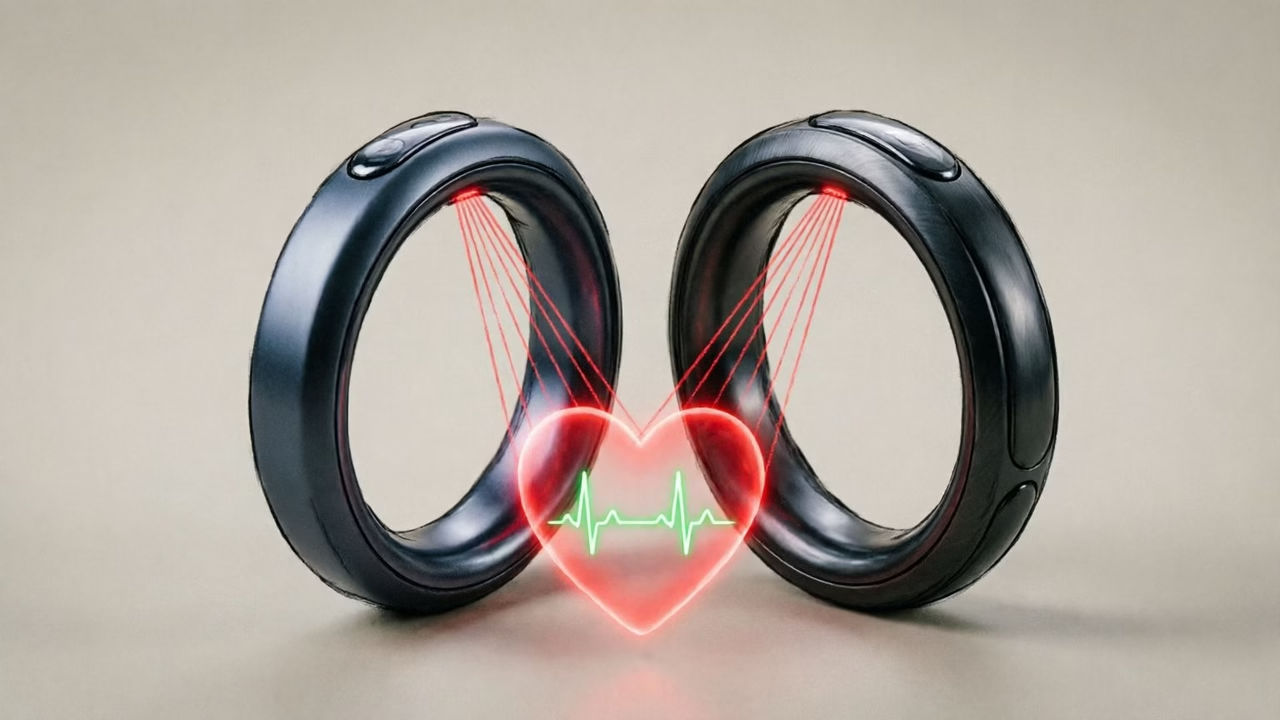
Ultrahuman has officially introduced the Heart Scan feature, expanding the health monitoring capabilities of its Ring Air and Ring Pro smart rings. This update builds directly upon the previously released AFib Detection PowerPlug, which already enabled background atrial fibrillation screening for these devices. While the existing system runs nightly checks automatically, the new Heart Scan provides an on-demand alternative for users who wish to verify their heart rhythm at specific moments.
The feature is powered by FibriCheck, a well-established digital medical device company specializing in cardiac rhythm analysis. To use the tool, eligible users must open the Ultrahuman app and initiate a scan. The process requires the user to remain still for exactly 60 seconds while the ring reads the signal and processes it through FibriCheck’s algorithm. This manual activation contrasts with the passive, overnight monitoring that was previously the primary method for detecting irregularities.
Availability is currently restricted to supported markets across the United Kingdom, Europe, the Middle East, and the Asia-Pacific region. Users in these areas can access free scans through their Ultrahuman dashboard. However, implementation requires specific software versions: iOS users need app version 4.3.0 or higher, while Android users require version 3.2.0.0 or later. Notably, the announcement does not confirm availability for North American consumers, leaving Canadian buyers uncertain about immediate access to this functionality.
Why Active Monitoring Changes the User Experience
The shift from purely passive screening to active, on-demand scanning addresses a common limitation in consumer wearable health tech. Background algorithms are excellent for catching trends over time, but they cannot always provide immediate reassurance during moments of physical stress or perceived discomfort. By allowing users to trigger a scan when they feel symptoms or simply want a baseline reading, Ultrahuman is bridging the gap between continuous data collection and actionable, real-time insight.

For individuals concerned about cardiovascular health, the ability to perform a structured 60-second check offers a tangible way to engage with their data. It transforms the ring from a passive observer into an interactive diagnostic tool, albeit one that relies on third-party medical validation through FibriCheck. This partnership lends credibility to the readings, as FibriCheck’s algorithms are often used in clinical settings.
However, the distinction between screening and diagnosis remains critical. These features are designed to detect potential irregularities like atrial fibrillation, not to replace professional medical advice. The value lies in early detection and awareness, empowering users to seek medical attention if anomalies are flagged. For Canadian consumers, the absence of confirmed regional availability means this benefit may not be immediately accessible, highlighting the fragmented rollout strategy of many European health-tech startups.
Rollout Questions and Regional Gaps
Ultrahuman’s introduction of the Heart Scan feature marks a significant step in making smart ring health monitoring more interactive and responsive. By leveraging FibriCheck’s technology, the company enhances the utility of its hardware beyond simple activity tracking. The 60-second on-demand scan complements the existing nightly AFib detection, offering users greater control over when they assess their heart health.
Despite the technical advancement, several questions remain unanswered for a global audience. The current rollout excludes North America, meaning Canadian users cannot yet utilize this feature. It is unclear whether a US or Canada release date has been set, or if regulatory approvals are delaying expansion. Additionally, long-term data sharing protocols with healthcare providers are not detailed in the initial announcement.
For now, the Heart Scan is a valuable addition for users in supported regions, providing a convenient way to monitor heart rhythm without waiting for overnight results. As the smart ring market matures, the integration of certified medical algorithms into consumer wearables will likely become a standard expectation rather than a premium feature. Until Ultrahuman confirms broader availability, Canadian buyers should monitor official channels for updates on regional support.