How AI Entered the Pit Lane
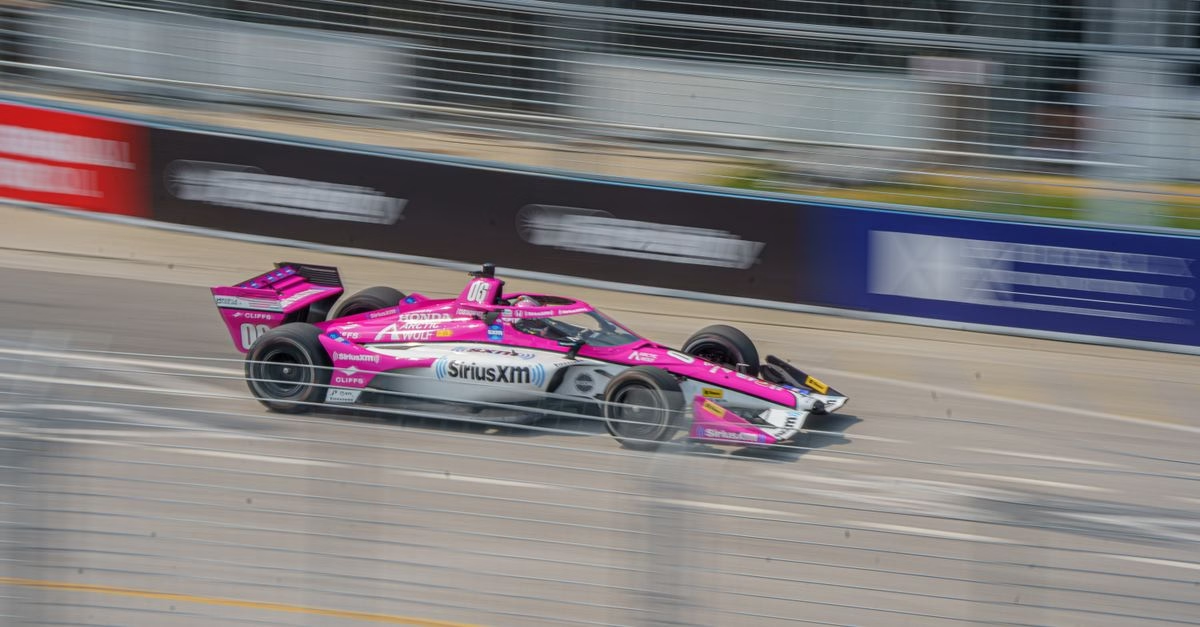
The landscape of motorsport sponsorship has shifted dramatically. In the past, teams relied heavily on tobacco and alcohol brands, but today’s paddock is increasingly dominated by crypto, cybersecurity, and artificial intelligence firms. This isn’t just about logo placement anymore; it’s about tangible performance gains. Chip Ganassi Racing (CGR) and OpenAI have formalized a partnership where the AI company provides more than just funding. They are actively helping the team optimize car setups for IndyCar races.
This collaboration has yielded immediate results for driver Alex Palou. Despite a challenging 2026 season where he won only three of eighteen races, Palou secured eight poles, a figure that outperformed every other competitor on the grid. The secret weapon behind this qualifying dominance appears to be the integration of OpenAI’s machine learning models into their engineering workflow. A documentary series released on YouTube recently detailed this process, showing how AI tools are now part of the standard toolkit for top-tier drivers and engineers.
The Competitive Edge of Machine Learning
For fans and industry observers, this development signals a fundamental change in how racing teams approach vehicle dynamics. Traditional setup optimization relies on decades of accumulated human experience and physical testing. By introducing AI, teams can process vast amounts of telemetry data faster and identify subtle adjustments that might escape human engineers. This doesn’t replace the driver or the engineer; it augments their decision-making capabilities.
The implications extend beyond just winning poles. In a sport where margins are measured in milliseconds, having access to predictive modeling and real-time analysis can mean the difference between victory and mediocrity. It also raises questions about the future of motorsport regulation. If AI becomes a standard tool, will governing bodies need to establish limits on computational assistance? Currently, the focus remains on how teams leverage these tools within existing frameworks. For consumers interested in the intersection of technology and sports, this is a clear example of high-performance computing moving from server rooms to racetracks.

What Remains Unknown
While the initial success of the CGR-OpenAI partnership is evident, several aspects of this technological integration remain unclear. It is not yet known how widely this approach is being adopted across other racing series or if rival teams are developing similar AI partnerships. Additionally, the specific algorithms and data inputs used by OpenAI to generate setup recommendations have not been fully disclosed.
As AI continues to permeate various sectors, its role in motorsport will likely evolve from a niche advantage to a standard requirement. Teams that fail to adapt may find themselves at a significant disadvantage. For now, Alex Palou’s pole positions stand as proof that AI is no longer just a buzzword in sponsorship—it is a functional component of modern racing strategy. The full extent of its impact on race outcomes and team dynamics will become clearer as the season progresses and more teams experiment with these tools.