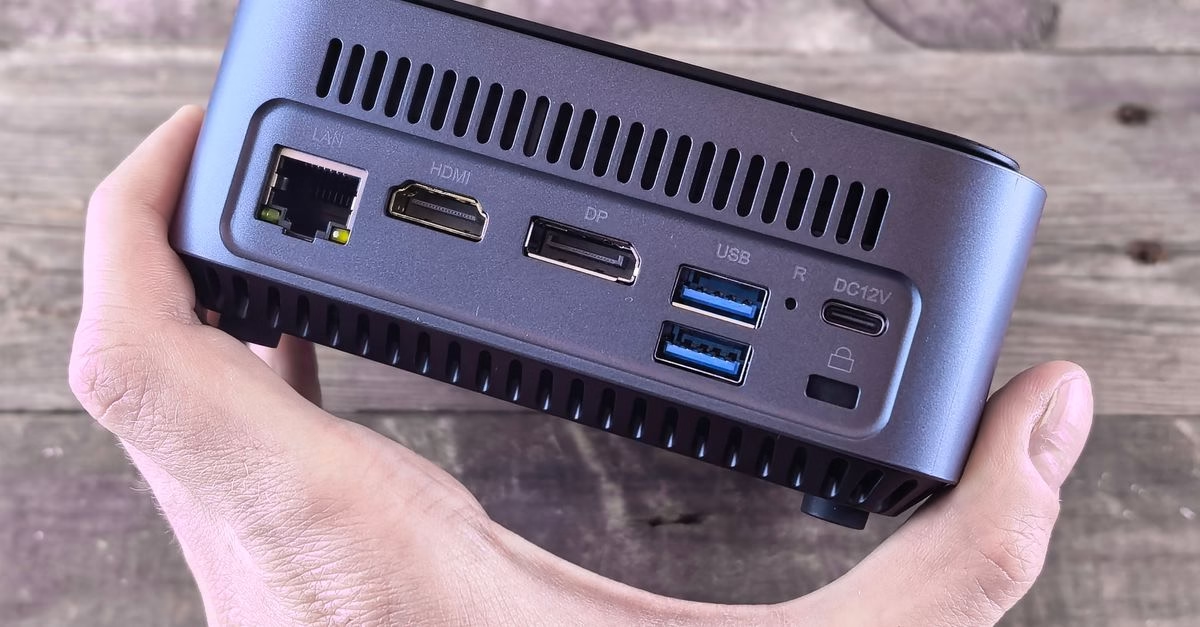
Why Compact Computers Are Gaining Ground
Recent coverage from BGR highlights a shifting preference among consumers who are reevaluating their desktop setups. The publication identifies mini PCs as a viable middle ground, effectively bridging the gap between the inherent portability of a laptop and the raw computing power traditionally associated with a full-size desktop tower. This trend suggests that buyers are no longer viewing these two categories as mutually exclusive options but rather as part of a spectrum where size and utility can be balanced more flexibly.
The article specifically curates a list of five budget-oriented mini PCs, indicating that manufacturers are actively targeting price-sensitive shoppers who still require reliable daily drivers. This move away from bulky chassis reflects a broader industry acknowledgment that many users do not need the expansion slots or massive cooling systems of traditional towers for standard tasks like web browsing, document editing, and media consumption.
Space and Savings in the Modern Workspace
For Canadian households and remote workers alike, the appeal of these devices lies in their ability to reclaim physical space while maintaining functionality. A full-size desktop often demands a dedicated corner or a substantial desk footprint, which can be prohibitive in smaller apartments or shared living areas common in urban centres. By opting for a mini PC, users can free up valuable real estate without compromising on the screen real estate they likely already own.
Furthermore, the emphasis on ‘budget’ recommendations signals that this technology has matured enough to offer competitive pricing structures. While high-end workstations remain necessary for specialized rendering or gaming, the average consumer can now access sufficient processing power at a lower entry point. This democratization of compact hardware means that upgrading or replacing an aging system does not necessarily require a significant financial investment, making it easier to keep pace with software updates and security patches.

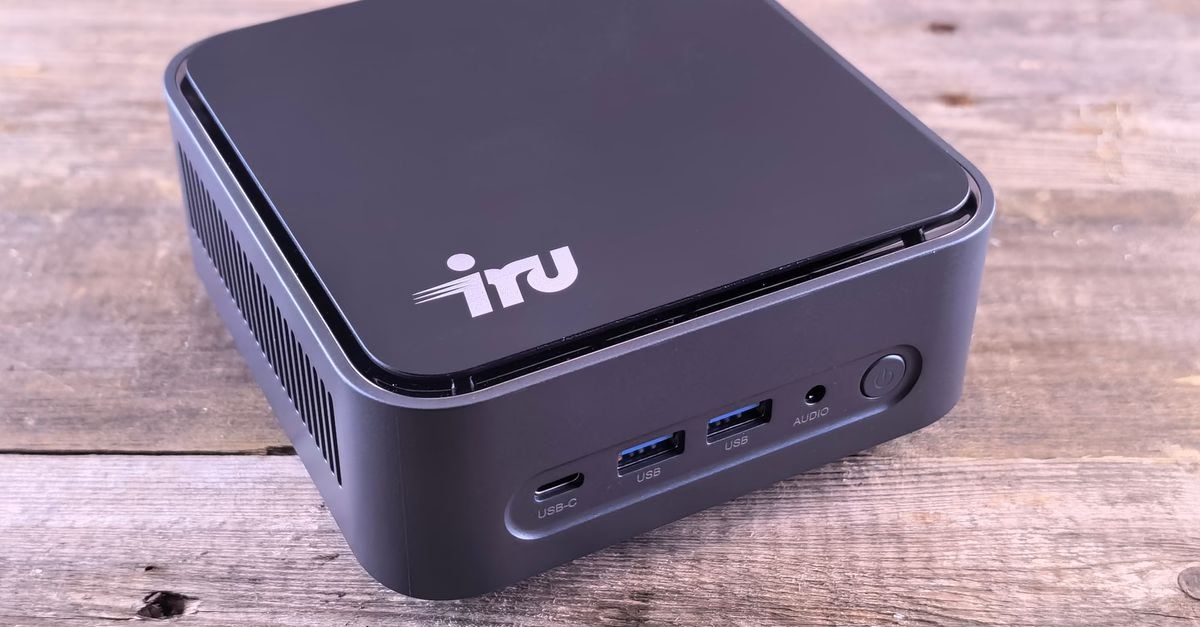
Making the Switch Without Compromise
The emergence of these budget-friendly mini PCs represents a practical evolution in home computing rather than a temporary fad. As long as the primary use case involves everyday productivity and entertainment, the trade-offs in terms of expandability are often negligible compared to the benefits of a cleaner, quieter, and more affordable setup. However, potential buyers should remain aware that specific needs, such as heavy multitasking or future hardware upgrades, may still favour traditional desktop configurations.
For those satisfied with their existing peripherals and focused on simplicity, exploring the curated list of mini PCs could be a logical next step. The key takeaway is that the definition of a ‘desktop’ is expanding, allowing users to choose form factors that better align with their spatial constraints and financial goals.