What happened
This story examines PlayStation game sharing.
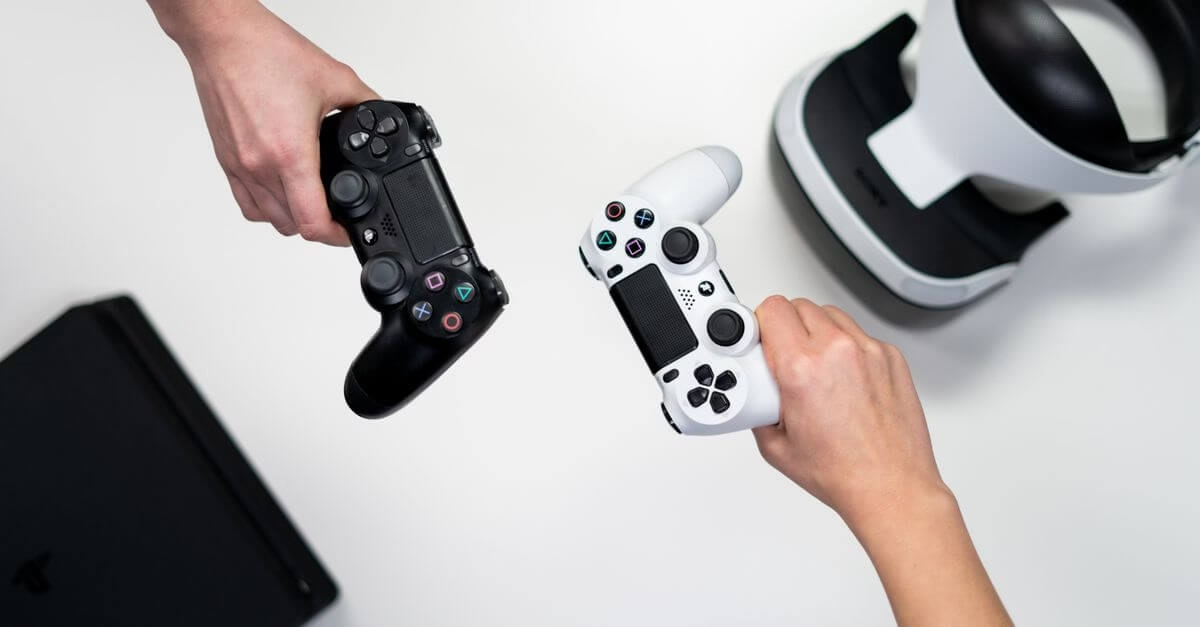
Shuhei Yoshida and Adam Boyes posted a new photo that mirrors their 2013 “how to share games on PS4” meme. Instead of holding a disc, both executives display empty hands, visually indicating that the original disc‑swapping ritual is largely irrelevant today.
The image was shared on Twitter and quickly picked up by gaming news sites, sparking conversation about the evolution of game ownership on PlayStation consoles.

Why the meme works

The original meme succeeded because it humorously exposed a pain point—physically swapping discs on a console that was marketed as a digital‑first platform. By removing the disc, the new version flips the joke: the pain point has vanished, but the cultural memory remains.
Visually, the empty hands act as a shorthand for “no disc needed,” reinforcing the message that most PlayStation users now obtain games via digital download or subscription services. The simplicity of the image makes it instantly shareable, a key factor in meme longevity.
Why it matters to gamers
The meme is more than a nostalgic gag; it signals how far PlayStation’s ecosystem has shifted. Physical media still exists, but the majority of new titles launch with digital‑first or digital‑only options. This influences everything from pricing strategies to resale markets.
For consumers, the trend means less hassle—no need to manage discs, worry about scratches, or wait for shipping. For developers and publishers, it opens up opportunities for dynamic pricing, seasonal bundles, and instant updates.
Moreover, the meme subtly validates Sony’s push toward services like PlayStation Plus, which rely on a digital‑centric model. By framing the disc‑free image as a natural progression, the executives reinforce the company’s long‑term strategy without a formal press release.
Practical implications
- Physical media sales will likely continue to decline. Retailers have already reported lower shelf space for new releases, and many indie titles launch exclusively digital.
- Resale and trade‑in markets shrink. Without a disc, there’s nothing to trade, which could affect second‑hand value for collectors.
- Subscription services gain leverage. PlayStation Plus tiers become the primary way to access a broad library, making the “share” concept about shared access rather than shared discs.
- Cloud gaming becomes more relevant. As bandwidth improves, services like PlayStation Cloud Streaming will further reduce the need for any physical storage.
Gamers should consider their own storage preferences—if you still value a physical collection, you’ll need to plan for a shrinking catalog. If you’re comfortable with digital, the meme is a reminder that you’re already aligned with the platform’s direction.
Limitations and unanswered questions
While the meme highlights a clear trend, it glosses over several nuances. Physical copies still matter for regions with limited broadband, for collectors, and for archival purposes. Sony has not announced any timeline for phasing out discs, and some major releases (e.g., certain PlayStation Studios titles) still ship on disc.
Additionally, the meme does not address the cost implications of digital‑only releases, such as higher upfront prices or the lack of price drops that often occur in the physical market.
Finally, the image offers no insight into Sony’s long‑term roadmap for backward compatibility or how future console generations might handle legacy media.
Conclusion
The recreated “PlayStation game sharing” meme is a succinct visual commentary on a decade of change. By swapping the disc for empty hands, Yoshida and Boyes remind us that digital distribution now defines the PlayStation experience. The joke lands because it’s true: most gamers no longer need to juggle physical media, and Sony’s services are built around that reality. Yet, the shift also raises questions about collector culture, pricing, and accessibility that remain unresolved. For now, the meme serves as both a nostalgic wink and a clear signal of where the platform is headed.
Future outlook for PlayStation’s distribution model
Looking ahead, Sony’s roadmap suggests an even tighter integration of digital delivery with hardware. Recent firmware updates have introduced automatic game library syncing across multiple consoles, meaning a purchase on a PS5 will instantly appear on a future PS6 without any manual intervention. This mirrors trends seen in other ecosystems where the platform itself becomes the primary storefront, reducing the relevance of any physical inventory. The shift also aligns with Sony’s broader investment in cloud infrastructure; the company has been expanding data center capacity in Europe and North America to support lower latency streaming. As bandwidth ceilings rise, the practical difference between downloading a game and streaming it narrows, making the “no disc” meme a realistic forecast rather than a tongue‑in‑cheek observation.
From a developer perspective, the move toward a fully digital pipeline simplifies patch distribution and content updates. Instead of releasing separate physical patches, studios can push updates directly to the cloud, ensuring every player receives the same version at the same time. This reduces fragmentation and can improve overall game stability. However, it also places greater pressure on studios to manage server costs and maintain robust content delivery networks, especially for titles with large, frequent updates.
Practical steps for gamers
For players who are still on the fence about embracing a disc‑free library, there are a few concrete actions to consider. First, audit your current collection: identify which titles you own physically and check whether they are available digitally on PlayStation Plus or the PlayStation Store. If a game is missing from the digital catalog, you may want to keep the disc as a backup, especially for titles that receive limited post‑launch support.
Second, evaluate your storage strategy. Modern consoles now come with SSDs ranging from 500 GB to 2 TB, and external USB drives can expand capacity further. Because digital games often require more space than their disc‑based counterparts—due to high‑resolution textures and bundled DLC—ensuring you have adequate storage will prevent the frustration of having to delete and redownload frequently.
Third, consider the financial implications of subscription services versus outright purchases. PlayStation Plus tiers offer a rotating library of games, which can be cost‑effective if you play a wide variety of titles. However, for collectors who prefer permanent ownership, buying games outright may still make sense, especially when sales occur. Keep an eye on seasonal discounts, as they often provide the best value for digital purchases.
Limitations of a fully digital ecosystem
Despite the clear benefits, a completely digital PlayStation ecosystem is not without drawbacks. Regions with unreliable internet connectivity remain dependent on physical media, and the cost of high‑speed data caps can make large downloads prohibitive. Moreover, digital rights management (DRM) policies mean that access to a game is contingent on the continued operation of Sony’s servers; if a service were to shut down, owners could lose the ability to launch their purchases.
Another concern is the longevity of digital archives. Physical discs, when stored properly, can survive decades, whereas digital files rely on server maintenance, encryption keys, and platform compatibility. While Sony has pledged to support legacy titles through backward compatibility, the exact mechanisms for preserving access to older games remain opaque.
Reader‑focused conclusion
In short, the recreated meme captures a pivotal moment in PlayStation’s evolution: the platform is moving decisively toward a disc‑free future, driven by convenience, subscription economics, and cloud capabilities. For gamers, this means fewer hassles with physical media, faster access to updates, and a growing reliance on digital libraries. At the same time, it underscores the importance of reliable internet, thoughtful storage planning, and awareness of the trade‑offs between ownership and subscription models. By understanding these dynamics, you can make informed choices—whether that means embracing the digital shift fully, maintaining a hybrid collection, or advocating for better offline options. The meme may be simple, but the implications are anything but, and they will shape how you experience PlayStation games for years to come.