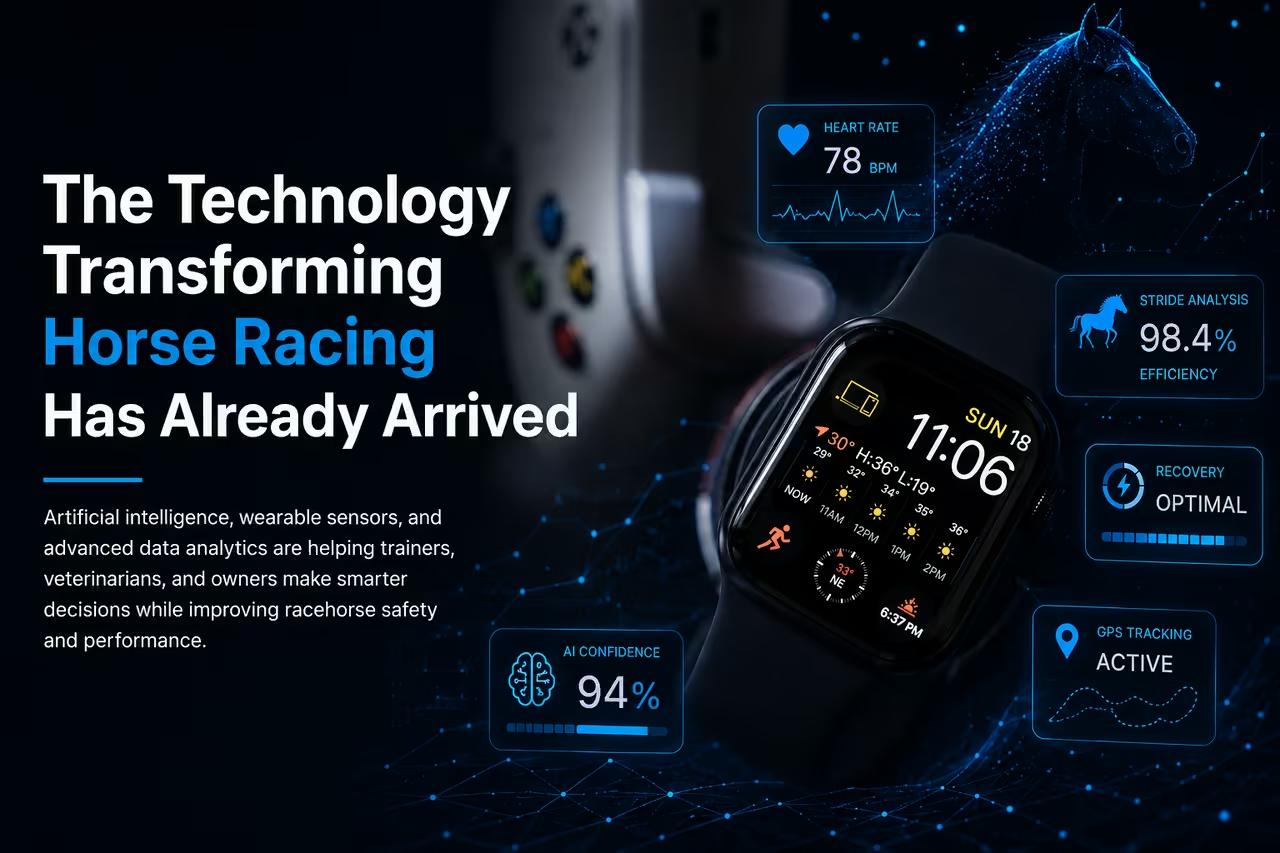
Horse racing has always had a complicated relationship with technology. In fact, if you ask horse racing fans, most will say the sport doesn’t involve technology at all.
But the industry has advanced over the last couple of years. Nowadays, technology is driving change, even though it is hidden deep beneath the surface.
New AI wearables and data tools are making the sport safer, more calculable, and more entertaining. These tools are not trying to replace horsemen. At least, the sensible ones are not. It’s not like AI is taking over, like many other industries we’ve seen in the last couple of years.
Instead, they are taking data from the sport, analyzing it, and serving it to people such as trainers, veterinarians, owners, and even bettors to help them make more informed decisions.

Wearable technology has evolved far beyond consumer smartwatches and fitness trackers. Today, AI-powered sensors are transforming industries ranging from healthcare to elite sports. If you’d like a broader look at how these innovations are shaping the future, read our guide on the future of wearable technology.
With AI taking over, let’s dive deeper into how new technology is transforming the sport.
The Problem With the Human Eye
Experienced horsemen can notice remarkable things. There is no doubt about that.
A groom may notice something is wrong before the training or the race even starts. A jockey can feel that the horse is not following its usual rhythm, and a trainer watches a gallop and notices all the small changes.
This knowledge is incredibly valuable. However, it is very difficult to scale.
A horse racing at 40 miles per hour is moving too quickly for a human eye to notice everything. On top of that, these suggestions and small things come in patterns. This is where the human eye and brain are useless. The best way to analyze data is to follow a horse’s pattern over a long period, and that’s very hard to do without technology.
This is where internal measurement units, or IMUs, become useful. Then we have data collectors through wearable devices and AI that can analyze everything. They scan horses’ patterns, movement, and vitals and combine everything into a processable data point for the trainer or even the bettor.
Yes, even bettors use AI nowadays to analyze races. So, if you are a bettor, it might be a good idea to take a techier approach with your next bet just to see if you can increase the probability of a winning bet.
If you want to learn more about horse racing bets, predictions, and tips, click here: https://www.twinspires.com/edge/racing/wagering/best-bets/
StrideSAFE Shows What Wearable Data Can Actually Do
StrideSAFE is probably one of the clearest examples of racing technology moving beyond performance statistics.
The sensor sits in a pocket behind the saddle and records a horse’s movement at racing speed. In the published JAVMA case series, the system used GPS and accelerometer-based IMU data, with the accelerometers producing a combined 2,400 force measurements per second.
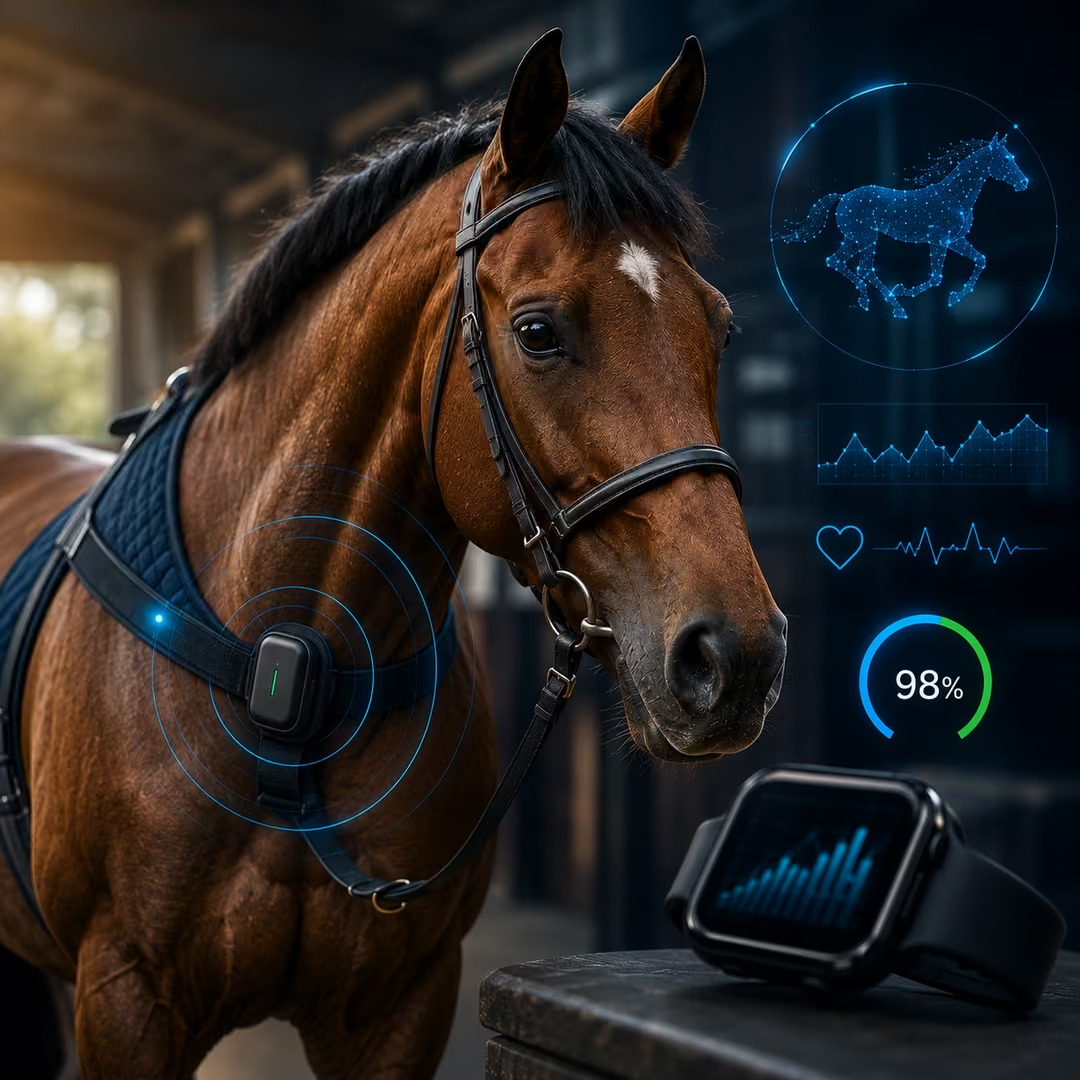
That sounds like a number designed for a technology brochure.
The interesting part is what happened next.
The system’s algorithm had been developed from sensor files covering more than 20,000 race starts. Three horses produced stride patterns that placed them in a very high-risk category. Veterinary examinations and PET imaging were then used to investigate them.
In two cases, the imaging found bone changes associated with increased fracture risk in the fetlock. In the third, researchers identified serious remodelling in a carpal bone, and radiographs later showed signs of an impending slab fracture.
AI Is Good at Finding Patterns Humans Cannot Memorize
People use the term “artificial intelligence” far too casually now.
Add an automatic summary to a dashboard, and suddenly the company has “AI-powered equine intelligence.”
Very impressive.
What machine learning is genuinely good at is comparing enormous numbers of patterns. A trainer can remember many horses. An algorithm can analyze tens of thousands of sensor files without becoming tired, distracted, or emotionally attached to the horse everyone in the barn desperately wants to be good.
A 2025 research project tested a convolutional neural network using data from just one IMU sensor to distinguish sound horses from horses showing lameness or gait irregularity. The system reported 90% session-level accuracy with no false positives in the researchers’ test conditions.
That does not mean lameness has been solved.
The study still needs to be understood in the context of its dataset, conditions, and future validation. Horses move differently on different surfaces, at different speeds, and for many different reasons.
Wearables Are Turning Recovery Into Something Measurable
Performance wearables are moving through horse racing in much the same way they moved through human sport.
At first, they look like expensive toys.
Then coaches collect enough data to start asking better questions.
Heart rate is a good example. A single high heart-rate reading may tell a trainer very little. The horse may have been excited, worked harder, or reacted to environmental conditions. But compare heart rate and recovery across similar gallops over several months, and the information becomes much more useful.
Data Will Never Completely Remove Racing’s Uncertainty
This is the point technology companies occasionally forget.
A horse is still a horse.
You can measure every stride and still lose the race. You can monitor recovery and still have an unexpected physical problem. An AI model can identify risk patterns and still produce false alarms or miss a horse that later becomes injured.
There is no perfect dataset.
There is no injury prediction system with a crystal ball hidden inside the algorithm.
And there is definitely no software that can explain why a talented horse suddenly decided today was the day to perform as if it had never seen a racetrack before.
Related Posts


Some Final reflections
AI is not taking over horse racing. That’s the wrong story. The more interesting change is that trainers and veterinarians are finally getting tools that can help them increase racehorses’ performance while keeping them safe.
This is the future of the sport, and in the future we will see even better technology that will remove that unethical label from horse racing forever.