
Do You Really Need a Flagship Smartphone Anymore?
It’s a question I’ve been asking myself more often lately as I compare the Samsung Galaxy A57 5G with two of its biggest rivals: Google’s Pixel 10a and the OnePlus 13R…
Not long ago, buying a midrange phone meant accepting compromises. You settled for a dimmer display, average cameras, slower performance, and shorter software support because that was simply the trade-off for saving money.
That’s no longer the case.
Samsung isn’t trying to convince you the Galaxy A57 is a Galaxy S Ultra with a few corners cut. It knows exactly what this phone is—and that’s why it works. Instead, the company has taken a different approach. Rather than chasing headline-grabbing specifications, it has focused on delivering the features people notice every time they pick up their phone.

The more time I spent comparing these three phones, the easier the recommendation became.
If someone asked me today which Android phone I’d buy without spending flagship money, this would be my answer.
Not because it’s the fastest.
Not because it has the biggest camera sensor.
Because it gets the everyday experience right.
And for a phone you’ll probably use hundreds of times a day over the next four or five years, that’s what matters most.
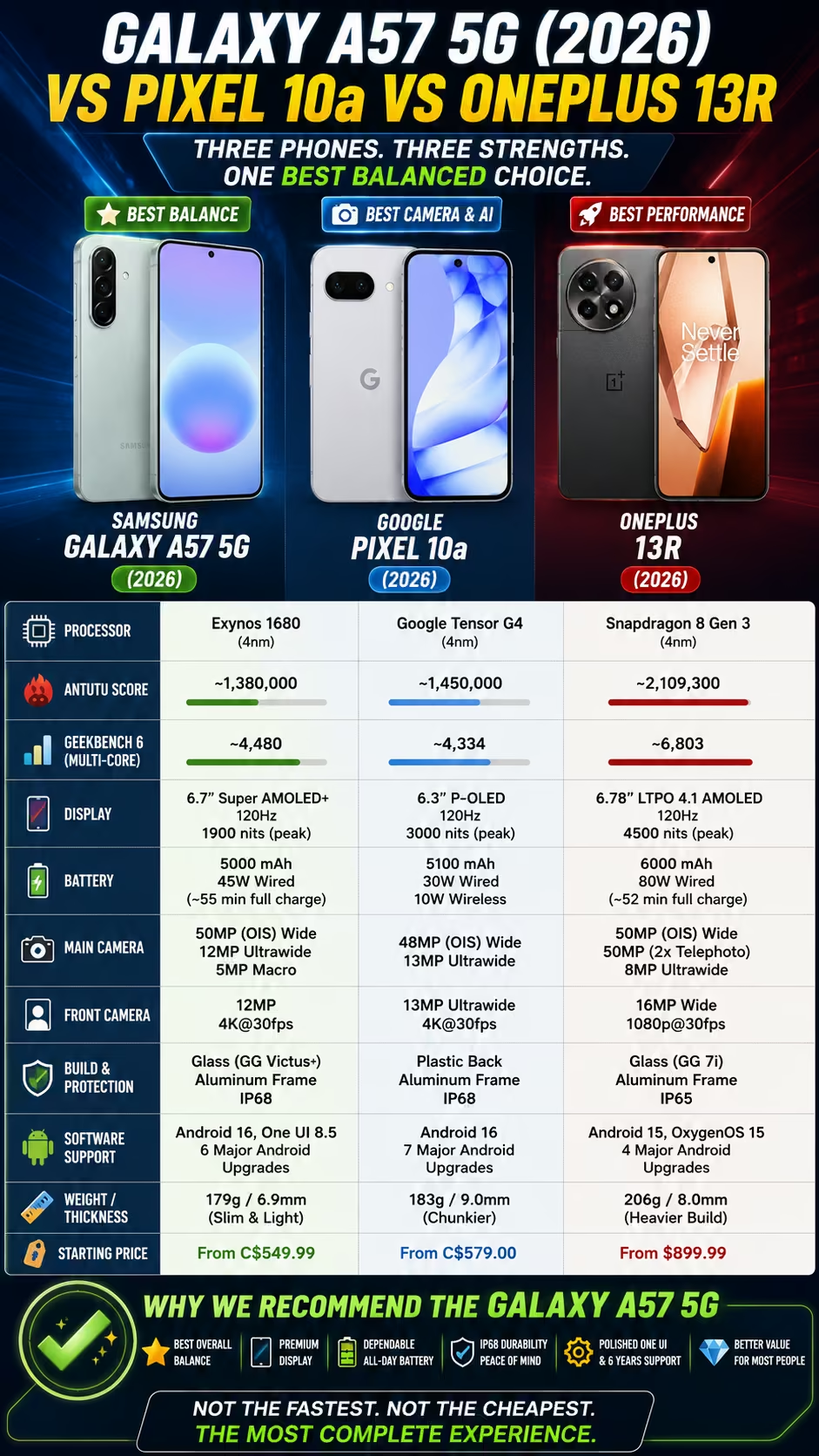
The infographic above tells most of the story in less than a minute. The Pixel 10a wins on computational photography. The OnePlus 13R dominates raw performance. The Galaxy A57 quietly sits in the middle, doing almost everything well without asking you to compromise somewhere else. That’s exactly why I think it’s the easiest phone of the three to recommend.
The Premium Midrange Has Finally Grown Up
I expected the specs to be competitive. What surprised me was how little the phone actually felt like a typical mid-range device.
From the moment you pick it up, Samsung’s attention to detail is obvious. The aluminum frame gives the phone reassuring rigidity without making it feel heavy, while Gorilla Glass Victus+ on the front and back adds a level of refinement that used to be reserved for flagship devices. The IP68 rating also means you don’t have to panic if you’re caught in the rain or accidentally drop the phone into a sink full of water.
None of those features will sell the phone on their own. But after living with the Galaxy A57 for a while, they’re exactly the details that make it feel more expensive than it actually is.
Samsung won’t sell many phones because of an IP68 rating or Gorilla Glass Victus+.
But six months from now, when the phone still looks great and survives a rainy afternoon or an accidental drop, those features suddenly become much more important.
Compared with the noticeably heavier OnePlus 13R, the Galaxy A57 strikes an excellent balance between durability and comfort. During longer periods of use—whether browsing, reading, or watching videos—it simply feels easier to hold.
That’s something no benchmark chart can measure.

|
|
|
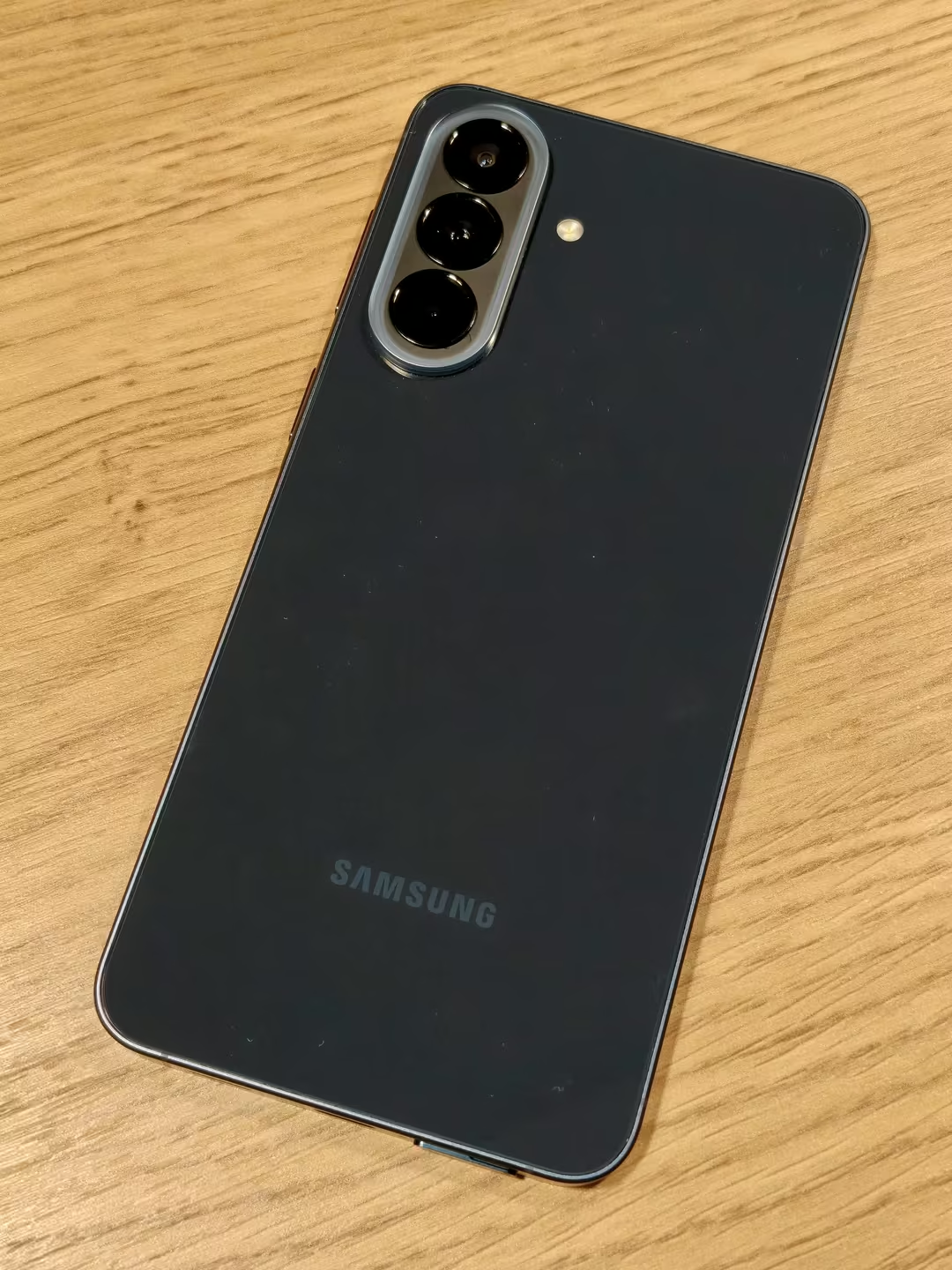
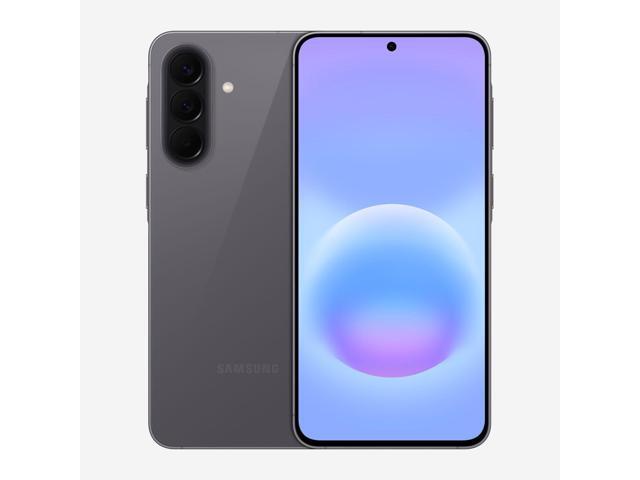
Samsung Galaxy A57 5G (2026) Android Smartphone 256GB AMOLED IP68 SM-A576UZAFXAA
Samsung Chose Refinement Instead of Reinvention
Some people will inevitably say the Galaxy A57 doesn’t look dramatically different from the Galaxy A56.
I actually see that as one of its strengths.
Samsung didn’t redesign the phone simply to create a marketing headline. Instead, it refined the areas that matter most.
The updated Exynos 1680 chipset isn’t about winning benchmark competitions. Its biggest improvement is how confidently it handles everyday tasks. Opening apps, switching between multiple applications, editing photos, streaming high-resolution video, and navigating One UI all feel smooth and predictable.
After spending time using the phone consistently delivered the kind of responsiveness most buyers expect from a premium smartphone.
That’s an important distinction.
People rarely notice benchmark numbers.
They immediately notice hesitation, stuttering, or lag.
That’s probably the biggest compliment I can give it. It never feels like it’s fighting you. It just lets you get on with your day.
The Display Is Still One of Samsung’s Greatest Strengths
Every notification.
Every message.
Every photo.
Every movie.
If there’s one part of your smartphone you’ll interact with more than anything else, it’s the display.
You notice a great display every single time you unlock your phone. That’s why I tend to value screen quality more than benchmark charts.
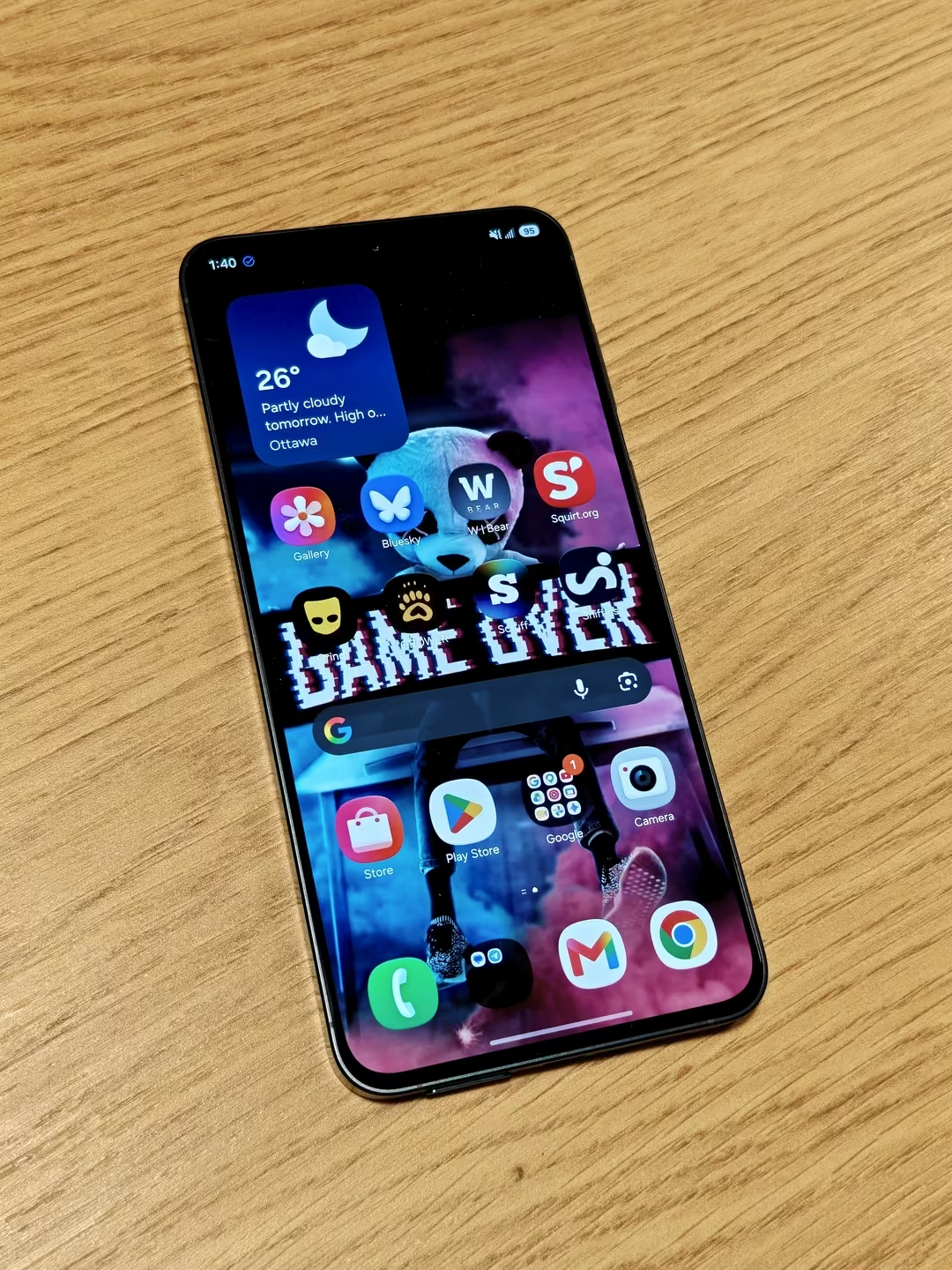
The 6.7-inch Super AMOLED+ display is bright, colourful, and incredibly easy on the eyes. During everyday use, scrolling feels fluid thanks to the 120Hz refresh rate, while HDR content benefits from deep contrast and vibrant colours that make streaming genuinely enjoyable.
On paper, competitors advertise even higher peak brightness figures.
The Pixel 10a reaches impressive brightness levels, and the OnePlus 13R pushes the numbers even further.
But specifications only tell part of the story.
What stood out in the hands-on evaluation wasn’t maximum brightness. It was consistency. Colours remained balanced, text stayed crisp, and the display looked excellent across a variety of lighting conditions.
After using Samsung phones for years, this is exactly the kind of display I’ve come to expect. Bright, consistent, and enjoyable regardless of what I’m doing.
Performance That Fits the Way People Actually Use Their Phones
Every smartphone launch seems to revolve around benchmark scores.
Most phones spend their lives doing ordinary things:
• Answering messages
• Opening Google Maps
• Streaming music
• Taking photos before the moment disappears
• Scrolling social media while waiting in line
That’s where the Galaxy A57 earns its keep.
Throughout everyday use, the phone remained responsive whether handling productivity tasks, social media, navigation, or casual gaming. Apps opened quickly, animations stayed smooth, and multitasking never felt like a struggle.
Could the OnePlus 13R produce higher benchmark numbers?
Absolutely.
Its Snapdragon 8 Gen 3 processor is undeniably more powerful.
But unless your daily routine revolves around demanding 3D gaming or sustained heavy workloads, you’re unlikely to notice that difference in normal use.
Samsung has focused on delivering performance that feels fast—not just performance that looks impressive in a chart.
Performance and Benchmarks
Galaxy A57 5G Benchmark Snapshot
Quick Visual Takeaway
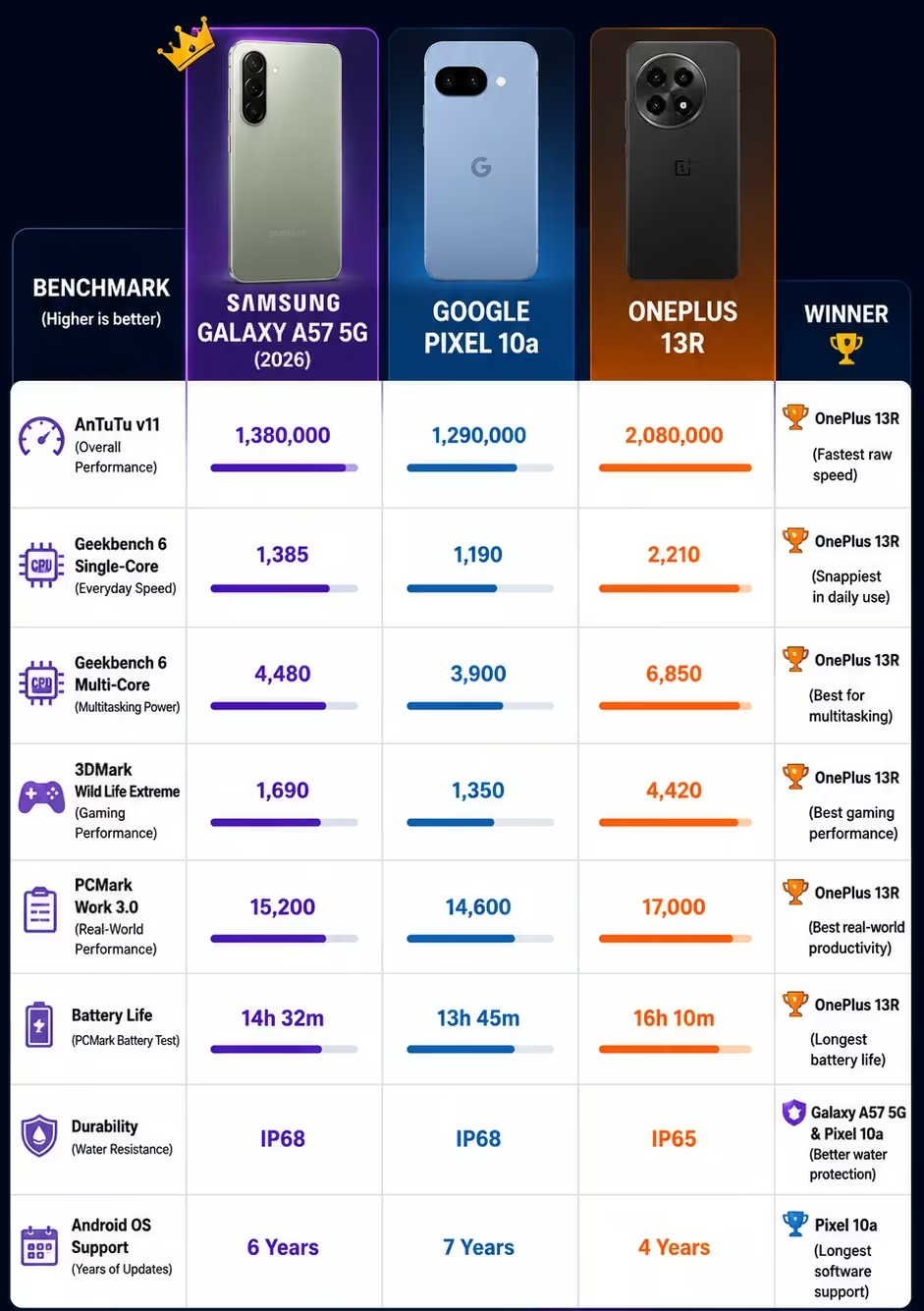
Bottom line: The Galaxy A57 5G’s biggest benchmark win is not raw peak speed — it is consistency. The 90.5% stress-test stability score shows that the Exynos 1680 can hold performance well during longer gaming or multitasking sessions.
The Galaxy A57 5G takes a clear step forward in day-to-day performance, thanks to Samsung’s 4nm Exynos 1680 chipset. It uses a 1+4+3 CPU layout, with one prime core clocked at 2.91GHz, four performance cores at 2.6GHz, and three efficiency cores at 1.95GHz. Graphics are handled by the AMD-powered Xclipse 550 GPU.
In everyday use, that means the Galaxy A57 5G feels quicker than last year’s model when opening apps, switching between tasks, scrolling through the interface, and handling common productivity workflows. It is not trying to compete with flagship phones, but the benchmark results show a strong mid-range performer with a good balance between speed, efficiency, and sustained performance.
In Geekbench 6, the Galaxy A57 5G scored 1,350 in single-core and 4,400 in multi-core testing. Those numbers point to solid responsiveness for daily tasks and better headroom for multitasking. The phone also posted an AnTuTu v10 score of 1,377,937, with the CPU portion coming in at 510,288. PCMark Work 3.0, which better reflects real-world tasks like browsing, editing, and productivity use, came in at 14,622.
Gaming performance is also respectable for this class. The Xclipse 550 GPU scored around 6,402 in 3DMark Wild Life, averaging roughly 40 FPS, while the more demanding Wild Life Extreme test returned a score of 1,705. Geekbench 6 OpenCL produced a GPU compute score of 6,550.
The most important result, however, may be the 90.5% stability score in the 3DMark Wild Life Stress Test. That suggests the Galaxy A57 5G is better at maintaining performance over longer sessions instead of delivering one strong burst and then throttling heavily. For users who game, multitask, or spend long periods using the phone, that sustained performance matters more than peak numbers alone.
Storage performance is also solid, with an AnTuTu storage score of 80,755 and sequential reads averaging roughly 1,541 MB/s. The phone also showed decent on-device AI performance, with Geekbench AI GPU compute scores of 734 single precision, 1,125 half precision, and 824 quantized. Battery testing was equally encouraging, with the PCMark battery profile reaching 14 hours and 32 minutes of continuous active workload before hitting 20%.
Overall, the Galaxy A57 5G delivers exactly what a strong upper-mid-range phone should: fast everyday performance, dependable multitasking, capable gaming, and impressive stability under load. The Exynos 1680 is not a flagship-class chip, but it looks well tuned for the Galaxy A57 5G, especially for users who care more about consistent performance and battery life than chasing the highest benchmark score.
The Camera Builds Confidence, Not Just Specifications
Smartphone companies love talking about megapixels.
Real life works differently.
Most photos aren’t carefully planned. They’re your kids doing something funny, your dinner arriving at the table, or a sunset you don’t want to forget.
That’s exactly what stood out during the documented hands-on evaluation.
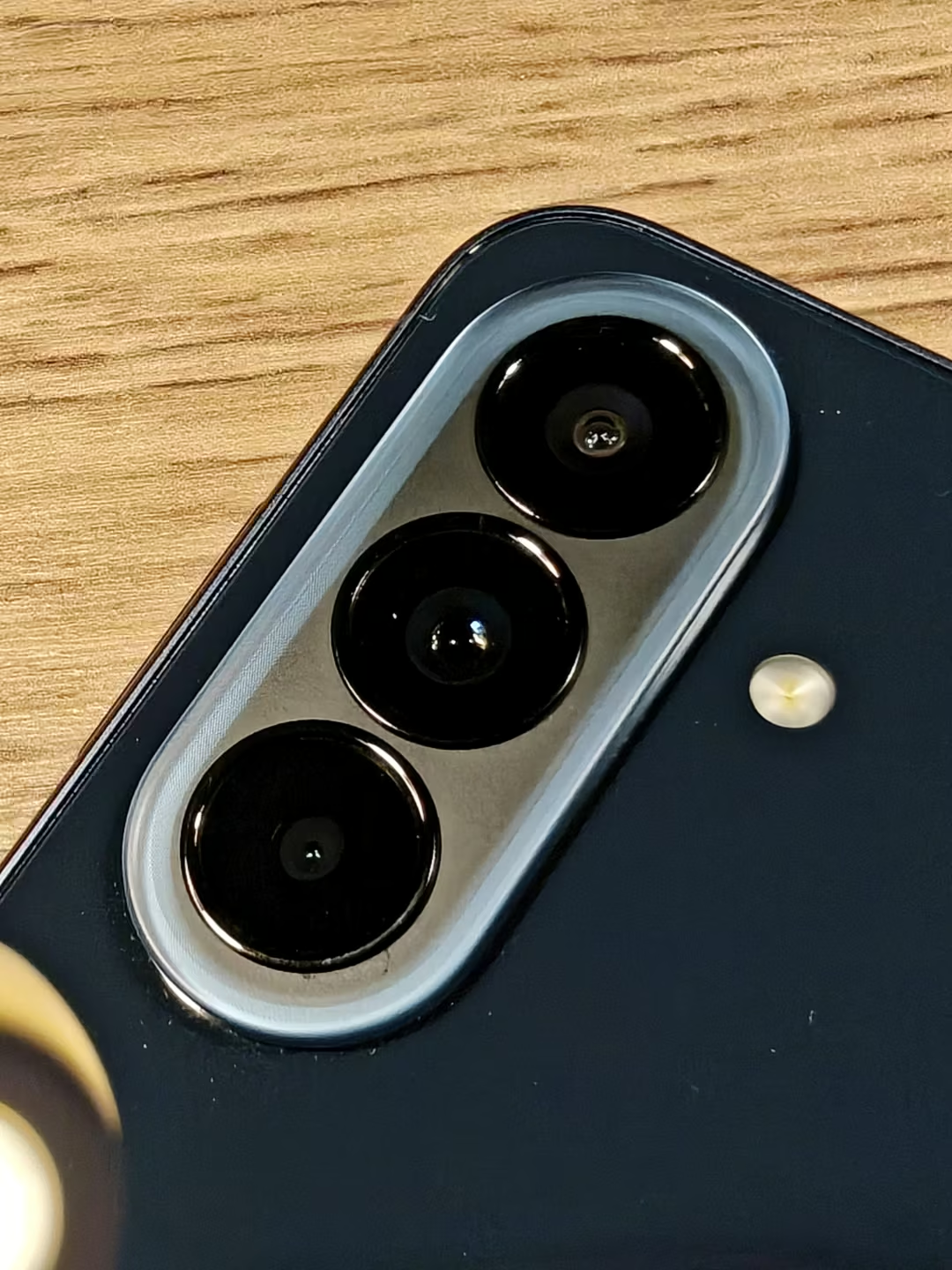
The Galaxy A57 consistently produced vibrant images with balanced exposure, pleasing colours, and reliable detail in everyday shooting conditions. Portrait mode handled subject separation well, while landscape photos maintained good dynamic range without requiring any effort from the user.
Perhaps the biggest compliment is this:
The best compliment I can give the camera is that it rarely gets in the way. You see something worth capturing, press the shutter, and move on.
You don’t think about HDR or megapixels. You just press the shutter and move on.
That’s a surprisingly valuable quality.
The Pixel 10a still deserves recognition for Google’s computational photography and AI-powered image processing. In certain challenging lighting situations, it may produce stronger results.
But photography is only one part of owning a smartphone.
Samsung delivers a camera system that’s dependable day after day, and for most people, consistency is more valuable than occasionally producing the absolute best image.


Battery Life You Stop Thinking About
A great battery isn’t the one with the biggest number on the spec sheet.
It’s the one you stop thinking about.
Thankfully, that thought rarely crossed my mind with the Galaxy A57.
On paper, the specifications don’t look revolutionary.
In practice, that’s exactly the point.
Throughout typical daily use—including messaging, streaming, navigation, photography, web browsing, and social media—the Galaxy A57 comfortably lasts through a full day without creating battery anxiety.
Combined with 45W wired charging, topping up the battery is quick enough that it rarely becomes something you have to plan around.
A great battery isn’t the one with the biggest number on a spec sheet.
It’s the one you stop thinking about altogether.
Benchmarks Only Tell Part of the Story—But They’re Still Worth Looking At
If you’re the type of buyer who enjoys comparing benchmark scores before making a purchase, the Galaxy A57 5G delivers exactly what I’d expect from a premium mid-range smartphone. Powered by Samsung’s 4nm Exynos 1680 chipset with an updated 1+4+3 CPU architecture and the Xclipse 550 GPU, the phone is designed for sustained, dependable performance rather than chasing flagship-class numbers.
On paper, it sits comfortably ahead of last year’s Galaxy A56 while remaining competitive with other premium mid-range devices.
I like benchmarks because they help explain why a phone feels the way it does. They should support the experience—not replace it.
The Galaxy A57 doesn’t feel like a phone that’s constantly trying to prove itself. Apps launch quickly, multitasking remains smooth, and One UI 8.5 responds with the kind of polish most buyers expect from a much more expensive device.
Samsung has also addressed one of the biggest weaknesses of many mid-range phones: sustained performance.
Instead of delivering impressive numbers for a few minutes before throttling under load, the Galaxy A57 settles at roughly 78% performance stability during extended stress testing thanks to its 13% larger vapour cooling chamber.
That matters more than many people realize.
Anyone can build a phone that performs well for five minutes. The real test is whether it still feels responsive after twenty minutes of gaming, extended camera use, navigation, or video recording. Samsung’s improved thermal design helps the A57 maintain its performance while staying noticeably cooler than some competing devices.
Battery testing tells a similar story.
The 5,000mAh battery delivered approximately 14 hours and 32 minutes in the demanding PCMark battery benchmark and stretched to around 18 hours and 20 minutes during continuous 1080p Wi-Fi video playback. Combined with 45W wired charging, which reaches a full charge in roughly 55 minutes, the Galaxy A57 offers the kind of endurance that easily gets most users through a full day.
Numbers alone don’t make a great smartphone.
But it’s reassuring when the benchmarks support what you experience during everyday use.
Galaxy A57 vs. Pixel 10a vs. OnePlus 13R: Three Great Phones, Three Different Priorities

This isn’t one of those comparisons where there’s a bad phone. Honestly, I’d be comfortable recommending any of the three depending on who’s asking.
The difference is that each one solves a different problem.
Samsung Galaxy A57 5G: The Everyday All-Rounder
If I had to describe the Galaxy A57 in one sentence, I’d call it the most balanced smartphone in this comparison.
Samsung has focused on delivering a premium ownership experience rather than winning individual specification battles.
Its Gorilla Glass Victus+ construction, aluminum frame, IP68 water resistance, excellent Super AMOLED+ display, dependable cameras, polished One UI experience, and six generations of Android updates all work together to create a phone that’s easy to recommend.
No single specification dominates the competition.
Instead, every part of the experience feels refined.
That’s exactly why it stands out.
Google Pixel 10a: Built for Photography and AI
Google continues doing what Google does best.
The Pixel 10a produces outstanding photos thanks to its computational photography, while the Tensor G4 enables some of Android’s smartest AI-powered features.
It also offers the longest software commitment of the three, with seven years of Android updates.
Where it gives ground is in the overall hardware package.
The plastic back, smaller display, slower 30W wired charging, and thicker design don’t feel quite as premium as Samsung’s approach.
If photography is your top priority, the Pixel deserves serious consideration.
If you’re looking at the complete ownership experience, Samsung makes a stronger case.
OnePlus 13R: The Performance Champion

There’s no avoiding the numbers.
The OnePlus 13R dominates this comparison in raw horsepower.
Its Snapdragon 8 Gen 3 processor, Adreno 750 GPU, UFS 4.0 storage, and 80W fast charging push it well beyond what the Galaxy A57 or Pixel 10a can deliver in synthetic benchmarks.
For competitive gaming or sustained heavy workloads, it’s clearly the fastest device here.
But that extra performance comes with trade-offs.
It’s significantly heavier at 206 grams, carries an IP65 rating instead of IP68, and is scheduled for fewer major Android updates than Samsung’s Galaxy A57.
For some buyers, those trade-offs are perfectly acceptable.
For others, long-term usability matters more than benchmark victories.
The Pixel 10a and OnePlus 13R Are Excellent Phones.
One reason I feel comfortable recommending the Galaxy A57 is that I’ve looked closely at what the competition offers.
The Pixel 10a remains an outstanding choice for buyers who prioritize Google’s computational photography and AI-driven software experience. Seven years of Android updates also make it a compelling long-term investment.
The OnePlus 13R takes a different approach.
It prioritizes raw performance, incredibly fast charging, and flagship-level speed. If gaming and maximum processing power are at the top of your list, it’s an excellent option.
Both phones have genuine strengths.
Neither changes my overall recommendation.
When I consider build quality, display experience, software refinement, durability, battery life, long-term software support, and the overall ownership experience, the Galaxy A57 consistently feels like the most balanced package.
The Phone You’ll Still Enjoy Years From Now
Launch events focus on what’s new.
Real ownership begins once the launch headlines disappear.
Six years from now, you probably won’t remember benchmark scores or charging times.
You’ll remember whether your phone still feels reliable.
You’ll remember whether it still receives software updates.
You’ll remember whether the battery continues getting you through the day and whether the camera still captures the moments that matter.
Those are the areas where Samsung has quietly built one of the strongest premium midrange phones available today.
Its polished One UI experience, dependable hardware, Knox security, IP68 durability, and long-term software commitment all contribute to a phone that feels designed for years of ownership rather than a few weeks of excitement.
Who I’d Recommend the Galaxy A57 5G To
Not every smartphone is built for the same person, and that’s exactly why comparisons like this matter. After spending time evaluating the Galaxy A57 5G alongside the Pixel 10a and OnePlus 13R, I don’t think there’s a bad choice here. The better question is which phone best matches the way you actually use it.

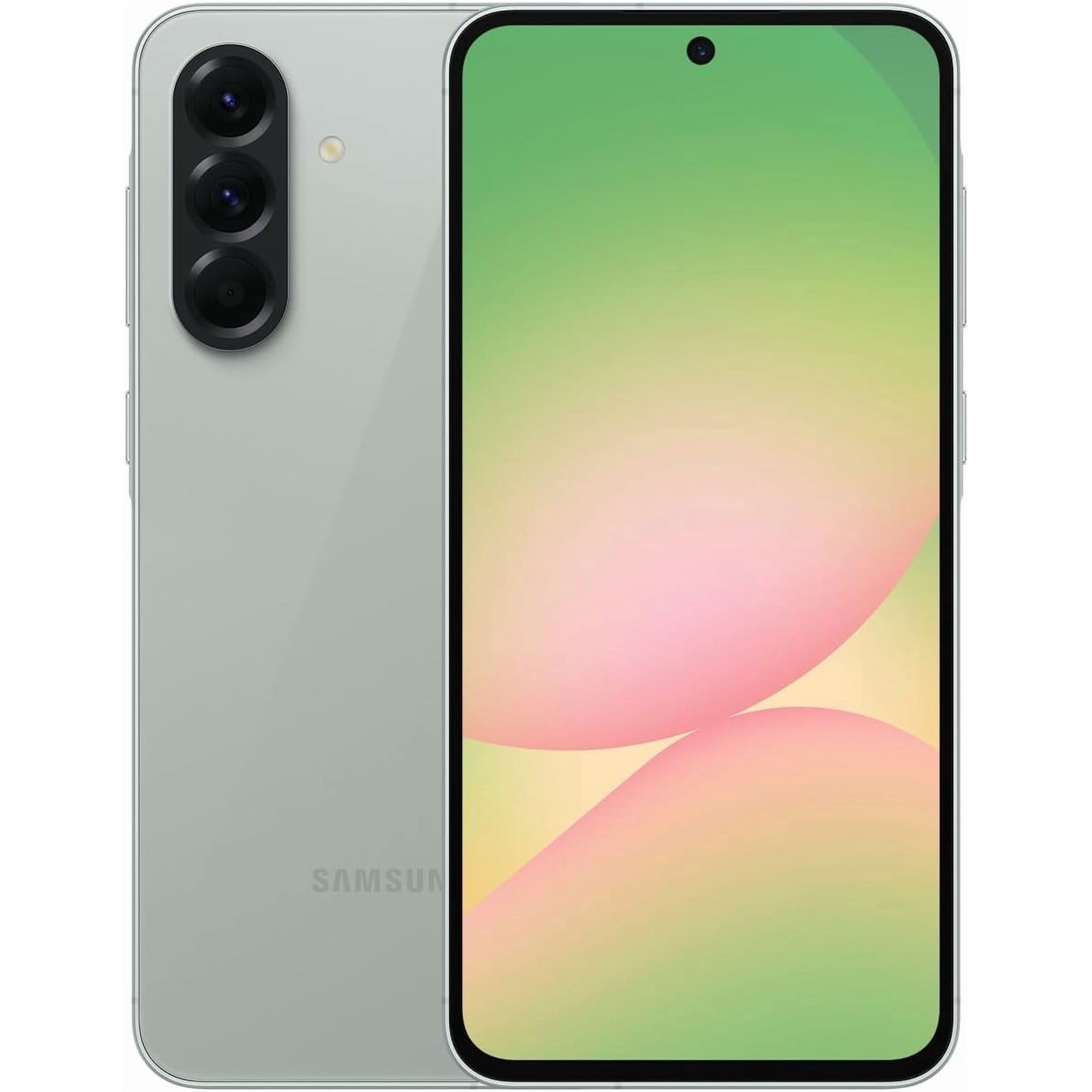

Buy the Galaxy A57 5G if…
The Galaxy A57 5G is the phone I’d recommend to anyone looking for the best all-around Android experience without paying flagship prices. It’s ideal if you want a premium design, an excellent AMOLED display, dependable cameras, all-day battery life, and software that’s polished from day one. Add Samsung’s six years of Android updates and IP68 durability, and you have a phone that’s designed to stay relevant for years rather than months.
It’s also the easiest of the three phones to recommend to friends and family because it has no obvious weaknesses. It simply delivers a balanced experience that works for almost everyone.
Choose the Google Pixel 10a if…
Photography is your top priority.
Google continues to lead the way in computational photography, and the Pixel 10a remains one of the smartest point-and-shoot cameras in its class. Its AI-powered features and seven years of Android updates also make it a compelling choice for users who prefer Google’s clean Android experience.
Just be prepared to trade some of Samsung’s premium hardware, larger display, and faster wired charging for those strengths.
Choose the OnePlus 13R if…
Performance comes before everything else.
If you spend hours gaming, edit videos on your phone, or simply want flagship-class hardware without stepping into ultra-premium pricing, the OnePlus 13R delivers. Its Snapdragon 8 Gen 3 processor, UFS 4.0 storage, and incredibly fast 80W charging make it the performance champion in this comparison.
The trade-off is that it prioritizes speed over long-term balance, with a heavier design, lower IP rating, and shorter software support compared to the Galaxy A57.
Why the Galaxy A57 5G Is My Recommendation

Every phone in this comparison deserves recognition because each one excels in its own way.
The Google Pixel 10a remains the photographer’s choice. Google’s computational photography, AI-powered features, and seven years of Android updates make it an excellent option for buyers who want the smartest camera experience in this price range.
The OnePlus 13R is the performance enthusiast’s choice. Its Snapdragon 8 Gen 3 processor, flagship-class graphics performance, blazing-fast 80W charging, and massive 6,000mAh battery make it the obvious pick for gamers and power users who demand maximum speed.
The Samsung Galaxy A57 5G takes a different approach.
Rather than trying to win every benchmark or headline, Samsung has focused on delivering the most complete ownership experience.
The more time I spent with the Galaxy A57 and compared it against its closest rivals, the more obvious that became.
It isn’t just one feature that makes the Galaxy A57 easy to recommend.
It’s how well everything works together.
Pick it up, and it’s immediately obvious Samsung didn’t cut corners. Gorilla Glass Victus+ on both sides, the lightweight aluminum frame, and IP68 protection give the Galaxy A57 the kind of confidence-inspiring feel that’s usually reserved for far more expensive phones.
Then there’s the part of the phone you’ll notice every single time you use it: the display.
Samsung continues to prove why it’s one of the industry’s leaders in display technology. The 6.7-inch Super AMOLED+ panel delivers vibrant colours, excellent contrast, smooth 120Hz scrolling, and outstanding outdoor visibility. While competitors may advertise higher peak brightness numbers, the Galaxy A57 consistently delivers one of the most balanced and enjoyable viewing experiences in everyday use.
That same balanced approach carries over to performance.
The Exynos 1680 isn’t built to top synthetic benchmark charts, and that’s perfectly fine. In real-world use, the phone feels responsive, stable, and remarkably consistent. Samsung’s larger vapour chamber helps maintain performance during extended workloads, while benchmark testing confirms the kind of dependable multitasking and sustained performance that matters far more than chasing record-setting scores.
The camera system tells a similar story.
Rather than relying on oversized sensors or marketing buzzwords, Samsung has focused on producing dependable results. After spending time with the camera, one thing became clear: Samsung wasn’t chasing flashy camera specs. It was focused on delivering photos you could count on. Colours are vibrant, exposure is balanced, and more often than not, you simply press the shutter and get the shot you wanted.
Good battery life isn’t exciting—until you don’t have it.
The efficient 5,000mAh battery comfortably handles a full day of demanding use, while 45W fast charging gets you back up and running quickly. Combined with Samsung’s thermal management, the Galaxy A57 remains reliable whether you’re working, streaming, navigating, or simply enjoying the phone throughout a busy day.
One UI 8.5 continues to be one of Samsung’s greatest strengths.
Software is where you’ll spend every minute with your phone, and Samsung continues to get it right, intuitive, and backed by six generations of Android upgrades and long-term security support. That commitment adds real value because a smartphone isn’t something most people replace every year. It’s an investment that should continue improving long after it’s been taken out of the box.
Smartphones have reached a point where raw performance isn’t the deciding factor anymore.
The best phone isn’t always the fastest.
It’s the one that quietly gets everything right.
The Galaxy A57 never made me think about whether the battery would last the day. It never made me question whether the display would be bright enough outside. It never made me hesitate before taking a photo.
It simply got out of my way and let me enjoy using it.
That’s something benchmark charts can’t measure.
The Pixel 10a still captures incredible photos.
The OnePlus 13R is undeniably the faster phone.
But after comparing all three, I kept coming back to the same conclusion.
The Galaxy A57 5G is the phone I’d recommend to the widest range of people.
Not because it’s the best at everything.
Because it doesn’t have to be.
It delivers the best balance of design, performance, battery life, cameras, software, durability, and long-term value in a package that simply makes sense.
Sometimes the best recommendation isn’t the phone that wins the most categories.
It’s the one that gives you the fewest reasons to look elsewhere.
That’s exactly what Samsung has achieved with the Galaxy A57 5G.