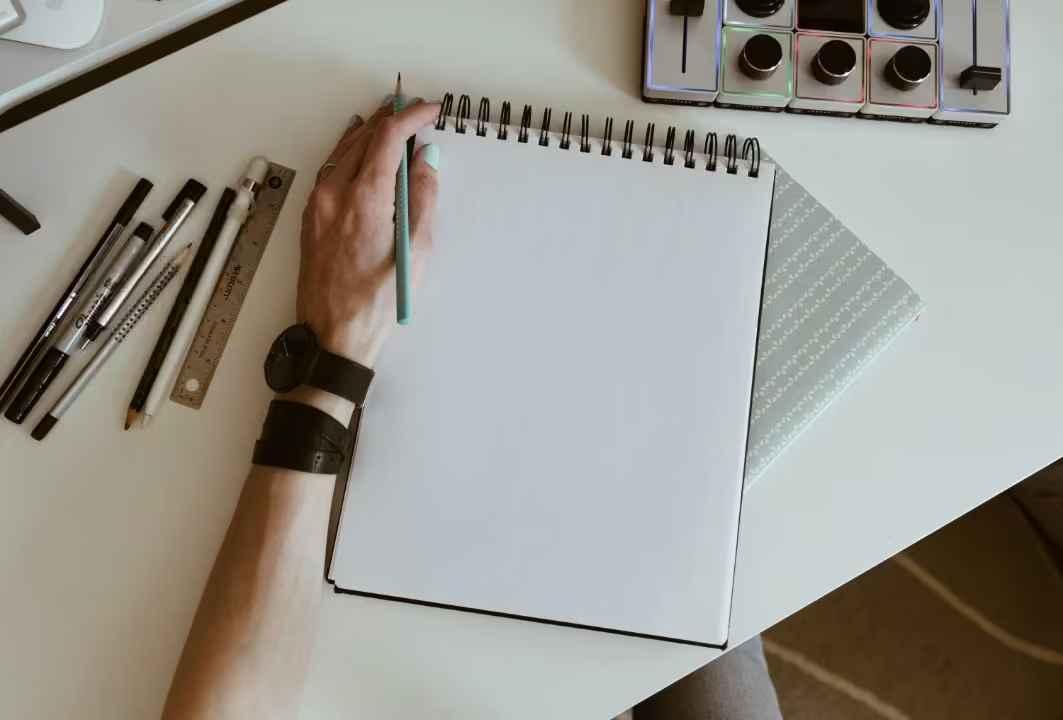
At times, left-handed people have had a lot of challenges to go through in a world that’s designed for the right-handed majority. From everyday tools and social norms, being left-handed often presents them with unique struggles that most others don’t notice. Yet lefties have continually shown adaptability and creativity as their innovative thinking often puts right-handers in their place. In this blog, we will look at some of the obstacles encountered by lefties while providing practical solutions that make life a little simpler for them.
The World Isn’t Left-Handed-Friendly
Everyday Tools, Rarely Inclusive
From scissors to can openers, many everyday gadgets are designed exclusively for right-handed people. Right-handed scissors may twist and bend the paper instead of cutting cleanly, while lefties frequently struggle with can openers that never quite function right. Even simple tasks such as writing can become challenging when spiral notebooks dig uncomfortably into their left arm.
Solution
Buy left-handed versions of these tools. There’s a surprisingly wide variety available, such as left-handed scissors, ergonomic pens and notebooks designed specifically to help left-handers. These changes could save hours of frustration.
The Struggle with Desks and Furniture
Students and adults often struggle with desks and furniture that are right-biased, suchas desks that leave lefties scrawling awkwardly while being forced into uncomfortable positions. Even as adults, similar problems exist with right-biased workstations.

Solution
For students, portable lap desks or left-handed desks (if they are available) can make classroom experiences much more comfortable. Professionals can even benefit from customizing their workspaces with ambidextrous or adjustable furniture.
Writing Woes and Smudges Galore
Ink Smudging and Hand Cramps
Writing neatly can be an especially difficult task for lefties. While dragging their hand across the page, ink, graphite or chalk will inevitably smudge onto the paper, leaving behind visible streaks on each line they write. Combine that with their awkward angle when looking down upon what they’re writing (known as “hooking”), and hand cramps can become all too frequent.
Solution
For faster drying times and smoother writing processes, opt for quick-drying pens and tools that are resistant to smudge, such as italic or Palmer handwriting styles. Left-handers can even benefit from adopting more natural writing positions to ease the strain and avoid hook postures.
Calligraphy and Artistic Challenges
Artistic pursuits like calligraphy can be particularly challenging for left-handers, as the tools and techniques are often designed for right-handers. This can make certain strokes awkward or ineffective.
Solution
Thankfully, tools that are specifically tailored to left-handed calligraphy have been developed, such as oblique pen holders and left-aligned nibs. Left-handed drawing techniques emphasize pulling rather than pushing tools to achieve the desired results, utilizing special paper angles.
Social Misconceptions and “Corrective” Conditioning
Left-Handed Myths and Stereotypes
Left-handers have been the subject of myths and stereotypes surrounding their identity for a long time, with certain cultures associating left-handedness with bad luck or incompetence. While society has generally moved past such outdated beliefs, biases (both overt and subtle) still exist today.
Solution
These misconceptions need to be addressed through education and advocacy. Teachers, employers and even friends must become more informed of the unique needs and abilities of left-handers. Many renowned left-handed minds, such as Albert Einstein or Oprah Winfrey, are evidence of this fact.
Forced Right-Handedness
Unfortunately, people can experience subtle pressure to conform to right-handed norms in cultures where left-handedness is less accepted. Forced switching of hands can lead to frustration, reduced confidence and developmental setbacks for some people.
Solution
Promoting left-handedness early is very important. Parents and educators must encourage children to use whichever hand is most comfortable to them, regardless of societal expectations.
Sports Equipment and Activities
The Right-Handed Playing Field
Left-handed people can feel marginalized when it comes to sports equipment. From golf clubs and baseball gloves, much of this gear is tailored towards right-handed users, leaving lefties struggling with strategies in team sports where right-handedness dominates strategy development.
Solution
Specialized equipment, such as left-handed golf clubs or baseball mitts, can help to level the playing field. Coaches and teammates should also be informed about how having left-handed teammates can give them an advantage in strategy and performance.
Technology, Innovation, and Accessibility
Tech Designed for the Right-Handed
Unfortunately, modern technology often doesn’t work well with left-handed users. Gaming controllers, for example, often default to configurations that are less friendly to left-handed players. Smartphone interfaces and tool layouts also typically favour right-handed users over left-handed ones.
Solution
For left-clickers who play, devices with customizable settings are a very important thing to think about buying. Many smartphones now also allow interface customizations, while gaming controllers with remappable buttons can make gameplay equally enjoyable for left-clickers. Encouraging companies to prioritize ambidextrous design will not only benefit left-handers but everyone else, too.
Mouse Ergonomics Troubles
Left-handed people frequently experience difficulty when using computer mice due to designs that are targeted towards right-handed users. Standard mice usually feature ergonomic shapes that support the dominant hands of right-handers, and prolonged use for left-handed people can become very uncomfortable. Also, button placement and orientation can be very inconvenient and therefore reduce their precision or efficiency during tasks like gaming or graphic design.
Solution
A great way of addressing this issue is to opt for a Left Handed Vertical Mouse. They are designed specifically to provide ergonomic support for left-handed users by relieving the strain and encouraging the natural hand positioning during use. Also, many such mice feature customizable buttons which can be altered according to their personal needs, further increasing their comfort and usability. When such inclusive hardware solutions are used by people and even in their workplaces, it can create more accessible environments for left-handed people.

Finally…
Yes, left-handed people do face a lot of difficulties, but their challenges aren’t “unstoppable”. When these challenges are acknowledged and responded to with proactive measures, like investing in specialized tools, or advocating for equal consideration, or spreading awareness, it just goes to show how lefties can be very adaptable and how ingenuity are strengths born of necessity. An inclusive environment embraces diversity despite handedness, which is better for everyone.
FAQs About Left-Handed Life
Q1: Is left-handedness rare?
Yes, approximately 1 in 10 people worldwide are left-handed.
Q2: Do left-handers have creative advantages?
Many studies suggest strengths in creativity and spatial thinking, though abilities vary individually.
Q3: Should left-handed children be encouraged to switch hands?
No. Natural hand preference should always be supported.
Q4: What tools help left-handers most?
Left-handed scissors, ergonomic pens, and vertical mice are highly effective.
Q5: Are left-handers better at sports?
In some sports, their rarity can offer a strategic advantage.
Q6: Is technology improving for left-handers?
Yes. Customizable and ambidextrous designs are becoming more common.