
The 80-Hour Decision Paralysis
Roku has released its seventh annual VOD Evolution Study, revealing that Canadian viewers are spending a staggering 80 hours per year simply trying to decide what to watch next. This figure represents a significant portion of leisure time lost to interface navigation and menu browsing rather than actual content consumption.
The study identifies a primary culprit behind this inefficiency: subscription fatigue. According to the data, 59 per cent of Canadians believe they have too many active streaming subscriptions. This abundance of choice has created a bottleneck where the effort required to locate specific titles outweighs the perceived value of watching them. Instead of settling into a viewing routine, users are caught in a cycle of opening apps, searching for content, and ultimately closing them without engagement.
This trend suggests that the current model of fragmented content distribution is becoming unsustainable for the average consumer. As more services launch and libraries shift between platforms, the cognitive load placed on viewers increases. The 80-hour statistic is not just a measure of wasted time; it is an indicator of a market struggling with complexity. For Canadian households managing multiple monthly bills, this friction point is becoming a major source of frustration, potentially leading to cancellations or reduced engagement across all platforms.
Why Subscription Fatigue Hurts Viewers and Providers
The implications of this study extend beyond mere annoyance. When viewers spend nearly two full days each year making decisions about entertainment, the quality of their leisure time diminishes. This ‘decision fatigue’ can lead to lower satisfaction with streaming services overall, even if the content library is robust.

For providers, this data signals a critical challenge. If users are overwhelmed by the number of options, they may become less likely to subscribe to new services or maintain existing ones. The cost-benefit analysis shifts negatively when the user experience involves navigating a maze of apps and logins. This environment favors consolidated platforms or improved aggregation tools that can simplify discovery.
Furthermore, this trend highlights a gap in the market for better recommendation algorithms and unified interfaces. Consumers are not necessarily rejecting streaming; they are rejecting the complexity of managing it. Services that fail to address this friction risk losing subscribers to competitors who offer a smoother, more intuitive path to content. The study underscores the need for the industry to prioritize usability alongside content acquisition.
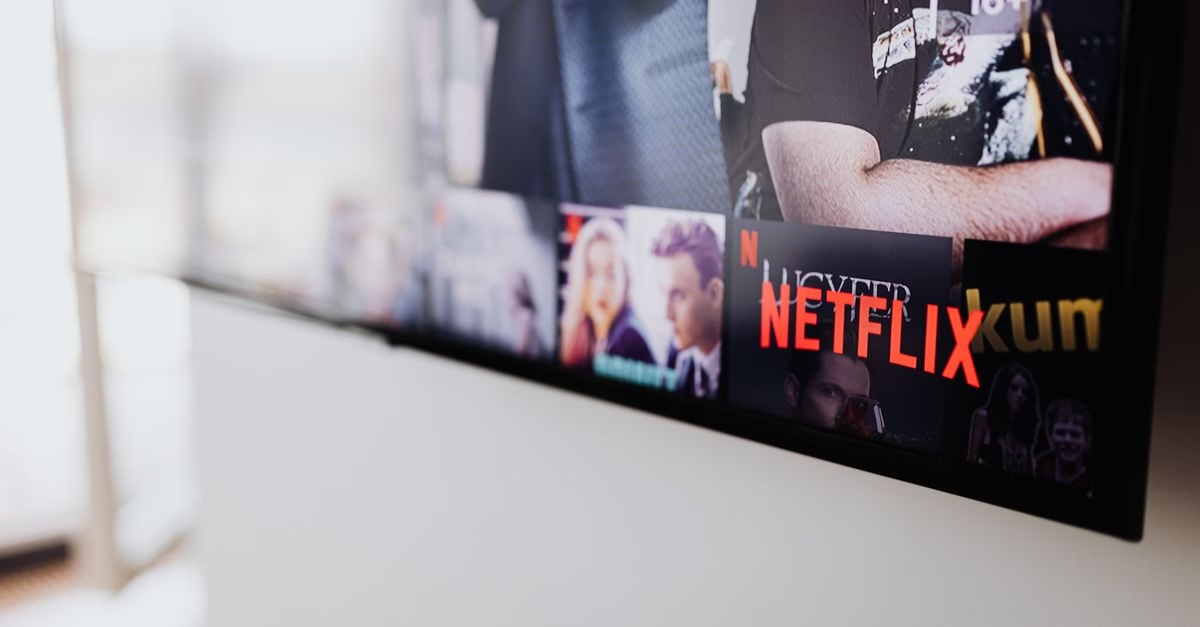
Navigating the Fragmented Future
The core takeaway from Roku’s VOD Evolution Study is clear: the current state of streaming is inefficient for Canadian consumers. With 80 hours lost to decision-making and a majority of users feeling overloaded by subscriptions, the status quo is untenable.
What remains unknown is how quickly the market will adapt. It is unclear whether providers will invest heavily in better discovery tools or if consolidation through mergers will reduce the number of choices available. Until then, viewers must navigate a complex landscape alone.
For now, the burden falls on the consumer to manage their digital entertainment budget carefully. Being selective about which services to maintain and utilizing free trials effectively may be the only way to reclaim those 80 hours. The industry needs to recognize that convenience is becoming as valuable as content itself.