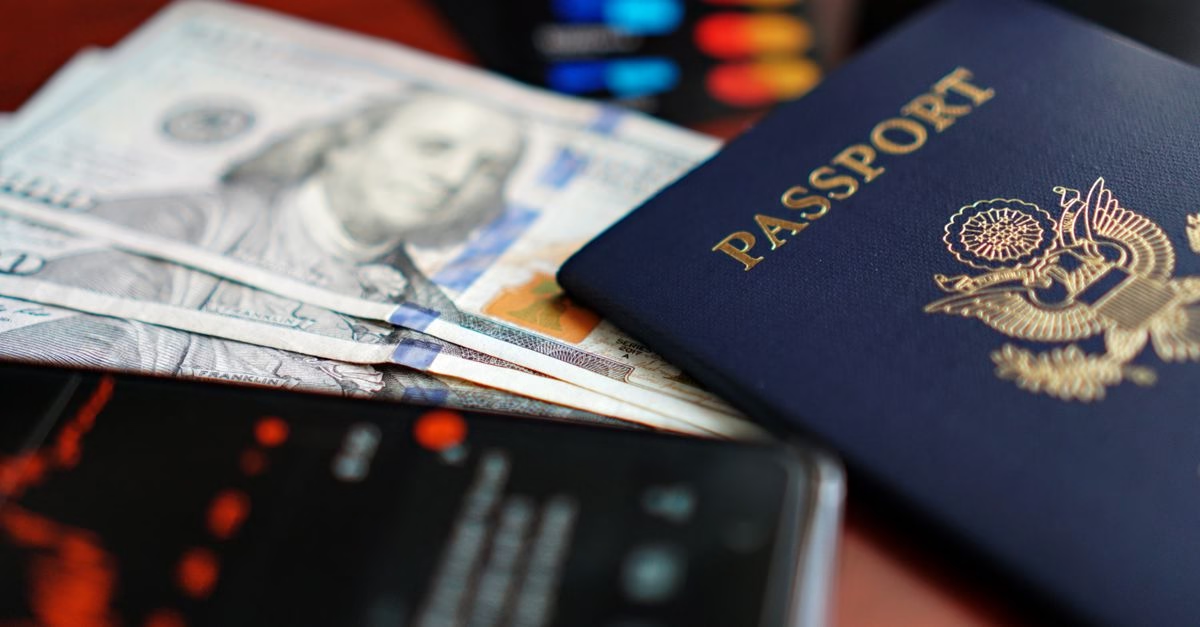
The Legal Shift at the Border
The focus here is warrantless phone searches. A recent court ruling has fundamentally altered the privacy landscape for Canadians travelling to the United States. The U.S. Court of Appeals issued a decision affirming that border officers can conduct warrantless searches of travellers’ cellphones. This authority exists without the need for probable cause or even reasonable suspicion.
The decision marks a significant expansion of border enforcement powers. Previously, many travellers operated under the assumption that some level of judicial oversight protected their digital lives. That assumption is no longer valid under this specific legal interpretation. The ruling clarifies that the border exception to the Fourth Amendment extends fully to modern digital devices.
This development is not merely theoretical. It affects every Canadian who crosses the land or air border into the U.S. Whether you are a tourist, a business traveller, or a student, your device is subject to inspection. The court’s stance removes the traditional barriers that usually protect citizens from arbitrary searches.
Mechanics of Digital Inspection
Understanding how these warrantless phone searches function requires looking at border enforcement protocols. Officers do not need a judge’s signature to request access to your device. They also do not need to articulate a specific reason for suspecting criminal activity. The mere act of crossing the border triggers this expanded authority.

In practice, an agent may ask you to unlock your phone. Refusal can lead to detention, seizure of the device, or denial of entry. The scope of the search can include photos, messages, emails, and app data. There is no clear limit defined in this summary regarding how deep the inspection can go.
The technical process often involves manual review by the officer. In some cases, devices may be copied for later analysis. This means your data could leave your possession physically. The lack of a warrant requirement streamlines this process for enforcement but complicates it for travellers seeking to protect their information.
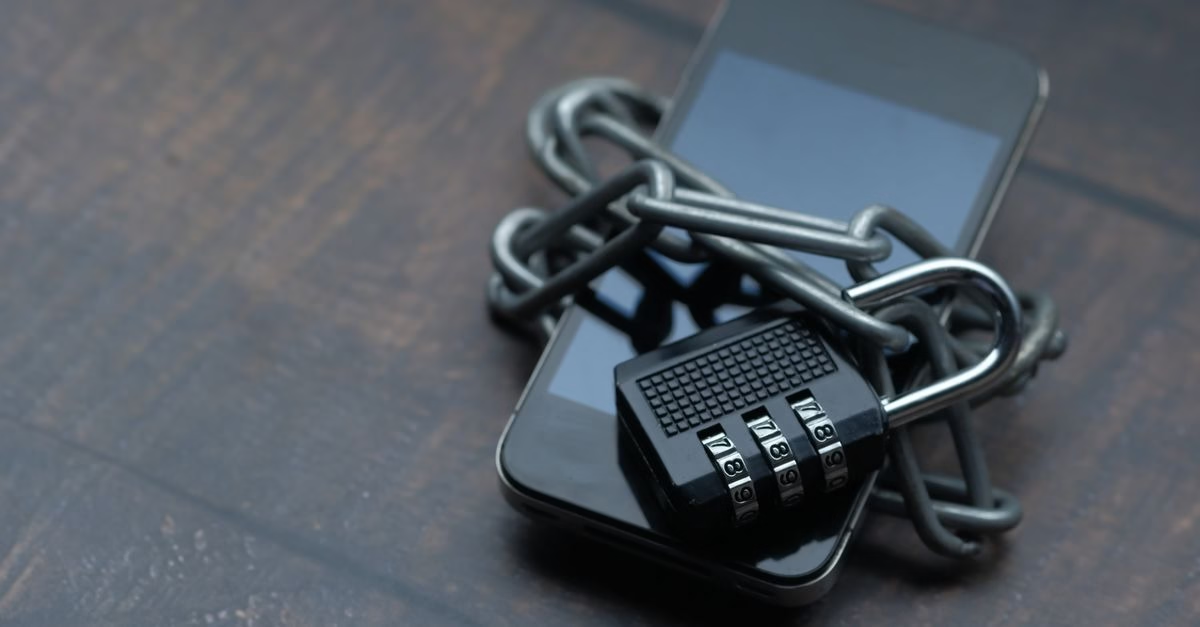
Privacy Implications for Canadians
This ruling matters because it creates a stark asymmetry in privacy rights. Canadians enjoy robust protections under domestic law, but those protections evaporate upon crossing the southern border. The decision highlights the vulnerability of personal data in an era where smartphones serve as digital extensions of our identities.
For many users, a phone contains more intimate details than a home. Financial records, health information, and private communications are all accessible. The absence of a warrant requirement means there is no neutral third party to check the government’s power. This shifts the balance heavily toward state authority.
The impact extends beyond individual privacy. Journalists, lawyers, and activists face heightened risks. Source confidentiality and client privilege could be compromised during a routine border check. The ruling does not distinguish between casual tourists and professionals handling sensitive material. Everyone faces the same exposure.
Strategies for Digital Hygiene
Travellers must adapt their habits to mitigate these risks. The most effective strategy is to travel with a clean device. Consider using a temporary phone or a laptop with minimal data stored locally. Cloud storage can help, but ensure you can access it securely without storing sensitive files on the device itself.
Before crossing the border, delete unnecessary apps and messages. Log out of social media and email accounts. Disable biometric unlocking if possible, as legal compulsion to use fingerprints or face ID varies. A strong alphanumeric passcode offers better legal protection in some jurisdictions, though refusal to provide it carries its own risks.
Business travellers should consult their IT departments. Corporate devices may have different protocols or encryption standards. Personal devices used for work should be treated with extra caution. Separating work and personal data reduces the blast radius if a search occurs. Preparation is the only defence available in this new legal environment.
Unanswered Legal Questions
While the ruling is clear on the lack of warrant requirement, several questions remain. The summary does not specify if there are any limits on the duration of device seizure. It also does not clarify the recourse available if data is mishandled or leaked during inspection. These gaps create uncertainty for travellers.
It is unclear how this ruling interacts with Canadian privacy laws. While U.S. law governs the border search, Canadians may seek remedies at home. However, enforcing those remedies against U.S. federal agents is complex and likely ineffective. The jurisdictional divide leaves travellers with limited options for accountability.
Another limitation is the scope of “reasonable” inspection. Without a warrant, the definition of reasonable becomes subjective. An officer’s discretion plays a large role. This subjectivity can lead to inconsistent application of the rule. Some travellers may face intense scrutiny while others pass through unchecked, depending on the officer’s mood or bias.
Navigating the New Reality
The affirmation of warrantless phone searches at the U.S. border is a significant development for Canadian travellers. It underscores the importance of proactive digital security. Assuming privacy at the border is no longer a safe strategy. Travellers must take concrete steps to protect their data before departure.
This ruling serves as a reminder that digital rights are not universal. They depend heavily on geography and legal context. As technology integrates deeper into daily life, these border exceptions will likely grow more contentious. Staying informed and prepared is the best approach for now.
Future legal challenges may refine these boundaries. Until then, the current standard stands. Canadians should treat their phones as potential evidence in any border interaction. Minimizing data exposure is not just prudent; it is necessary. The burden of protection now rests squarely on the individual traveller.