The Architecture of a Transatlantic Deal
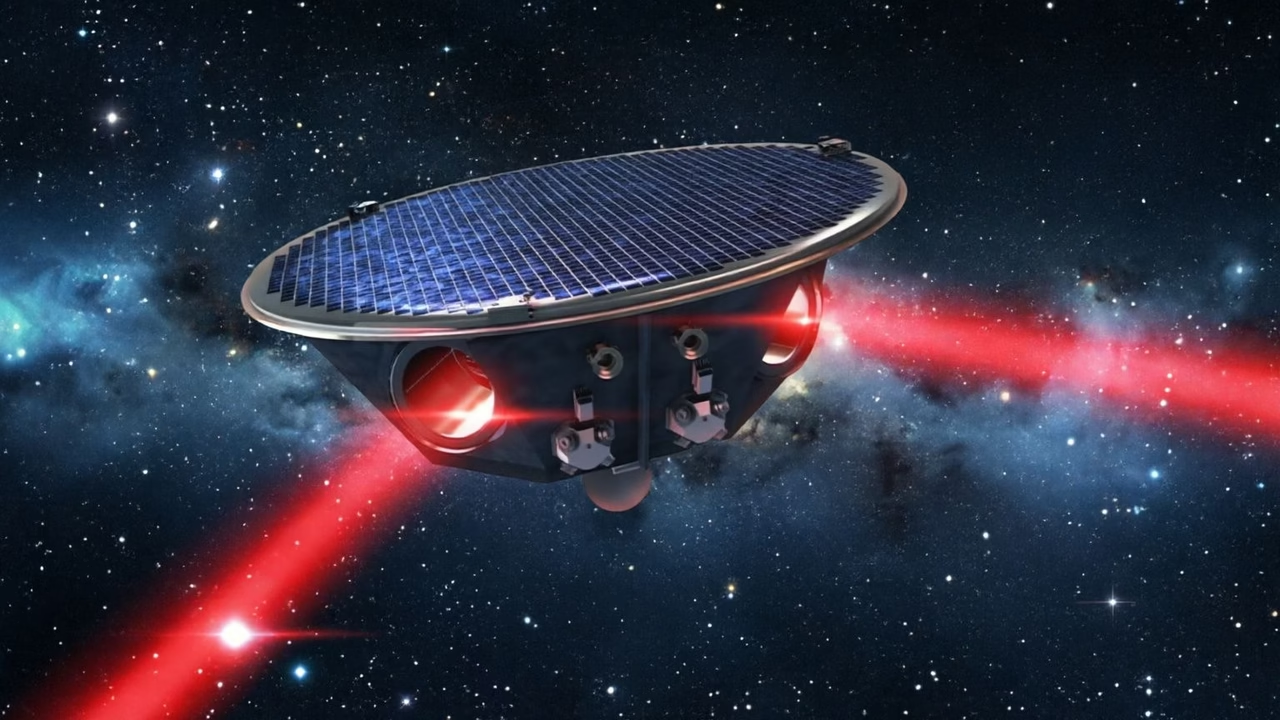
NASA is currently seeking to secure at least one joint science mission with the European Space Agency (ESA), specifically targeting the Laser Interferometer Space Antenna (LISA). This ambitious project aims to detect gravitational waves from massive black hole mergers and other cosmic events that ground-based detectors cannot observe.
Under the proposed agreement, the division of labour is distinct. NASA is responsible for supplying critical components, including the lasers, transmitters, and telescopes required for the interferometry system. The agency will also provide charge management devices to reduce electric charge buildup on the proof masses inside each spacecraft, alongside supporting ground-based data analysis. Meanwhile, Europe will handle the construction, launch, and operation of the three-spacecraft constellation.
Financial estimates suggest the total cost could reach approximately $3 billion. While ESA has already approved development with a budget of 1.75 billion euros ($2 billion), this figure excludes US contributions. NASA’s portion is expected to cost around $1 billion, though the agency has not yet established a firm budget commitment. This structure represents a significant shift toward international cost-sharing in fundamental physics research.
Why This Partnership Defines Future Science Funding
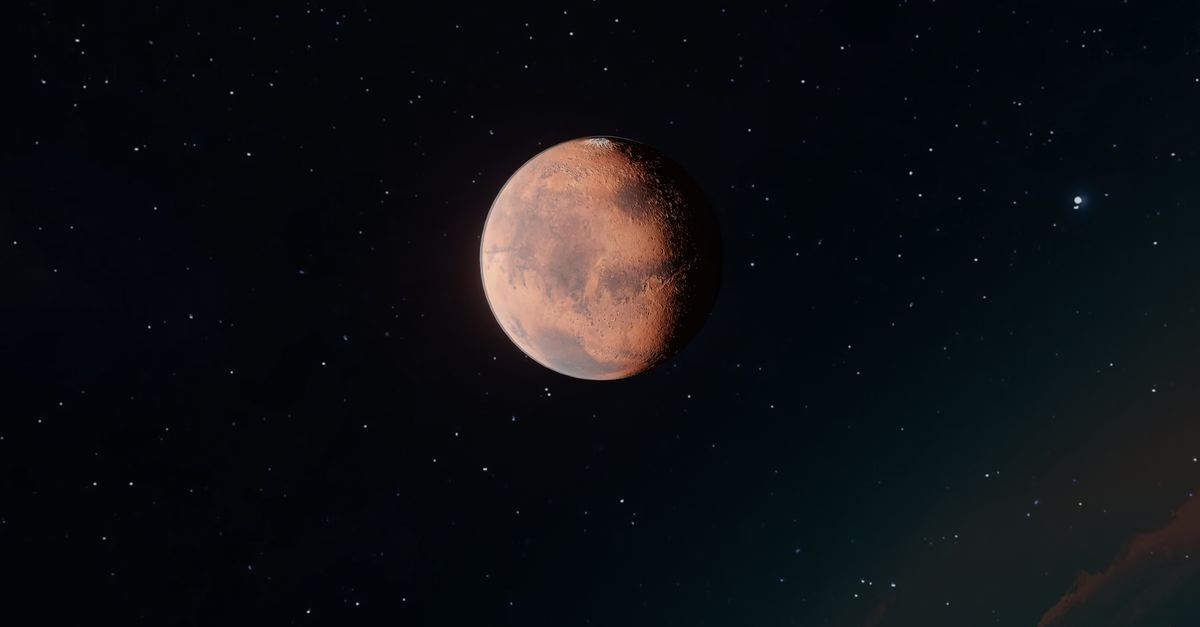
The push for this collaboration comes at a time when NASA faces intense pressure to justify its spending. The agency recently canceled the Mars Sample Return mission after its budget ballooned beyond $10 billion, threatening to cannibalize funds for other robotic science missions. With the Trump administration directing NASA to prioritize human spaceflight and a lunar base, discretionary spending on pure science is increasingly scrutinized.

For Canadian and global observers, this deal highlights a pragmatic approach to maintaining scientific leadership without bearing the full financial burden. By partnering with ESA, NASA can access cutting-edge gravitational wave data while limiting direct expenditure. However, the lack of a firm budget commitment from NASA introduces uncertainty. If domestic political pressures shift again, the US contribution could be jeopardized, potentially stalling the entire mission.
Furthermore, the success of LISA depends on precise coordination between two major space agencies. Any delay or technical disagreement could impact the timeline for detecting gravitational waves, which would have profound implications for our understanding of the universe. The ‘good deal’ narrative suggests mutual benefit, but it also masks the complex diplomatic and financial negotiations required to keep such a large-scale project alive.

Unanswered Questions on Implementation
While the intent behind the NASA-ESA partnership is clear, several critical details remain unresolved. The exact timing of the launch, the final breakdown of costs between member states, and the contingency plans if US funding falls short are all still under negotiation.
For now, the mission stands as a testament to international cooperation in science, but it also serves as a cautionary tale about the fragility of large-scale projects in volatile political climates. Readers should watch for official announcements regarding NASA’s budget approval process, as this will determine whether LISA moves from concept to reality. Until then, the promise of hearing the ‘chirps’ of merging black holes remains a tantalizing but uncertain prospect.