Honor Enters the Dual-Screen Market with Entry-Level Hardware
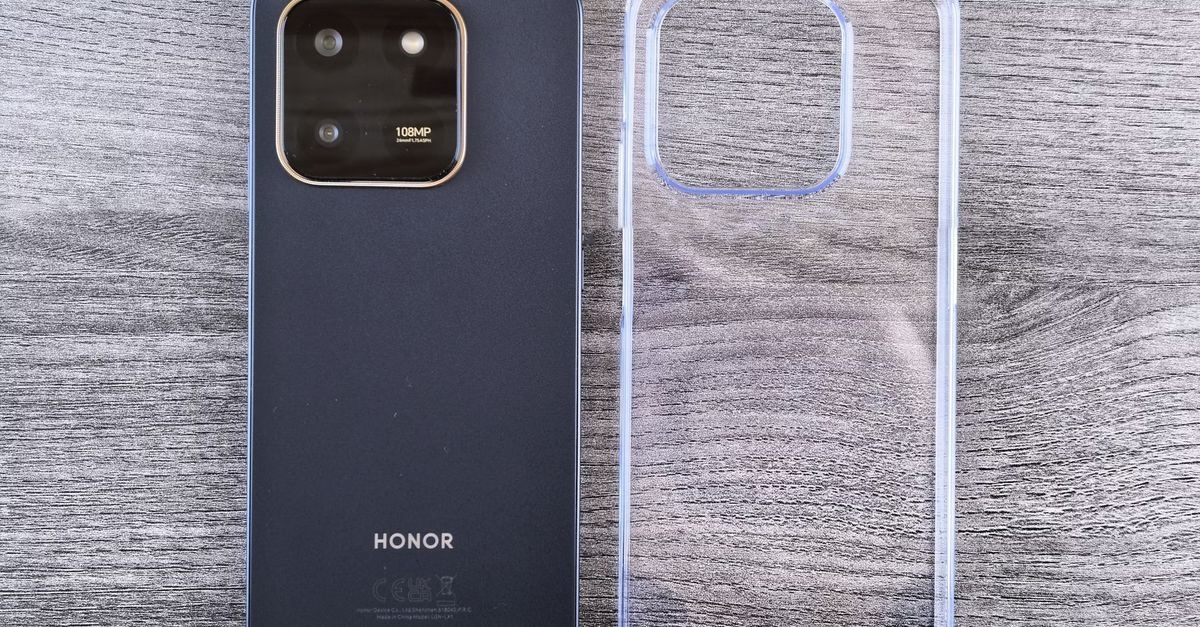
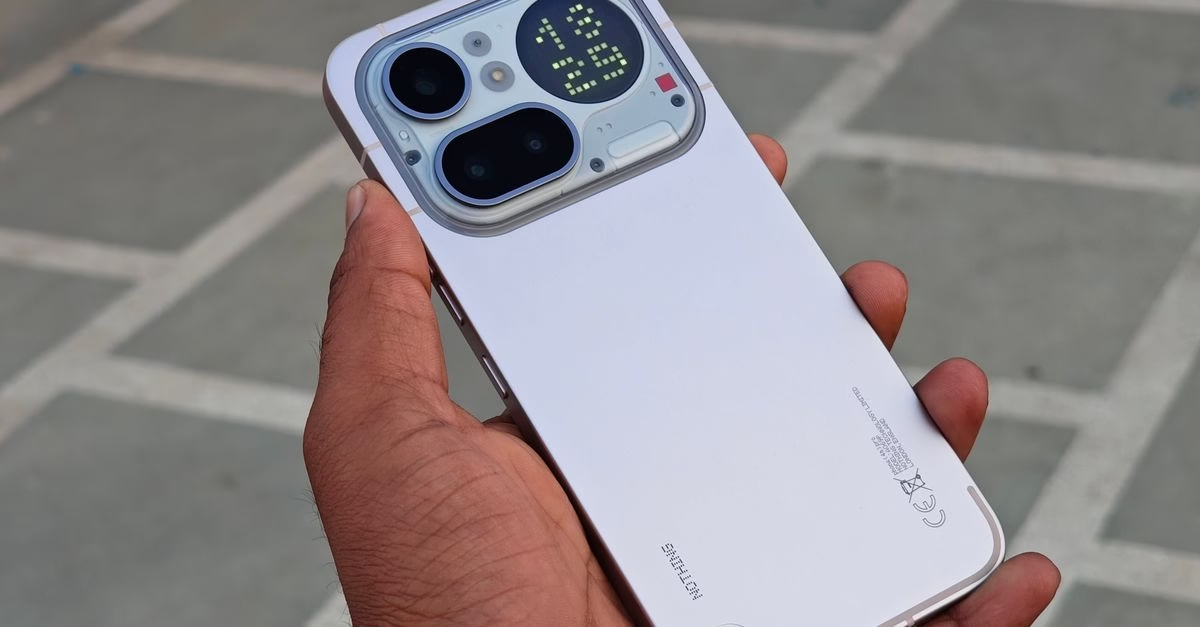
Honor has officially unveiled the X5d s, a new smartphone that places a secondary display on the back of the device. While Chinese manufacturer Xiaomi pioneered this form factor with its 17 Pro and 17 Pro Max last year, Honor is taking a distinctly different path by integrating the feature into a budget-oriented device rather than a premium flagship. The announcement confirms that the dual-screen concept is no longer exclusive to high-end hardware.
The Honor X5d s is built around a 6.78-inch LCD panel on the front, offering a 720×1576 resolution with a 90Hz refresh rate and typical brightness of 600 nits. On the rear, users will find a smaller 2.01-inch display with a 240×296 resolution. This secondary screen is primarily marketed for taking selfies using the main camera, but it also supports call alerts and media playback controls. Under the hood, the phone packs a 50MP f/1.8 main camera, a 5MP f/2.0 front-facing camera, and a substantial 6,000 mAh battery that supports 15W wired charging. Security is handled via a side-mounted fingerprint scanner embedded in the power button.
Democratizing a Premium Design Feature
The introduction of the Honor X5d s highlights a strategic divergence in how manufacturers are approaching innovative hardware features. Xiaomi utilized the rear screen as a unique selling point to justify premium pricing and attract tech enthusiasts willing to pay top dollar. In contrast, Honor appears to be testing whether this novelty can drive volume sales in the competitive low-end market.
For consumers, this shift suggests that experimental designs may become more accessible sooner than expected. However, the practical utility of a small rear screen on a budget device remains questionable. While the ability to use the higher-quality main camera for selfies is a tangible benefit, the cost-cutting measures elsewhere—such as the outdated 5-megapixel front camera and plastic build materials noted in early reviews—indicate that the rear screen might be a gimmick designed to distract from basic specifications. It raises the question of whether adding a second display adds genuine value or simply serves as a marketing hook for buyers who prioritize novelty over core performance metrics.

Market Implications and Unanswered Questions
Honor’s decision to bring the rear screen to the X5d s signals that the feature is moving out of the niche flagship category. Whether this will inspire other mid-range manufacturers to follow suit remains to be seen, but it certainly pressures competitors to innovate beyond traditional spec sheets. For now, the primary unknown is the final retail price and regional availability outside of China. Until those details are confirmed, the X5d s stands as an interesting proof-of-concept for affordable dual-screen technology, though potential buyers should weigh the novelty against the device’s otherwise modest hardware capabilities.