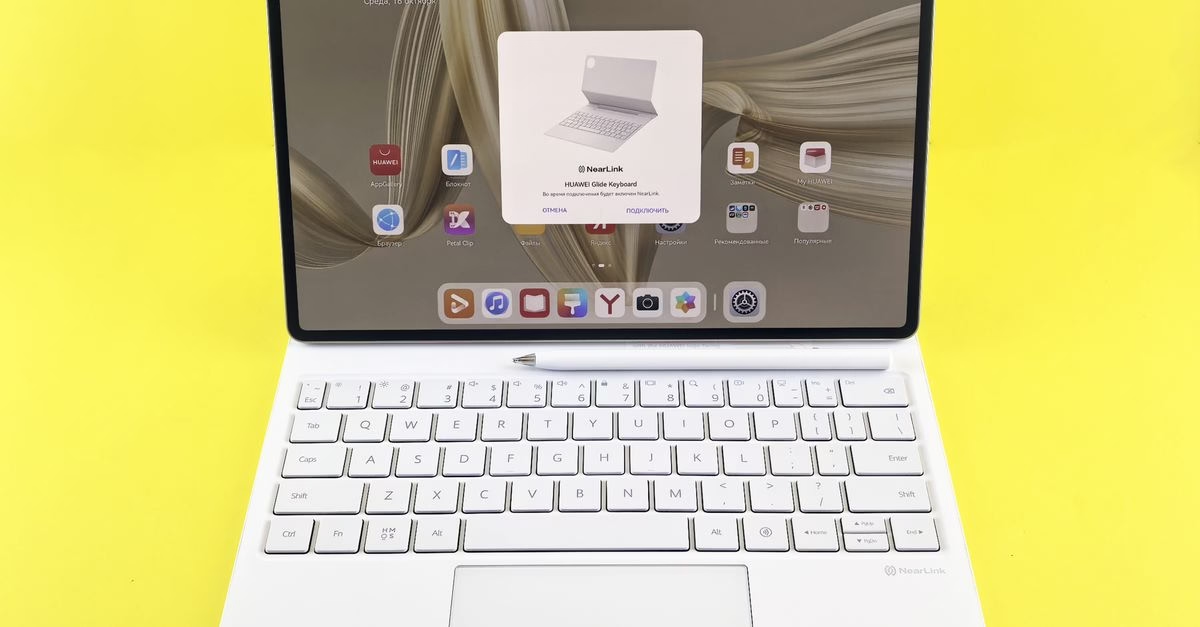
Inside the MatePad Air Z Launch Details
Huawei has officially unveiled the MatePad Air Z in China today, expanding its tablet portfolio with two distinct configurations: a Standard Edition and an Enjoy Edition. The announcement marks a strategic move to offer high-refresh-rate displays in a more accessible price bracket compared to the flagship Pro series.
At the core of both models is a 12-inch IPS LCD panel boasting a resolution of 2800 × 1840 pixels and a 3:2 aspect ratio. A key differentiator in this generation is the inclusion of a 144Hz refresh rate across all units, a feature that research suggests delivers tangible fluidity during rapid document scrolling and reduces ghosting. While the screen technology is largely consistent, the Standard Edition offers a configurable PaperMatte display option for users prioritizing eye comfort and writing experiences.
Under the hood, both variants are powered by Huawei’s Kirin T93SD chipset. This shared silicon choice indicates a unified performance baseline for everyday tasks, media consumption, and light productivity. However, Huawei has introduced subtle divergences between the two lines, specifically regarding charging speeds and specific display treatments. These minor hardware tweaks allow the company to segment the product line without compromising the core user experience provided by the high-fidelity screens and capable processors.
The Strategic Shift Toward Mid-Range Fluidity
The introduction of the MatePad Air Z highlights Huawei’s continued focus on refining the mid-range tablet segment within its home market. By equipping both the Standard and Enjoy editions with a 144Hz display and the Kirin T93SD chip, Huawei is effectively raising the baseline for smoothness and responsiveness in devices that do not carry the premium price tag of the MatePad Pro series.

For consumers in China, this launch provides a viable alternative to other mid-range options by emphasizing display quality and processing power over niche features. The availability of a PaperMatte display variant further caters to students and professionals who rely on tablets for note-taking and reading, addressing a common pain point regarding screen glare and eye strain.
However, the significance of this launch is heavily circumscribed by geography. As these devices are currently exclusive to the Chinese market, they do not directly impact Canadian or global consumers. For readers outside of China, the MatePad Air Z serves as an indicator of Huawei’s internal supply chain capabilities and design direction, but it does not present an immediate purchasing opportunity. The lack of global distribution underscores the ongoing challenges Huawei faces in accessing international markets due to geopolitical constraints and service limitations.
What Remains Unknown About Global Availability
While the technical specifications of the MatePad Air Z are now public, significant questions remain regarding its broader availability. There is currently no official confirmation from Huawei regarding an international rollout for either the Standard or Enjoy editions. Given the historical patterns of Huawei’s tablet releases, it is unlikely that these specific models will be widely distributed in North America or Europe in the near future.
Canadian consumers interested in Huawei tablets may need to look toward existing global models like the MatePad Pro or older Air iterations if they wish to purchase through unofficial channels, though this comes with risks regarding warranty support and software updates. Until Huawei announces a global strategy for the Air Z line, this device remains a domestic offering for Chinese users.
The launch reinforces Huawei’s commitment to maintaining a competitive presence in the tablet sector despite external pressures. For now, the MatePad Air Z stands as a testament to Huawei’s ability to innovate within its home market, delivering high-spec hardware to local buyers while leaving international audiences to watch from the sidelines.