HP Unveils the Snapdragon-Powered HP Googlebook 14
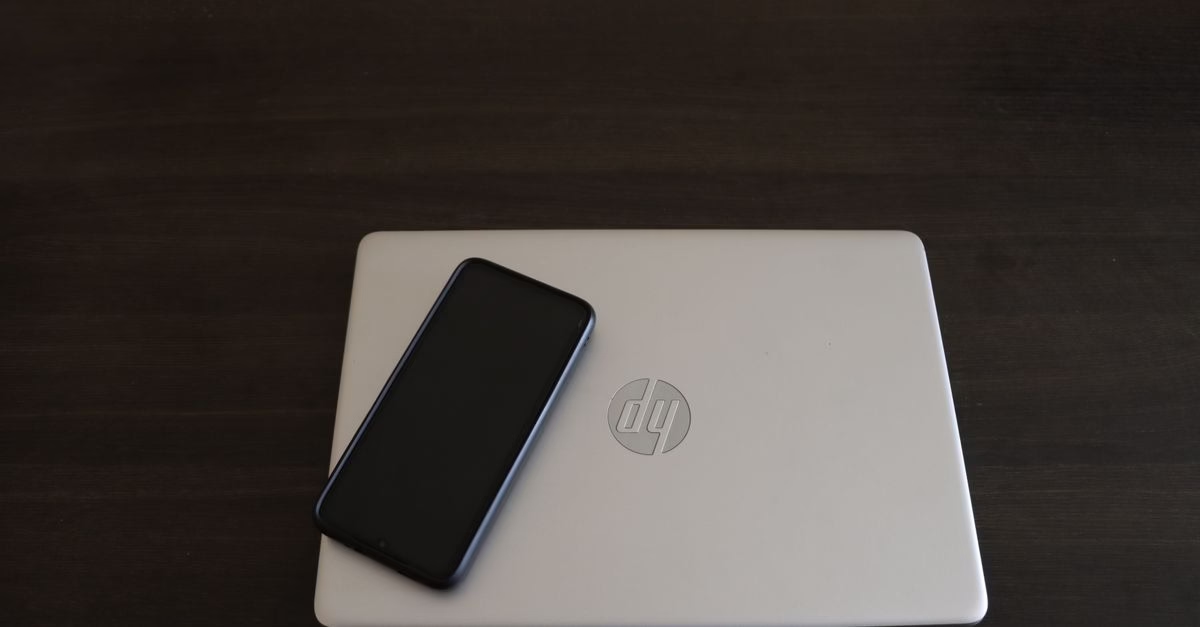
HP Inc. has officially expanded its hardware lineup with the launch of the HP Googlebook 14, a new premium laptop built around Qualcomm’s ARM-based Snapdragon X Elite processor. Designed to bridge the functional gap between mobile devices and personal computers, this hardware platform offers native synergy with modern Android smartphones alongside high-efficiency silicon computational throughput.
The system combines HP’s upper-tier chassis design with an architecture tuned specifically for Google’s emerging ecosystem. Rather than acting as a standard clamshell PC, the HP Googlebook 14 anchors a multi-device setup that targets productivity workers and creators who constantly pivot between mobile handsets and traditional desktop applications throughout their workday.
Central to the release is the inclusion of built-in Google Gemini intelligence, providing accelerated artificial intelligence routines directly within the system software. By leveraging both on-device neural processing hardware and connected cloud infrastructure, HP aims to streamline routine organizational, creative, and technical workflows on a single dedicated machine.
Snapdragon X Elite Architecture and Deep Android Integration
At the mechanical and logical core of the HP Googlebook 14 lies the Snapdragon X Elite platform. Qualcomm’s custom silicon delivers high clock frequencies and advanced instruction processing designed to challenge x86 supremacy, all while maintaining strict thermal limits and low power draw. This architecture allows the laptop to maintain thin z-height dimensions without sacrificing long-term sustainment metrics under compute-heavy workloads.

The hardware architecture interacts closely with Google’s connected software stack, establishing direct pipes to nearby Android mobile devices. Through native services like Quick Access and Cast my Apps, the HP Googlebook 14 interfaces with a user’s smartphone without forcing manual file uploads or tedious local wireless pairings. The laptop file system reads mobile storage directly, presenting files in a unified file manager interface.
Furthermore, application virtualization tools permit the laptop to run supported mobile applications locally on the display. Users can operate phone apps directly via the laptop’s trackpad and keyboard without installing secondary application binaries onto the computer’s local drive storage, preserving system resources and keeping application states completely synchronized.
Breaking Down the Wall Between Handsets and Laptops
For years, the division between mobile operating systems and personal computer platforms created unnecessary operational friction. Transferring working files, mirror-hosting communication apps, or resuming mobile tasks on a laptop frequently required third-party software suites, proprietary web portals, or clunky cloud sync workarounds. The HP Googlebook 14 tackles this pain point head-on by standardizing mobile-to-laptop fluidity right out of the box.
By leveraging the Snapdragon X Elite, HP gives users a heavy-hitting processor capable of genuine desktop-grade multitasking, while maintaining the background sync mechanisms natively optimized for ARM architecture. This configuration delivers immediate advantages to Canadian professionals who manage workflows spread across personal mobile devices and corporate productivity tools.
Additionally, embedding Google Gemini deeply into the system operating layer represents a shift away from standalone web-based assistant windows. Treating AI interaction as a platform-level utility allows contextual data sharing between mobile apps, local documents, and web services, giving users a single intelligence interface to organize daily schedules, summarize data, and draft content.
Real-World Efficiency for the Mobile Canadian Worker
The practical impact of the HP Googlebook 14 comes down to practical time savings during typical multitasking routines. A professional snapping photos or receiving documents on an Android smartphone can immediately pull those assets into a document editor on the laptop through the unified file browser. There is no need to email attachments to oneself or wait for consumer cloud backup services to reconcile local directories.
The Cast my Apps feature alters how messaging and mobile utility apps are managed at a desk. Instead of constantly reaching for a phone or relying on limited web-app clones, users can open supported Android applications in distinct desktop windows. This unified interface keeps attention focused on a single monitor, reducing context switching and keeping notification streams organized in one workspace.
Battery endurance also benefits from the ARM-based Snapdragon X Elite platform. The chip’s power-efficient core design allows users to work through extended travel schedules or long meetings away from wall outlets, making the machine a practical choice for field workers, students, and frequent business travellers.
Platform Dependency and Key Unanswered Questions
Despite the hardware capabilities of the HP Googlebook 14, certain operational limitations exist. The seamless inter-device connectivity relies entirely on supported Android smartphones running modern operating system builds. Users locked into non-Android mobile ecosystems will find the laptop’s defining synchronization utilities, like Quick Access and app casting, largely non-functional or severely restricted.
Furthermore, while the Snapdragon X Elite provides strong raw performance figures, app compatibility under ARM architectures still requires evaluation for niche software pipelines. Legacy x86 software or proprietary enterprise utilities may require emulation layers, which can reduce processing efficiency or cause unexpected software conflicts compared to traditional x86 mobile chips.
HP has also left several key details undisclosed in this initial announcement. Official regional pricing structures for the Canadian market, precise configuration tiers regarding RAM and solid-state drive capacity, and exact retail availability dates remain unconfirmed. Prospective buyers will need to wait for final retail specifications to evaluate the system’s exact price-to-performance ratio.
A Focused Step Forward for Connected Ecosystems
The HP Googlebook 14 marks a clear evolutionary step for connected laptop platforms, merging Qualcomm’s high-performance Snapdragon X Elite silicon with Google’s expanding Android ecosystem features. By building phone-to-laptop integration directly into the user experience, HP presents a sleek, highly functional option for users looking to streamline their daily digital tools.
As hardware manufacturers continue to refine how mobile devices and personal computers interact, systems that reduce user friction will stand out in a crowded market. Buyers invested in the Android ecosystem will find plenty to like here, provided final retail pricing and configuration options align with expectations when the hardware officially hits store shelves.