
Bitcoin has experienced multiple boom-and-bust cycles throughout its history, making volatility one of its defining characteristics. While many investors focus on buying during bull markets, experienced traders understand that bearish conditions can present just as many opportunities—provided they adapt their strategies.
Learning how to trade Bitcoin in a bear market isn’t about predicting the exact bottom. It’s about recognizing market structure, managing risk effectively, and taking advantage of price movements regardless of direction.
Today’s cryptocurrency market is heavily influenced by macroeconomic events such as interest rate decisions, inflation reports, institutional investment flows, and regulatory developments. These factors can cause rapid price swings that create both opportunity and risk.
For traders looking to reduce their personal financial exposure, proprietary trading firms have become an increasingly popular option. By providing access to funded accounts, they allow skilled traders to participate in the market without committing substantial personal capital.

However, choosing the right proprietary trading firm requires careful research into evaluation rules, fees, drawdown limits, and payout terms. Resources such as PipBack can help traders compare futures prop firms, review verified information, and explore available discounts before selecting an option that aligns with their trading goals.
What Defines a Bitcoin Bear Market?
A bear market is generally defined as a sustained decline of 20% or more from recent highs. In cryptocurrency, however, corrections of 40–80% have occurred several times throughout Bitcoin’s history, making risk management even more important.
Typical characteristics include:
- Lower highs and lower lows
- Increased volatility
- Weak buying momentum
- Persistent negative market sentiment
- Higher selling volume than buying volume
Rather than viewing these conditions as obstacles, professional traders often see them as environments where disciplined strategies can outperform emotional decision-making.
Market sentiment also deserves close attention. Fear often remains elevated even when prices begin recovering, meaning many traders hesitate to re-enter the market. Understanding this disconnect between sentiment and price action can provide valuable context when analyzing potential setups.
Before deciding whether to buy the dip or sit it out entirely, it helps to weigh both sides of the argument. There’s a solid case for and against getting into crypto during a downturn like this one, and reading through it before you commit capital saves a lot of regret later.
Macroeconomic data should also remain part of every trader’s routine. Interest rate announcements, inflation figures, employment reports, and institutional ETF flows increasingly influence Bitcoin’s short-term direction, often more than cryptocurrency-specific news.
Why Trade Bitcoin Through a Prop Firm?
One of the biggest challenges facing retail traders isn’t identifying opportunities—it’s protecting their capital during periods of extreme volatility.
Trading through a proprietary trading firm addresses this challenge by allowing qualified traders to access funded accounts after successfully completing an evaluation. Instead of risking a large personal trading account, participants trade the firm’s capital while sharing a portion of any profits generated.
This approach provides several advantages:
| Personal Trading | Trading Through a Prop Firm |
|---|---|
| Limited by available savings | Access to larger funded accounts |
| Personal capital at risk | Reduced personal financial exposure |
| Emotional decision-making | Structured risk parameters |
| Difficult to scale | Opportunity to increase funded capital |
That’s the real appeal here. Trading Bitcoin with someone else’s money is almost risk-free from a personal financial standpoint, since the worst outcome is usually just losing your evaluation fee rather than a chunk of your portfolio. Firms like Vetted Prop Firms have made it easier to find funding programs that specifically support BTC/USD trading, which matters a lot when so many providers still restrict crypto pairs or apply extra conditions on them.
Funded accounts also encourage better discipline. Daily loss limits, maximum drawdowns, and consistency requirements may initially seem restrictive, but these rules help traders avoid the emotional decisions that often lead to significant losses during volatile markets.
7 Proven Strategies for Trading Bitcoin in a Bear Market
1. Follow the Primary Trend
One of the most common mistakes traders make is attempting to predict market reversals too early. While catching the exact bottom may seem attractive, confirmation is almost always more reliable than speculation.
During bearish conditions, consider following the prevailing trend using tools such as:
- 50-day and 200-day moving averages
- Trendlines
- Lower-high rejection patterns
- Market structure analysis
Waiting for confirmation before entering positions can significantly improve trade quality.
2. Take Advantage of Short-Selling Opportunities
Unlike traditional investing, active trading allows participants to profit from falling prices.
Many crypto prop firms support BTC/USD short positions, enabling traders to benefit when bearish momentum continues. Before selecting a funding provider, always verify which cryptocurrency instruments and trading conditions are available.
3. Trade Established Ranges
Not every bear market trends continuously lower.
Bitcoin frequently enters periods of consolidation where prices oscillate between well-defined support and resistance levels. During these phases, disciplined range trading strategies can offer attractive risk-to-reward opportunities until a decisive breakout occurs.
4. Wait for Breakout Confirmation
Bear markets are notorious for producing false breakouts. A single candle pushing above resistance or below support doesn’t always signal the beginning of a sustained move. Jumping into trades too early often results in getting caught in a reversal.
Instead of reacting to the first move, wait for confirmation. Many experienced traders look for:
- A strong candle close beyond a key support or resistance level.
- Increased trading volume confirming market participation.
- A successful retest of the breakout level before entering a position.
Patience can often be the difference between a high-probability trade and an unnecessary loss.
5. Manage Position Size Carefully
Position sizing becomes even more important when Bitcoin’s volatility increases. A trade that appears conservative during a calm market may become overly aggressive when daily price swings exceed several percentage points.
Before opening any position, determine:
- Your maximum acceptable loss per trade.
- The distance between your entry price and stop-loss.
- The percentage of your account you’re willing to risk.
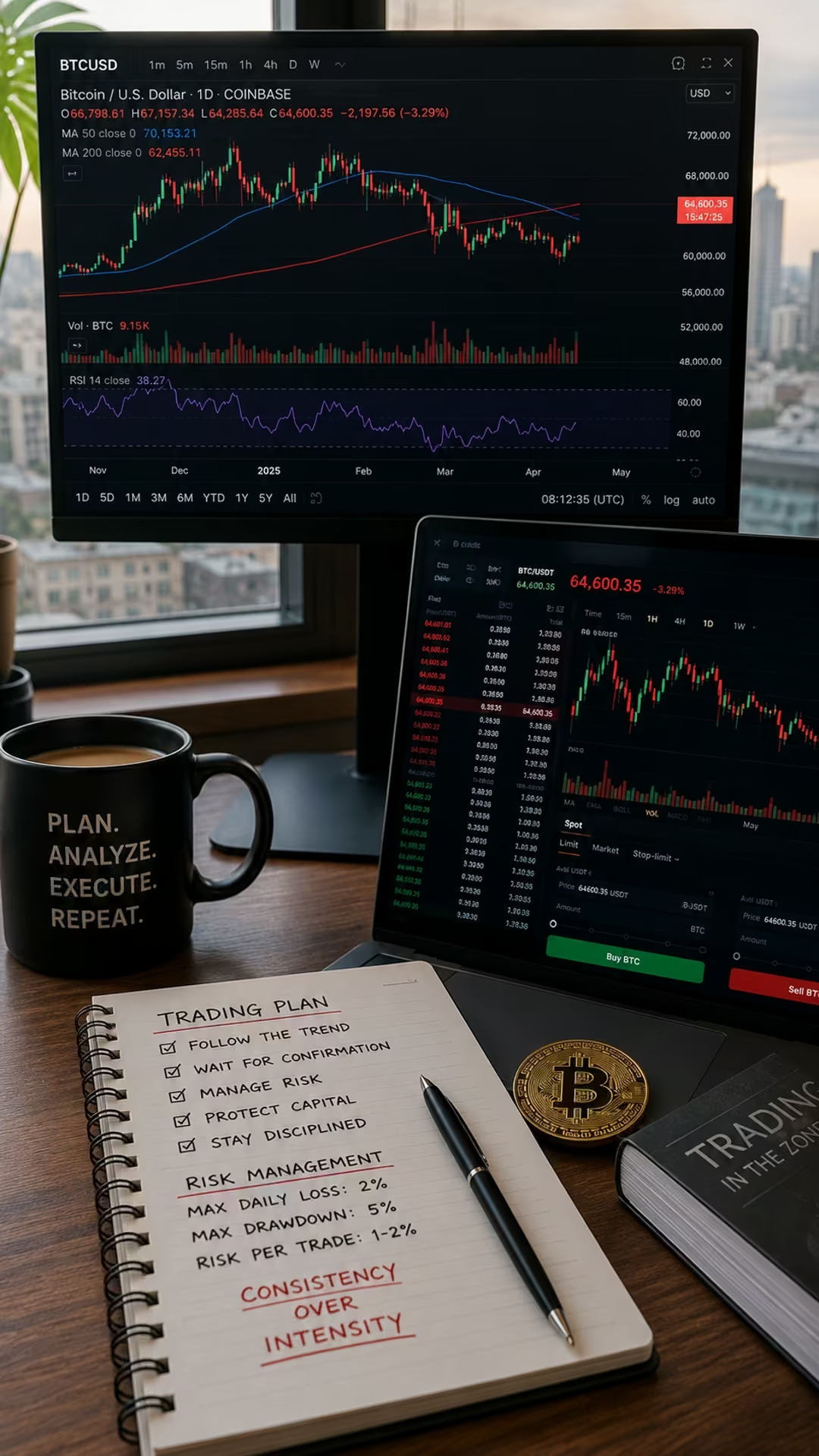
Many professional traders risk between 1% and 2% of their account balance on any single trade. While every strategy is different, maintaining consistent position sizing helps preserve capital through inevitable losing streaks.
6. Use Technical Indicators as Confirmation
Technical indicators should support your trading decisions rather than replace market analysis. Relying solely on one indicator rarely produces consistent results, especially during highly volatile markets.
Some of the most widely used indicators for Bitcoin include:
| Indicator | Purpose |
|---|---|
| Moving Averages | Identify the overall trend direction |
| Relative Strength Index (RSI) | Measure momentum and identify overbought or oversold conditions |
| MACD | Confirm trend changes and momentum shifts |
| Volume | Validate breakouts and reversals |
| Average True Range (ATR) | Measure market volatility for stop-loss placement |
Using multiple indicators together can help filter out weaker trade setups while increasing confidence in stronger opportunities.
7. Keep Emotions Out of Every Trade
Markets are driven by human psychology, and successful traders understand that controlling emotions is just as important as technical analysis.
Fear often causes traders to exit winning positions too early, while greed encourages excessive risk-taking after a string of profitable trades. Developing a written trading plan can help reduce emotional decision-making.
A well-defined trading plan should include:
- Entry criteria.
- Exit strategy.
- Stop-loss placement.
- Profit targets.
- Maximum daily risk.
- Conditions that invalidate the trade.
Following predefined rules helps create consistency regardless of market conditions.
Related Posts



Risk Management Should Always Come First
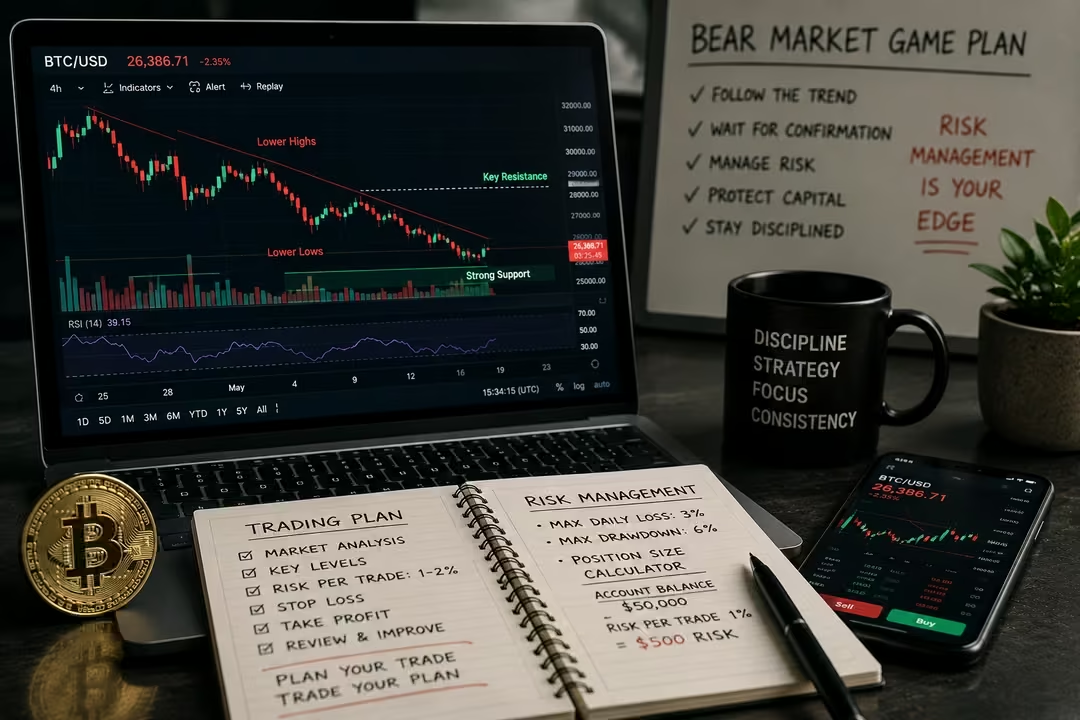
No strategy can guarantee profitable trades. The goal of successful trading isn’t to win every position but to manage losses while allowing profitable trades enough room to develop.
When trading through a prop firm, risk management becomes even more important because every funded account operates under specific rules.
Typical requirements include:
| Rule | Purpose |
|---|---|
| Daily Loss Limit | Prevents excessive losses in a single trading session |
| Maximum Drawdown | Protects the firm’s capital over the life of the account |
| Profit Target | Required during the evaluation phase |
| Consistency Rule | Encourages sustainable performance rather than relying on one large winning trade |
Rather than viewing these rules as obstacles, many experienced traders see them as safeguards that reinforce disciplined trading habits.
Common Mistakes Traders Make During Bear Markets
Even experienced traders occasionally fall into habits that undermine long-term performance. Recognizing these mistakes early can improve consistency.
Trying to Catch Every Bottom
Buying simply because Bitcoin has fallen significantly often results in entering trades before the market has established a genuine reversal.
Ignoring the Bigger Trend
Short-term rallies frequently occur within larger downtrends. Trading against the prevailing trend without confirmation increases unnecessary risk.
Overtrading
High volatility creates the illusion that every price movement presents an opportunity. In reality, quality setups remain relatively rare.
Trading less frequently—but with greater discipline—often produces better long-term results.
Increasing Position Size After Losses
Attempting to recover losses quickly by increasing trade size can accelerate drawdowns and lead to poor decision-making.
Neglecting a Trading Journal
Recording each trade, including the reasoning behind it and the eventual outcome, provides valuable insights that help refine future strategies.
Frequently Asked Questions
Can you make money trading Bitcoin during a bear market?
Yes. Bear markets often present profitable opportunities through trend-following, short-selling, range trading, and breakout strategies. Success depends on discipline, risk management, and adapting to changing market conditions.
What is a crypto prop firm?
A crypto prop firm provides traders with funded accounts after they complete an evaluation. Traders use the firm’s capital while sharing a percentage of the profits they generate.
Is trading with a prop firm suitable for beginners?
Many beginners use prop firms to develop discipline and structured risk management. However, new traders should first practise on demo accounts and fully understand the firm’s evaluation rules before applying.
Which technical indicators work best for Bitcoin?
There is no single best indicator. Many traders combine moving averages, RSI, MACD, support and resistance levels, and trading volume to improve decision-making.
How much should I risk on each trade?
Many experienced traders risk between 1% and 2% of their account balance on a single trade. The appropriate amount depends on your trading strategy, risk tolerance, and any rules imposed by your prop firm.
Can bear markets be better than bull markets for traders?
For active traders, bear markets can provide excellent opportunities due to increased volatility and stronger directional trends. Long-term investors, however, may prefer accumulating assets gradually while prices remain depressed.
Final Thoughts
Bear markets can be uncomfortable for investors, but they often provide some of the most rewarding opportunities for disciplined traders. Rather than attempting to predict the exact market bottom, focus on following the prevailing trend, managing risk carefully, and allowing market structure to guide your decisions.
Trading through a reputable crypto prop firm can further reduce the financial pressure associated with volatile markets by providing access to funded capital while encouraging disciplined risk management. Combined with a well-tested trading plan, technical analysis, and emotional control, this approach can help traders navigate uncertain market conditions with greater confidence.
Successful Bitcoin trading isn’t about being right on every trade—it’s about protecting your capital, remaining consistent, and continually refining your strategy as market conditions evolve.