What the FAA Just Announced
This story examines AI air traffic.
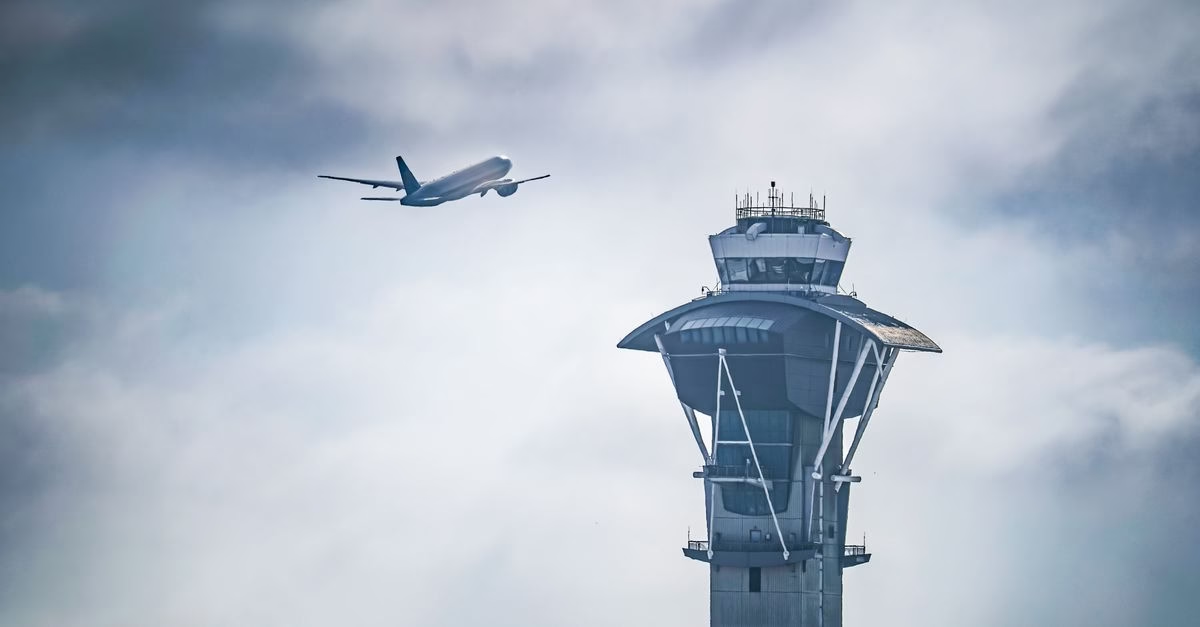
The Federal Aviation Administration disclosed that it will begin a pilot of a new artificial‑intelligence platform, dubbed the SMART system, in the nation’s most sensitive airspace – the corridor surrounding Washington, D.C. The $875 million investment will fund a software suite that advises air‑traffic controllers on how to sequence and route flights in real time. The rollout is scheduled for the second half of 2026, with a full‑nation deployment envisioned over the next several years.
According to the FAA’s own briefing, the system will ingest live flight‑plan data, weather radar, and runway‑capacity metrics, then generate routing recommendations that aim to smooth peaks in traffic and reduce the likelihood of conflicts. The pilot will be limited to the DC‑area en‑route sector, a region historically plagued by bottlenecks due to high commercial volume, military traffic, and restrictive flight‑path corridors.
How the AI Tool Operates

At its core, the SMART system is a collection of machine‑learning models trained on decades of historical flight data. The models predict traffic flow patterns minutes ahead of time, flagging potential overloads before they materialise. When a surge is detected, the AI suggests alternative routings, altitude changes, or spacing adjustments that controllers can approve or reject.
Key data streams feeding the engine include:
- Real‑time flight positions from ADS‑B transponders.
- Weather inputs such as wind shear, thunderstorms, and low‑visibility forecasts.
- Runway availability and airport‑capacity constraints.
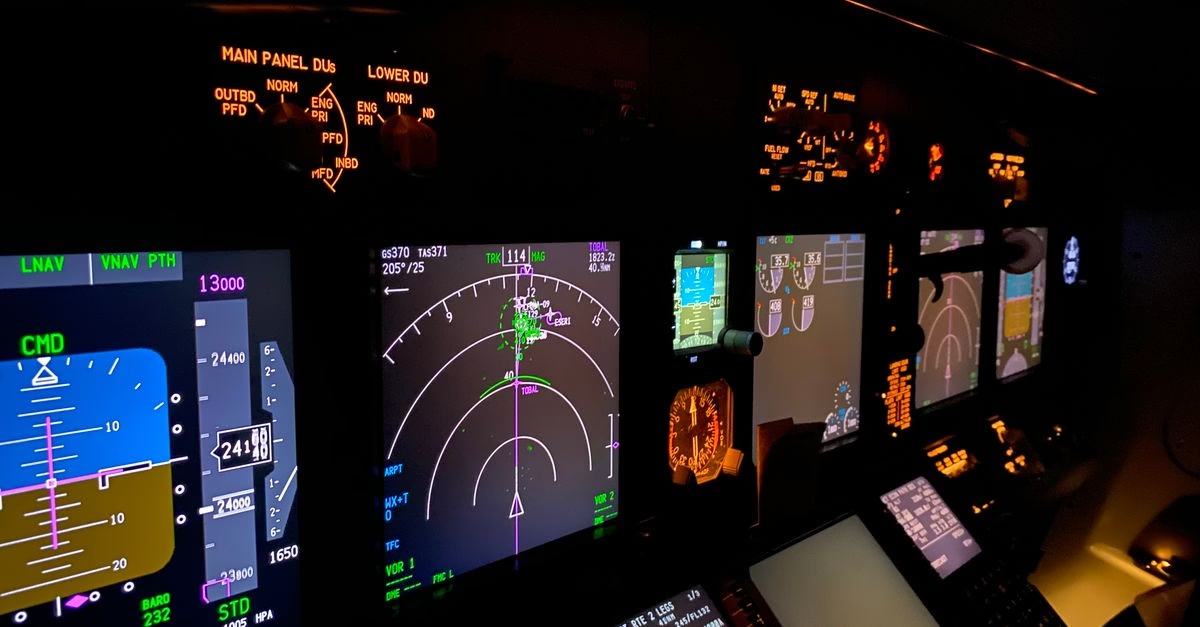
All inputs are processed in a cloud‑based environment hosted by the FAA’s own data centre, ensuring low latency. The AI does not replace human decision‑making; instead, it surfaces a ranked list of options on the controller’s display, allowing the controller to retain final authority.
Why This Matters to Pilots, Airlines, and Passengers
Congestion over the capital costs airlines millions in fuel burn, crew overtime, and passenger inconvenience. A 2023 FAA report estimated that delays in the DC corridor added roughly 1.2 million extra flight‑hours annually. By smoothing traffic flows, the AI tool could shave minutes off average flight times, translating into lower emissions and better on‑time performance.
From a safety perspective, the system’s predictive capability offers an extra layer of conflict detection. While controllers already rely on radar and procedural safeguards, an AI‑driven early‑warning could highlight subtle trajectory intersections that human eyes might miss during high‑stress periods.
Finally, the pilot serves as a testbed for a broader modernization agenda. If the AI proves reliable, the FAA could extend it to other high‑density hubs such as New York, Chicago, and Los Angeles, potentially reshaping how the nation’s air‑traffic network handles growth.
Practical Implications for the Industry
Airlines should anticipate modest schedule adjustments as the AI’s recommendations are integrated. Controllers will receive training on interpreting the AI’s suggestions, but the FAA has stressed that the tool will not dictate actions. In practice, this means airlines may see fewer ground‑hold delays during peak periods, but they should also prepare for new routing patterns that could affect fuel planning.
For airports, the AI’s runway‑capacity modelling could enable more efficient use of existing infrastructure, delaying the need for costly expansions. However, the system’s reliance on high‑quality data means that any gaps in ADS‑B coverage or weather reporting could blunt its effectiveness.
Regulators and unions are watching closely. The National Air Traffic Controllers Association (NATCA) has called for transparent performance metrics and a clear escalation path if the AI’s advice conflicts with established safety protocols. The FAA has pledged quarterly public reports on the pilot’s impact on delay minutes, conflict alerts, and controller workload.
Known Limitations and Open Questions
Despite the hype, the AI tool is not a silver bullet. Its predictions are only as good as the data fed into it; inaccurate weather feeds or missing flight‑plan updates could produce sub‑optimal routing suggestions. The system also currently handles only en‑route traffic; terminal‑area sequencing and ground‑movement optimisation remain outside its scope.
Another concern is human‑machine interaction. Early trials of similar AI aids in other sectors have shown that over‑reliance can erode operator skill. The FAA’s pilot includes a “human‑in‑the‑loop” safeguard, but the long‑term effect on controller expertise is still unknown.
Finally, the $875 million price tag raises questions about cost‑benefit. While the FAA argues that reduced delays will recoup the investment, independent economic analyses have not yet been published. Stakeholders will be looking for hard data once the pilot concludes.
Bottom Line
The FAA’s $875 million AI air traffic tool marks a bold step toward data‑driven congestion management in the nation’s busiest skies. By feeding real‑time flight, weather, and runway data into predictive models, the system promises smoother flows, fewer delays, and an extra safety net for controllers. Yet the technology is still in its infancy, and its true value will hinge on data quality, human‑machine dynamics, and measurable performance outcomes. The coming months will reveal whether AI can truly keep the nation’s airspace moving—or if the promise remains a high‑cost experiment.