The Reality Behind the Rugged Promise
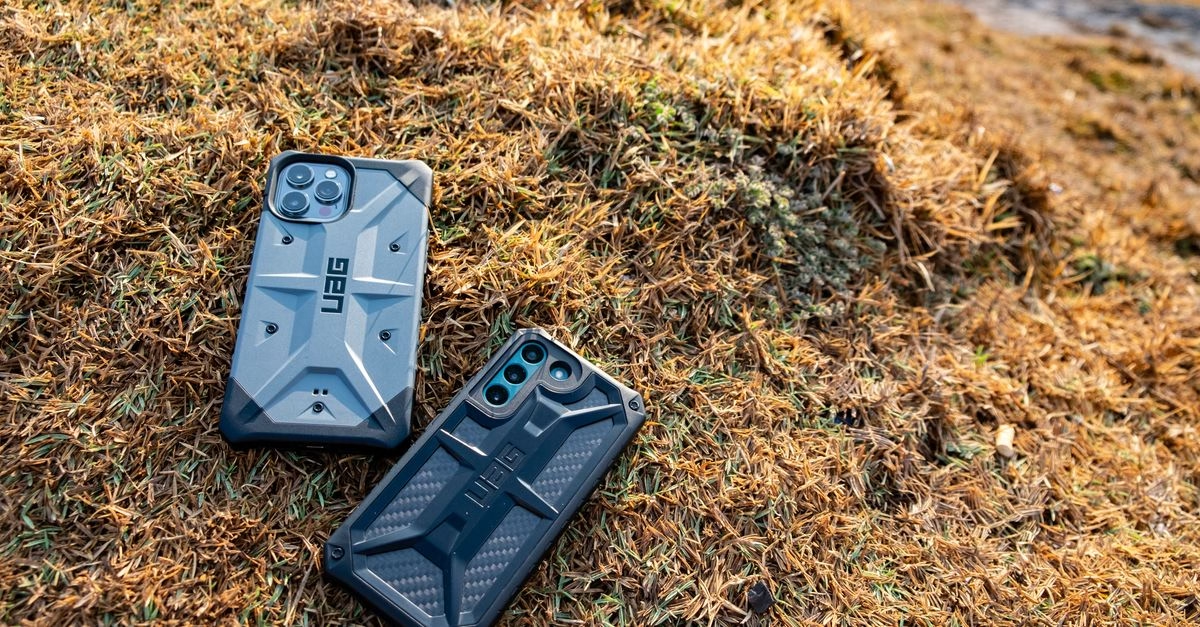
Recent discussions among mobile device users highlight a growing disconnect between marketing claims and real-world ownership experiences regarding rugged smartphones. While these devices are engineered to withstand drops, water, and dust, a significant number of owners report that the physical design introduces new categories of inconvenience. The core issue is not necessarily that the phones break, but that their construction prioritizes impact resistance at the expense of ergonomic comfort and visual clarity.
Users who have switched from standard flagships to rugged alternatives often note that the added protective layers make the devices noticeably heavier and thicker. This shift in form factor affects how the phone feels in hand and in pocket, leading to complaints about fatigue during extended use. Additionally, the need to protect internal components often results in compromises in display technology, with some models offering screens that are less vibrant or harder to read in bright sunlight than their non-rugged counterparts.
Weighing Protection Against Daily Usability
Understanding these common pain points is essential for consumers considering a rugged phone as a primary device. The decision to buy such a phone should not be driven solely by the fear of dropping it, but by an honest assessment of whether the user values extreme durability over the refined experience offered by modern mainstream smartphones. For individuals working in construction, outdoor recreation, or hazardous environments, the trade-offs may be justified. However, for the average consumer, the benefits might not outweigh the drawbacks.
The implications extend beyond just hardware. Rugged phones often operate on older or less optimized chipsets to manage heat and power within their sealed chassis, which can lead to slower performance and fewer software updates. This means that while the phone might survive a drop, it may also become obsolete faster in terms of software support and app compatibility. Buyers must consider if they are prepared to accept these limitations in exchange for peace of mind regarding physical damage.

Making an Informed Choice for Your Lifestyle
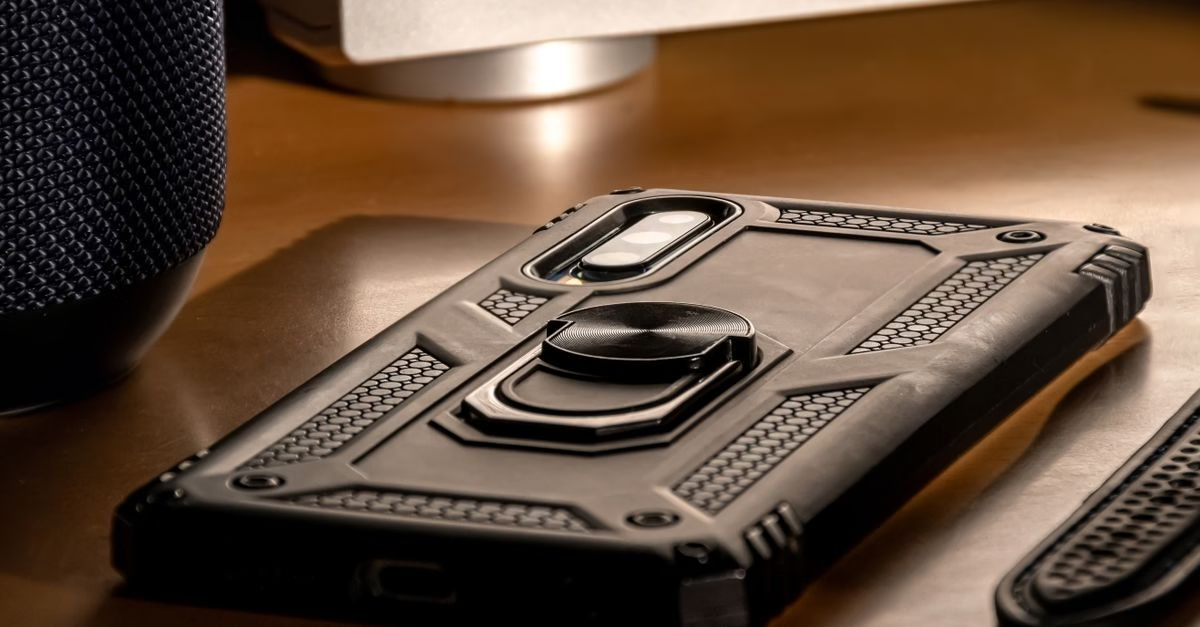
Ultimately, the choice between a rugged phone and a standard model depends on individual risk tolerance and usage patterns. If you are prone to accidents or work in harsh conditions, a rugged phone can be a valuable tool, provided you are aware of its potential shortcomings. It is advisable to handle the device in person before purchasing to assess its weight and screen quality firsthand. For those who simply want occasional protection, a high-quality case paired with a standard smartphone may offer a better balance of functionality and durability without sacrificing the premium features that define modern mobile computing.