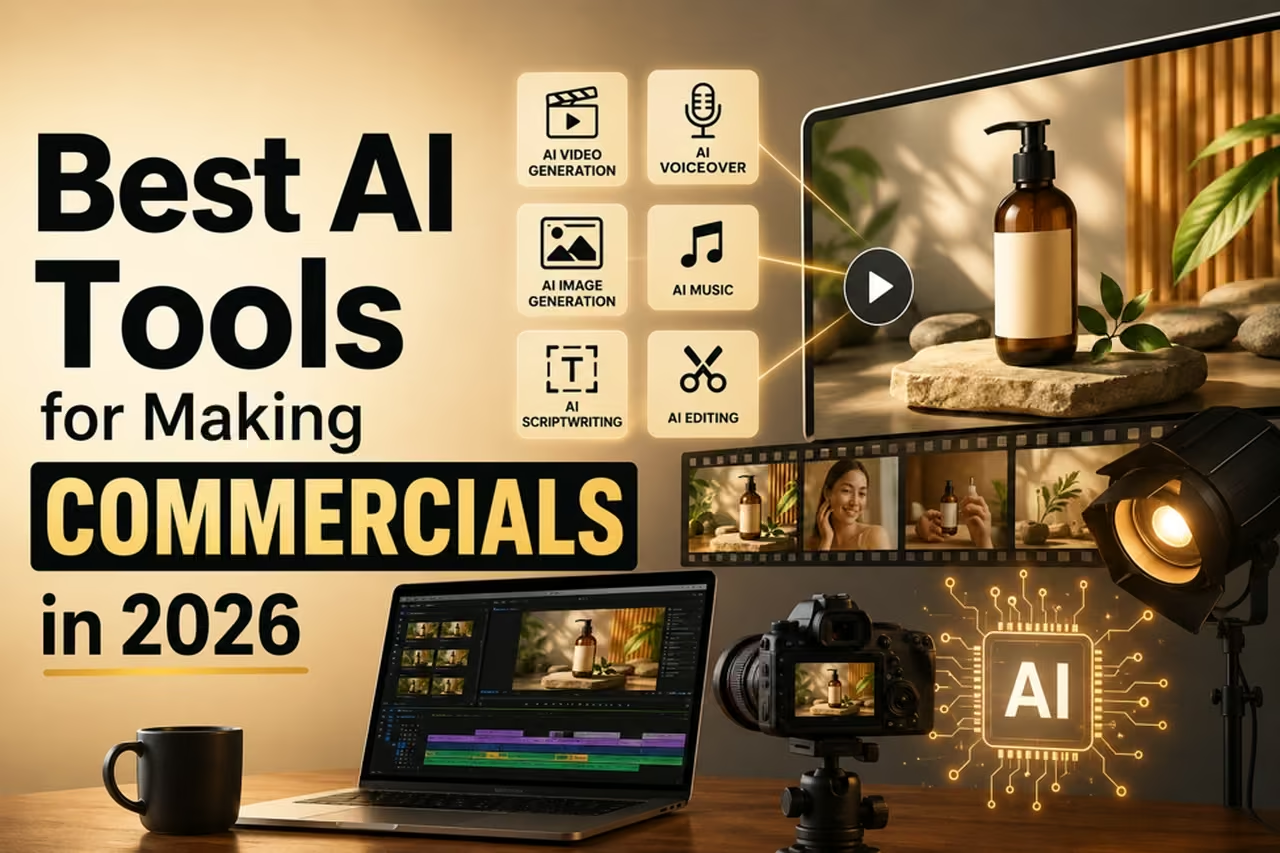
A commercial may only run for 15 or 30 seconds, but producing one can involve weeks of work. Concept development, scripting, storyboarding, casting, locations, product shots, voiceovers, editing, and multiple platform versions all add time to the process.
For brands running several campaigns, this can put pressure on creative teams. AI video tools are changing that workflow by helping teams develop concepts, create scenes, adapt footage, and produce variations without treating every asset as a completely new production.
The value is not simply generating a commercial from one prompt. It is giving creative teams more room to test ideas and move from concept to finished content with fewer production bottlenecks.
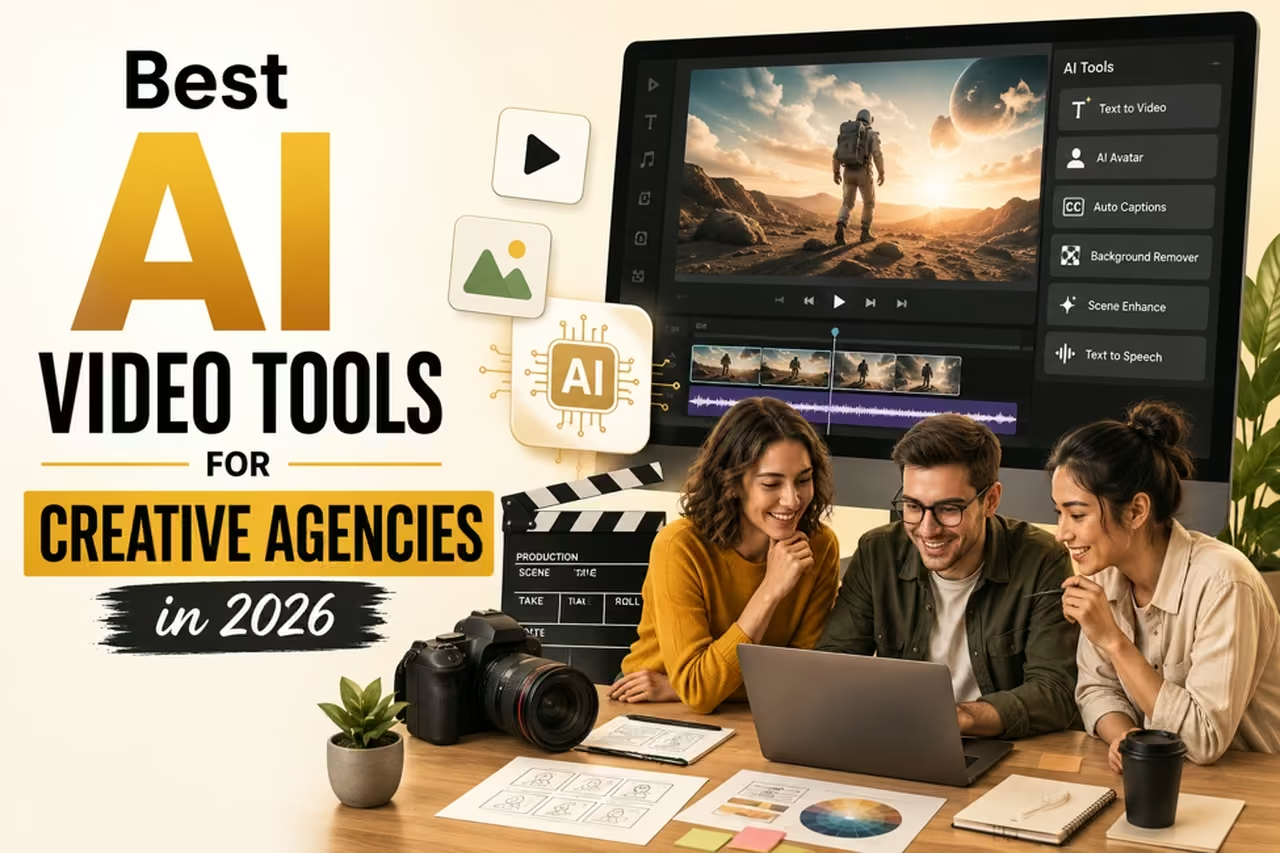
The best AI tools for making commercials in 2026 address different parts of this process. Some focus on cinematic visuals, others support product-focused content, while some make it easier to experiment with concepts, transform existing imagery, or create several advertising variations.

AI Tools for Commercial Production
Different commercials need different workflows. A cinematic brand campaign may rely heavily on atmosphere, environments, and visual storytelling. A product advertisement may need accurate product shots and controlled imagery. Social campaigns may require several short versions, alternative openings, vertical edits, and creative variations.
AI can assist with several stages of that production process, including:
- Concept and visual development
- AI video generation
- Product-focused scenes
- Image-to-video creation
- Creative effects and transitions
- Storyboarding and visual planning
- Supporting shots
- Voiceovers and music
- Campaign variations
- Social media cutdowns
Here are seven platforms that can support those different commercial-production needs.
1. Invideo agent
Commercial projects usually begin with a brief, product information, brand guidelines, references, and creative direction rather than a blank prompt. Invideo agent can bring these inputs into one workflow and support scripting, visual planning, generation, editing, voiceovers, and music.
It provides access to 200+ AI models, including Seedance 2.0, Kling AI, Nano Banana, Google Veo, Sora, and Flux, giving teams different options for developing individual scenes.
Invideo Agent Two adds project memory, allowing it to retain campaign details, characters, visual rules, references, and creative decisions. It can also read PDFs, brand books, scripts, videos, rough cuts, and uploaded footage.
Teams can create specialist agents for roles such as DOP, storyboard artist, or casting director and have them work from the same project context.
This broader workflow may be useful for commercial campaigns where individual AI-generated shots need to remain connected to a larger project. Brand requirements, creative decisions, visual references, characters, and campaign context can all influence whether separate assets feel like parts of the same advertisement.
Best suited to: Commercial teams seeking a broader AI-assisted workflow that combines project context, scripting, generation, editing, voiceovers, music, and access to multiple AI models.
Pricing: Invideo offers Plus at $17/month, Max at $85/month, and Generative at $170/month.
2. Pika
Pika focuses on fast video generation and creative effects. It can be used for product reveals, transitions, short commercial concepts, and social advertising content.
It is useful when teams want to test several visual ideas before committing to a final direction.
That ability can be valuable during early commercial development. Instead of investing heavily in the first concept, a creative team can evaluate different visual treatments, movements, reveals, or transitions and identify the ideas most worth developing.
For short-form advertising, this type of rapid experimentation can also help when several variations are needed for social media or paid campaigns.
Best suited to: Product reveals, creative effects, transitions, short-form advertisements, social content, and rapid visual experimentation.
Pricing: Pika offers Standard at $10/month, Pro at $35/month, and Fancy at $95/month.
3. Luma AI
Luma AI can help creative teams develop cinematic AI-generated visuals and imaginative environments.
It can be useful for campaigns that rely on atmosphere, unusual locations, or visual storytelling that may be difficult to produce through a traditional shoot.
This makes Luma AI relevant for commercial concepts in which the setting or visual atmosphere contributes significantly to the message. Teams may be able to explore environments or creative directions before deciding how a final campaign should be produced.
Cinematic generation can also help during concept development when marketers or creative teams need to communicate the intended mood of an advertisement more clearly.
Best suited to: Cinematic advertisements, imaginative environments, atmosphere-driven campaigns, and visual storytelling.
Pricing: Luma AI offers Plus at $30/month, Pro at $90/month, and Ultra at $300/month.
4. Krea
Krea combines visual generation and creative development tools. Commercial teams can use it to explore campaign looks, develop visual references, and experiment with different treatments.
It can be particularly useful during the early stages of a campaign when the final visual direction is still being developed.
Establishing that direction early can influence later decisions involving lighting, environments, composition, product presentation, and overall campaign consistency.
Rather than using AI only for a finished video, Krea can therefore support the exploratory stage where a team determines how the campaign should look before committing to a particular treatment.
Best suited to: Campaign look development, visual references, creative exploration, and testing different visual treatments.
Pricing: Krea’s Pro plan costs $35/month, while the Max plan costs $105/month.
5. Vidu
Vidu supports text-to-video and image-to-video generation. The image-to-video workflow can be useful when brands already have product photography or approved campaign visuals.
Instead of starting from scratch, teams can use those assets as the foundation for short promotional scenes and advertising variations.
This can be particularly relevant for brands that already have approved product imagery. Existing assets can provide a starting point for motion-based content rather than requiring an entirely separate visual concept.
For product-focused advertising, image-to-video workflows may also help teams experiment with promotional variations while retaining a connection to material that has already been reviewed or approved.
Best suited to: Image-to-video advertising, existing product photography, promotional scenes, product-focused videos, and variations based on approved visual assets.
Pricing: Vidu offers Standard at $10/month, Premium at $35/month, and Ultimate at $99/month.
6. Runway
Runway focuses on AI video generation and visual experimentation. Commercial teams can use it to develop scenes, modify footage, create effects, and explore different visual treatments.
It can be useful when a campaign needs a visual concept that would otherwise require locations, sets, or extensive post-production.
That flexibility allows Runway to fit into several stages of commercial development. Teams can experiment with generated scenes during concept development, alter existing footage, test effects, or explore visual ideas before finalizing the campaign.
This can be useful when the creative direction extends beyond conventional product footage and requires more substantial visual experimentation.
Best suited to: AI-generated scenes, footage modification, effects, visual experimentation, and campaigns with complex creative treatments.
Pricing: Runway offers Standard at $12/month, Pro at $28/month, and Max at $76/month.
7. Hailuo AI
Hailuo AI can generate short video sequences from creative directions and visual references.
For commercial teams, it can be useful for testing different scene ideas, creating supporting shots, or developing variations before settling on a final creative direction.
Teams do not necessarily need to generate an entire commercial to benefit from AI video generation. A short test sequence may be enough to evaluate an opening, environment, supporting shot, or creative approach.
This makes Hailuo AI suitable for an iterative workflow in which individual ideas can be tested before more time is committed to developing a complete campaign.
Best suited to: Short AI video sequences, scene testing, supporting shots, visual-reference-based generation, and creative variations.
Pricing: Hailuo AI offers Standard at $10.50/month, Pro at $38/month, Master at $89/month, and Max at $216/month.
Related Posts
How to Choose the Best AI Tool for Commercials
There is no single AI commercial generator that will automatically be the right option for every campaign.
The better approach is to begin with the production requirement.
If a team needs a broader workflow that can incorporate briefs, references, scripts, uploaded assets, and project context, Invideo Agent offers one approach.
If the campaign depends on fast creative effects or short-form experimentation, Pika may be more relevant. Luma AI is suited to cinematic visuals and imaginative environments, while Krea can help teams establish a visual direction during early creative development.
Vidu can be useful when a campaign begins with existing photography or approved imagery. Runway supports video generation, footage modification, effects, and visual experimentation. Hailuo AI can assist with short sequences, supporting footage, and scene testing.
Before choosing a platform, consider:
- What type of commercial are you producing?
- Do you already have approved product photography or footage?
- Is cinematic generation more important than rapid variation?
- Do you need individual scenes or a broader project workflow?
- Will the commercial require several social-media versions?
- How much human editing and review will be needed?
- How important is consistency across multiple generated scenes?
Matching the tool to the production problem is more useful than choosing solely on the number of AI features available.
Using AI Across a Commercial Campaign
AI becomes more useful when it is treated as part of the production workflow rather than the entire workflow.
A team can test several opening shots, product presentations, environments, or visual styles before investing heavily in one concept. Once a direction works, the same campaign can be adapted into different lengths and formats for YouTube, Instagram, TikTok, websites, and paid advertising.
This also makes it easier to create multiple versions of a commercial.
A 30-second hero video can become shorter cutdowns, vertical edits, product variations, and alternative openings without rebuilding everything from scratch.
A practical AI-assisted commercial workflow might include four stages:
1. Concept Development
Develop the campaign idea, references, possible environments, visual direction, and product presentation before committing to final production.
2. Scene Testing
Experiment with opening shots, transitions, product reveals, supporting footage, environments, and other individual elements.
3. Production and Refinement
Develop the selected concept further, modify footage where necessary, integrate voiceovers or music, and review visual quality and product representation.
4. Campaign Adaptation
Turn the main commercial into shorter edits, vertical versions, alternative openings, product variations, and other assets needed across advertising channels.
This keeps AI focused on areas where it can reduce repetitive production work while still allowing a creative team to determine the overall direction.
Why Human Creative Direction Still Matters
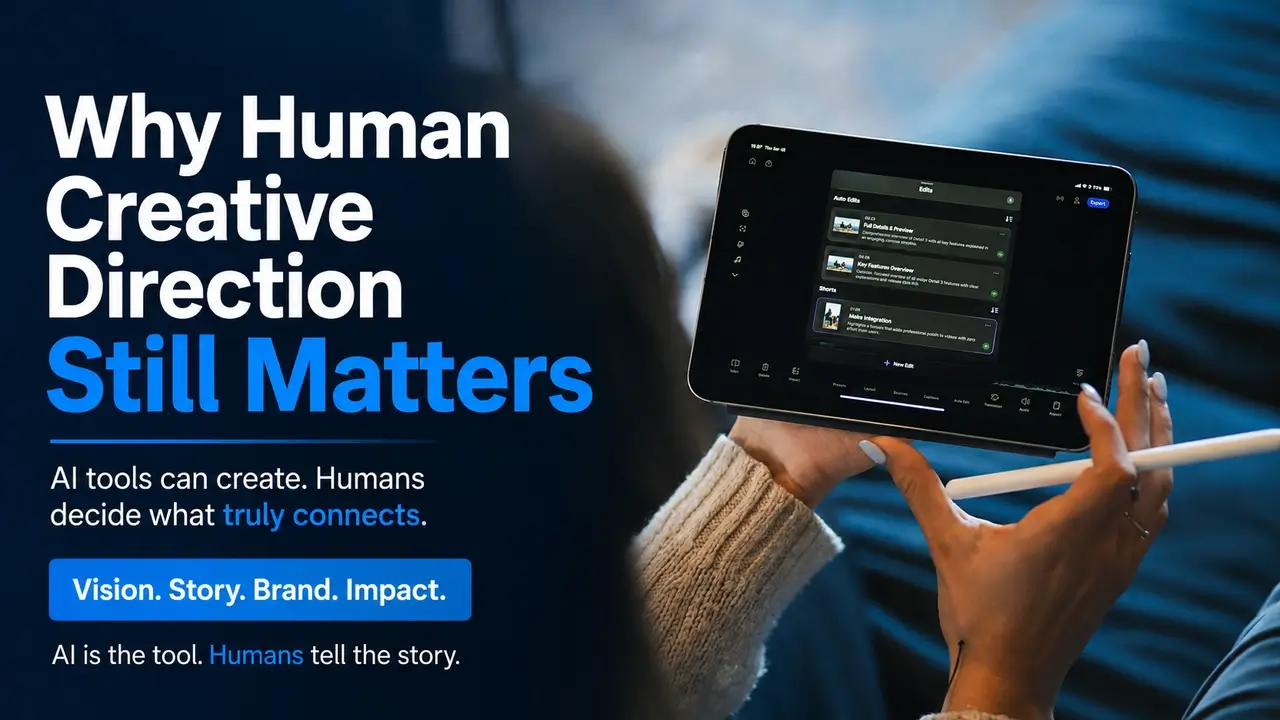
Human creative direction still matters. Teams need to control the campaign idea, brand identity, product accuracy, messaging, and final quality.
AI can make it easier to create options, but generating more options does not guarantee that every result is suitable for a brand.
Commercial material should be reviewed for visual consistency, messaging accuracy, product representation, campaign objectives, and overall quality before publication.
This is especially important when AI-generated elements are combined with existing brand assets or when several generated scenes need to appear within the same campaign.
The most effective role for AI is therefore not necessarily replacing the creative process. It is supporting that process by helping teams explore, test, adapt, and produce content more efficiently.
Frequently Asked Questions
What are the best AI tools for making commercials in 2026?
The tools covered in this guide are Invideo Agent, Pika, Luma AI, Krea, Vidu, Runway, and Hailuo AI. Each supports different parts of commercial production, including project workflows, cinematic generation, effects, image-to-video creation, visual development, and scene testing.
Can AI be used to create commercials?
Yes. AI video tools can support concept development, scene generation, visual experimentation, image-to-video creation, footage modification, effects, voiceovers, supporting shots, and campaign variations. Human review remains important for brand identity, messaging, product accuracy, and final quality.
Which AI tool is best for product commercials?
The right option depends on the campaign. Vidu can be useful when a brand already has product photography or approved visual assets because it supports image-to-video generation. Pika can support product reveals and effects, while other platforms can help with generated scenes and broader campaign development.
Which AI tool is useful for cinematic commercials?
Luma AI can help teams create cinematic AI-generated visuals and imaginative environments. Runway can also support campaigns that require generated scenes, visual experimentation, effects, or footage modification.
Can AI turn existing product images into videos?
Yes. Vidu supports image-to-video generation, which can allow existing product photography or approved campaign imagery to become the basis for short promotional scenes and advertising variations.
Can AI help make multiple versions of a commercial?
Yes. Once a campaign direction has been established, AI can help support shorter cutdowns, vertical edits, product variations, alternative openings, and versions intended for different advertising channels.
Can AI replace a commercial production team?
AI is better treated as part of the production workflow rather than the entire workflow. Human teams still need to manage the campaign concept, creative direction, brand identity, messaging, product accuracy, and final quality.
What should brands look for in an AI commercial generator?
Brands should start with their production requirements. Important considerations include cinematic generation, image-to-video capability, effects, concept testing, project context, footage modification, short scene generation, and the ability to create campaign variations.
Final Thoughts
AI video platforms are making commercial production more flexible. Invideo agent offers a broader workflow with 200+ AI models, while Runway, Pika, Luma AI, Krea, Vidu, and Hailuo AI provide different approaches to visual generation and experimentation.
The right tool depends on the campaign. Some brands may need cinematic scenes, while others may benefit from product animation, rapid concept testing, image-to-video workflows, or multiple social variations.
The biggest advantage is having more creative options without adding the same amount of production work to every campaign.
For brands evaluating the best AI tools for making commercials in 2026, the goal should be to choose technology that supports the specific production requirement while keeping human creative direction, brand identity, product accuracy, messaging, and final quality under appropriate control.