What Happened
The focus here is Switch 2 sales.
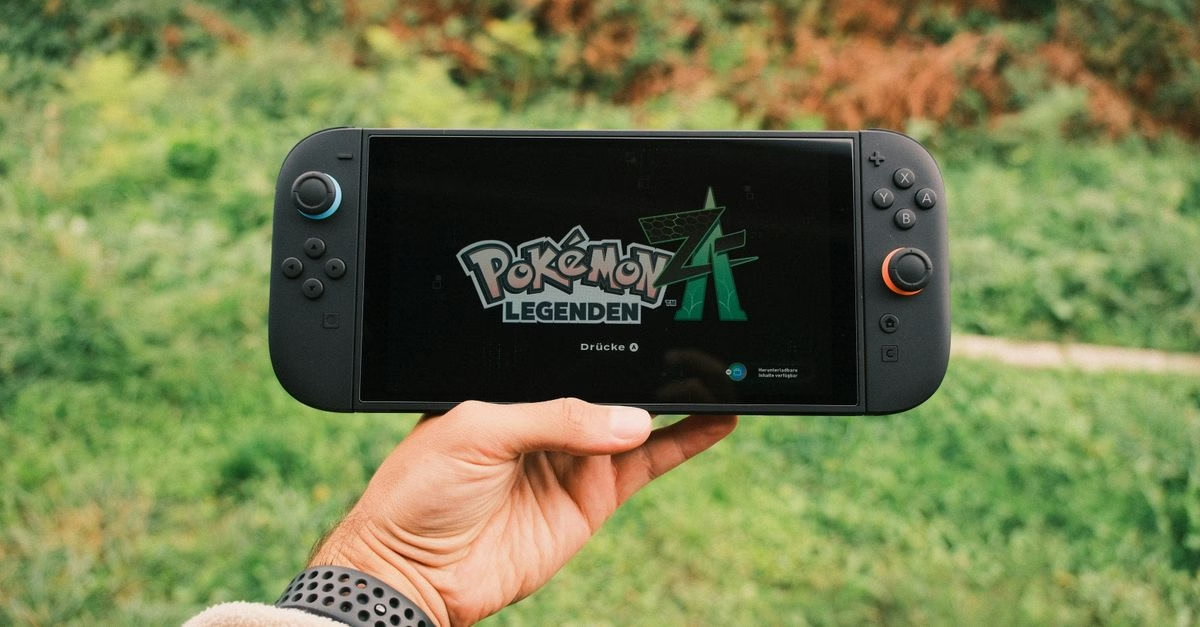
In the latest quarterly sales update, Nintendo confirmed that the Switch 2 has sold almost 20 million units in the United States, less than a year after its launch in November 2023. This milestone makes it the second‑fastest selling console in U.S. history and the fastest‑selling hardware ever, overtaking the PlayStation 4’s previous record of 16.5 million units sold within the same timeframe. The announcement arrived alongside the reveal of a high‑profile remake of “The Legend of Zelda: Ocarina of Time,” reinforcing Nintendo’s strong pipeline of first‑party titles and signaling that the company is not resting on its laurels. Nintendo’s chief operating officer, Doug Bowser, framed the numbers as a proof point that the hybrid form factor still resonates with a broad audience, from casual family gamers to dedicated enthusiasts.
How the Numbers Add Up
The Switch 2’s rapid uptake is the result of several interlocking factors. First, the console launched with a refreshed hardware design that improves CPU and GPU performance by roughly 30 % while retaining the hybrid portability that made the original Switch popular. This performance bump enables smoother frame rates in flagship titles like “Pokémon Scarlet & Violet” and supports higher‑resolution output when docked, appealing to both handheld and living‑room gamers. Second, Nintendo’s aggressive first‑party lineup—spanning new entries in the “Mario,” “Metroid,” and “Zelda” franchises—has driven demand, with each major release triggering a noticeable sales spike. Third, after the initial launch shortages that plagued the original Switch, Nintendo re‑engineered its supply chain, adding additional fab capacity in Taiwan and securing longer‑term component contracts. The result is a steadier flow of units to retailers, translating into consistent weekly sales spikes rather than the erratic bursts seen in previous console cycles.
Why It Matters
These sales figures are more than a brag‑ging point; they signal a shift in the console market’s power dynamics. By eclipsing the PS4’s historic launch pace, Nintendo demonstrates that a well‑executed hybrid device can still dominate a market increasingly focused on mobile and cloud gaming. The momentum also gives Nintendo leverage when negotiating with developers and retailers, potentially leading to better launch windows for future titles and accessories. Moreover, the strong performance provides a cushion for the upcoming price increase, suggesting that consumers value the platform enough to absorb higher costs. From an industry perspective, the data challenges the long‑standing assumption that only high‑spec, stationary consoles can command the top sales slots, opening the door for more innovative form factors in the next generation.

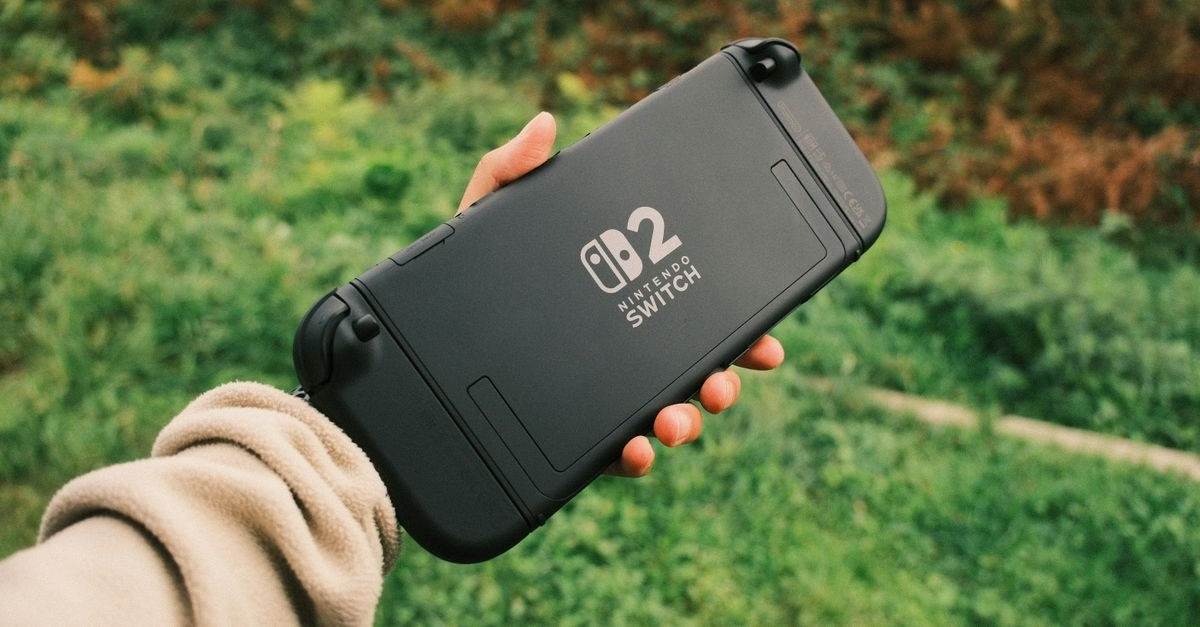
Photo by Daniel J. Schwarz via Pexels.
Practical Implications for Consumers
For shoppers, the sales surge means the Switch 2 will likely stay in stock longer, reducing the frustration of the early‑launch shortages that plagued the original Switch. Retailers, seeing the robust demand, are expanding inventory and offering more bundle options—such as the popular “Game & Switch 2” packages that include a game, a dock, and a set of Joy‑Cons. Developers can expect a larger install base, making the Switch 2 a more attractive target for both first‑party sequels and third‑party ports, which could broaden the library beyond Nintendo’s traditional strengths. Finally, the announced price hike—while not yet quantified—will probably be modest relative to the console’s proven demand, so early adopters may avoid a higher price tag by buying now. Consumers who were on the fence may also feel reassured that the platform’s longevity is supported by a growing ecosystem.
Limitations and Open Questions
Despite the impressive numbers, several uncertainties remain. Nintendo has not disclosed exact pricing for the upcoming increase, nor the timeline for its rollout, leaving retailers to speculate on how it will affect demand curves. The sales data is U.S.-only; global figures could paint a different picture, especially in markets where Nintendo historically lags behind Sony and Microsoft, such as Germany and South Korea. Additionally, while the “Ocarina of Time” remake has generated buzz, its release date and pricing are still unconfirmed, leaving a gap in the pipeline that could affect long‑term momentum. Finally, the hybrid design still faces criticism from hardcore gamers who desire more raw power, which could limit the console’s appeal in the high‑performance niche.
Conclusion
Switch 2 sales hitting nearly 20 million units in the United States confirms Nintendo’s winning formula of hybrid hardware paired with strong first‑party titles. The record‑breaking pace, combined with the excitement around the upcoming Zelda remake, suggests the console’s growth curve is still upward. While a price increase looms and global data is pending, the current trajectory indicates Nintendo’s momentum is far from over—just as the COO promised. For investors, analysts, and gamers alike, the takeaway is clear: Nintendo has re‑engineered the console playbook, and the Switch 2 is now the benchmark against which future hardware will be measured.