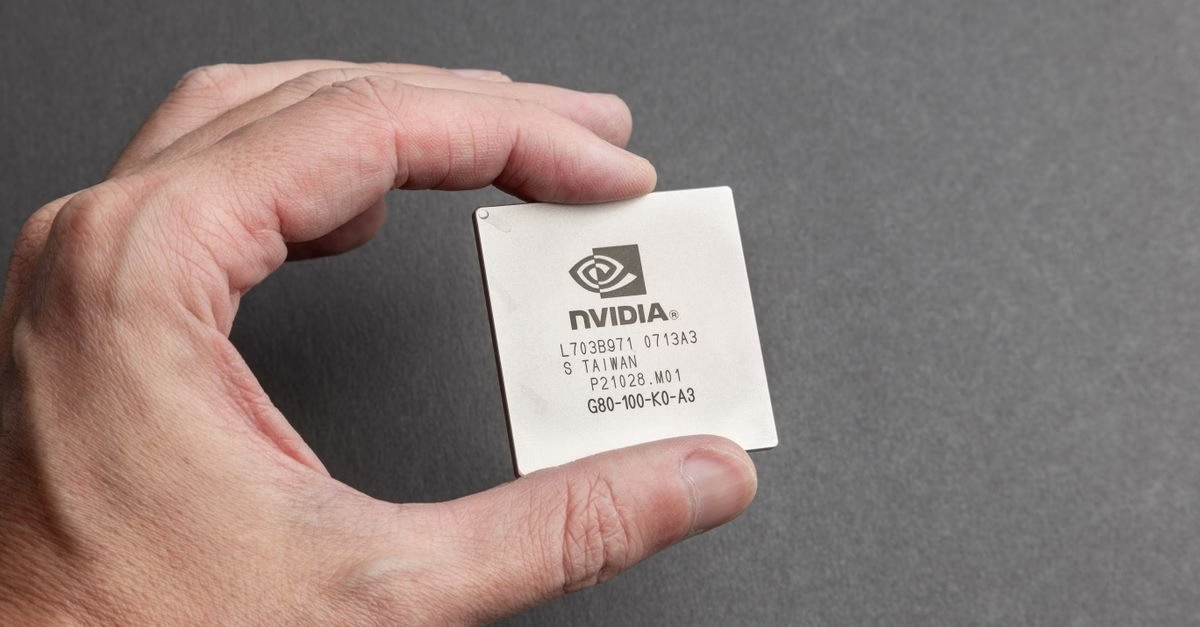
The Scale of SpaceX’s Hardware Acquisition
SpaceX has reportedly entered negotiations to secure approximately $40 billion in funding specifically earmarked for purchasing Nvidia’s high-performance computing hardware. This figure represents an extraordinary commitment to artificial intelligence infrastructure, far exceeding typical corporate technology upgrades. The reported demand is not for standard consumer-grade graphics cards found in gaming PCs, but rather for the specialized data center accelerators that power large-scale machine learning models. According to recent industry reports, this acquisition is part of a broader strategy to build out proprietary computational capabilities. The sheer magnitude of the requested capital underscores the intensity of competition in the AI hardware market, where access to top-tier silicon is becoming a critical bottleneck for technological advancement.
Financial Risks Behind the Silicon Rush
While the ambition behind the chip acquisition is clear, the financial mechanics raise significant red flags for stakeholders. Recent analysis indicates that rising bond spreads and record-high credit risk metrics are intensifying concerns over SpaceX’s ability to service such substantial debt. For a private company with no public stock market to absorb volatility, taking on tens of billions in liabilities requires immense confidence in future revenue streams.
This pivot suggests that SpaceX views artificial intelligence not just as a tool, but as a core pillar of its future operational model, potentially rivaling or complementing its traditional aerospace ventures. However, the reliance on external financing for such a massive hardware rollout exposes the company to macroeconomic shifts. If interest rates remain elevated or if the projected returns from AI applications do not materialize quickly, the financial strain could become unsustainable.
This situation highlights the precarious balance between aggressive technological expansion and fiscal responsibility in the modern tech landscape.

Outlook for the Space-Tech Giant
The reported $40 billion Nvidia deal marks a definitive turning point for SpaceX, signaling a deep integration of AI into its long-term roadmap. Whether this investment will yield the anticipated competitive advantages in satellite networks, autonomous systems, or other emerging sectors remains to be seen. The primary challenge now lies in execution: securing the necessary capital without compromising the company’s financial stability. Investors and observers will be watching closely to see how SpaceX manages this transition from a pure aerospace manufacturer to a diversified tech conglomerate.
Until more details about the specific terms of the chip procurement and the associated financing structures are made public, the full scope of this strategic gamble remains partially obscured. What is certain, however, is that the intersection of space exploration and artificial intelligence is becoming increasingly central to the next generation of technological innovation.