The Hardware Hack Behind the Modified Connector
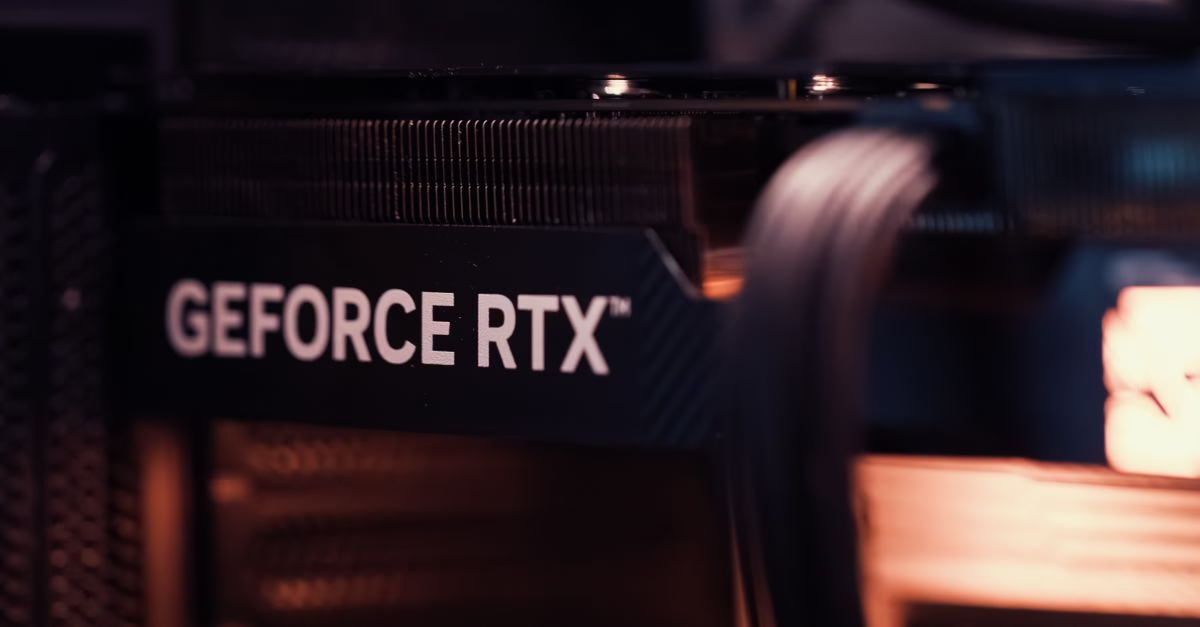
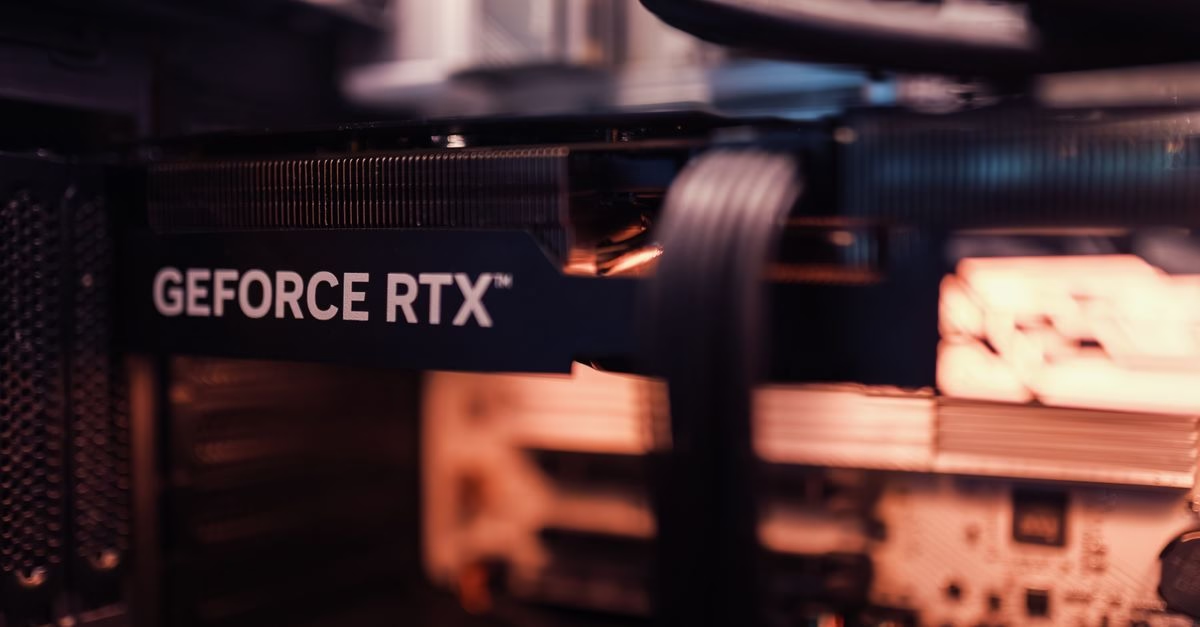
A Reddit user known as DallasGrave has taken matters into their own hands regarding the power delivery of the MSI GeForce RTX 5090. The modder soldered a small pickup PCB directly to the contacts of the card’s original 16-pin header. This primary board then feeds a secondary PCB that carries two additional 8-pin PCIe power sockets. By integrating these extra inputs, the card now draws power from three separate cables instead of relying solely on the single 16-pin connection.
According to the modder’s report on r/pcmasterrace, this physical redistribution of power significantly reduces the electrical load on any single conductor. DallasGrave states that each wire now carries roughly 3 amps. During a rigorous 48-hour stress test running at 550 watts, the wires never exceeded 40°C, even at the critical joint where the power enters the card. While more test data is reportedly coming, these initial figures suggest the modification effectively mitigates the thermal buildup associated with high-wattage drawing.
Why NVIDIA’s Official Fixes Haven’t Stopped the Heat
This DIY intervention highlights a persistent reliability gap in NVIDIA’s latest flagship hardware. The company introduced the 12V-2×6 standard specifically to resolve the melting connector crises that plagued earlier generations. In early 2025, NVIDIA declared the issue resolved, pointing to the revised connector design on the RTX 50-series as the definitive fix. However, real-world usage tells a different story.
Reports of melted connectors have continued to surface throughout 2025. Incidents include a Founders Edition unit failing shortly after launch, another case involving undervolting with a -100W power limit, and a notable demonstration by Hardware Unboxed where a cable reached 175°C with a single wire pulling approximately 22 amps. These failures occur despite official assurances, suggesting that either the new standard is insufficient for peak transient loads or that third-party cables are introducing compatibility issues. For owners of expensive, high-performance GPUs, the risk of catastrophic hardware failure due to simple power delivery flaws remains a significant concern.

The Risk-Reward of DIY Power Solutions
While the modder’s results are promising, they represent a non-standard, irreversible hardware modification. Soldering components directly to a graphics card header voids warranties and introduces potential points of failure if not executed with precision. Furthermore, the long-term stability of such a setup under varying load conditions remains unverified beyond the initial 48-hour window.
For most users, this situation underscores the importance of using only certified, high-quality cables provided by reputable manufacturers. Until NVIDIA provides clearer guidance or hardware revisions that address these specific thermal bottlenecks, enthusiasts facing similar concerns must weigh the benefits of reduced heat against the risks of modifying proprietary hardware. The community continues to watch for further data from DallasGrave, which may provide more insight into whether this hack becomes a viable workaround for the broader RTX 5090 owner base.