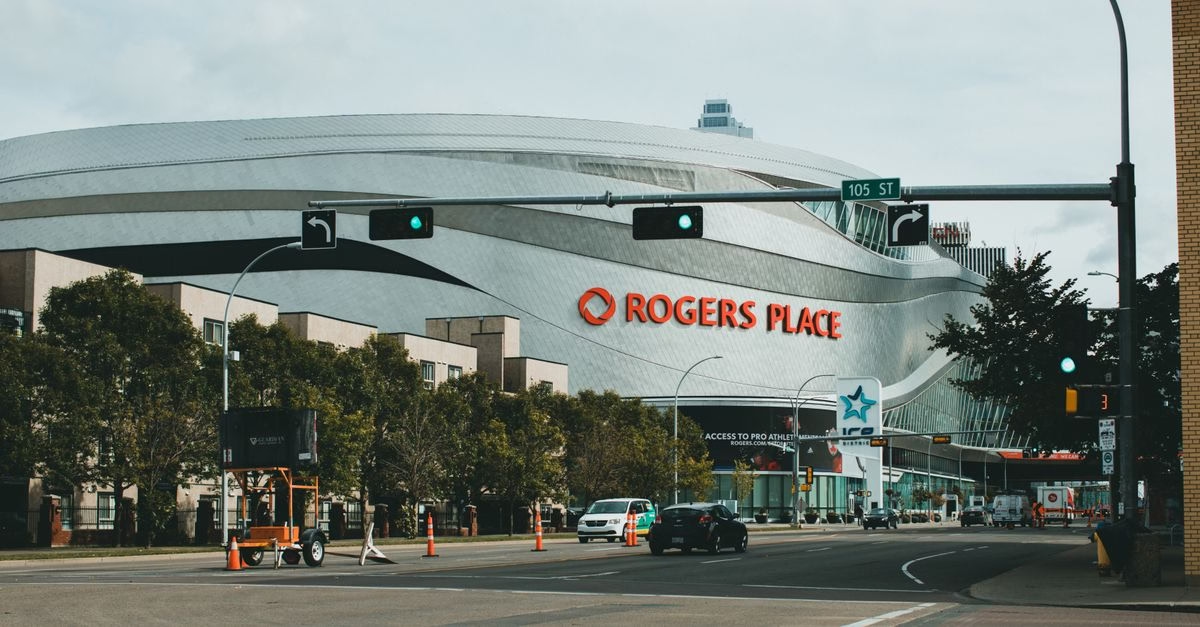
Rogers Secures Complete Ownership of Toronto’s Sports Empire
Rogers Communications has officially completed its acquisition of the remaining shares in Maple Leaf Sports & Entertainment (MLSE), marking the end of a significant era for Canadian sports business. The company purchased the final 25% stake held by Kilmer Sports for C$4.35 billion, bringing its total ownership of the organization to 100%. This move follows the initial signing of the deal in early July 2026, which set the stage for Rogers to consolidate its control over one of North America’s most valuable sports franchises.
With this transaction closed, Rogers now holds sole authority over all assets under the MLSE umbrella. This includes the Toronto Maple Leafs, the Toronto Raptors, Toronto FC, and the Mattamy Athletic Centre. The completion of the purchase resolves a long-standing joint venture structure that had defined the management of these teams for years. For consumers and stakeholders, this shift signals a clear transition from shared governance to singular corporate direction, removing any ambiguity regarding decision-making power within the organization.
Consolidated Control Changes Strategic Priorities for Fans
The significance of this acquisition extends beyond financial figures; it fundamentally alters how decisions will be made for the teams Rogers now fully owns. Previously, Kilmer Sports, led by Larry Tanenbaum, held equal voting rights with Rogers, creating a balanced but sometimes complex dynamic in strategic planning. With Rogers holding 100% of the shares, the path for future investments, stadium renovations, and roster strategies becomes streamlined under a single corporate entity.
For Canadian consumers, particularly those who follow hockey and basketball closely, this consolidation may impact everything from ticket pricing models to broadcast partnerships. Rogers already operates Sportsnet, a major broadcaster of these games, so full ownership could lead to tighter integration between media distribution and team operations. While this might offer more cohesive content for viewers, it also raises questions about competitive balance and fan engagement strategies. The lack of a co-owner means Rogers can act quickly on opportunities without needing consensus, potentially accelerating changes that affect the daily experience of attending games or watching broadcasts.


What Remains Unknown About the New Era
While the financial and legal aspects of the deal are now settled, several operational details remain unclear as Rogers settles into its new role as the sole owner. It is not yet known how the integration of MLSE into Rogers’ broader corporate strategy will affect day-to-day team management or player acquisitions. Additionally, the specific timeline for any announced infrastructure projects or media rights renegotiations has not been detailed in the immediate aftermath of the closing.
Stakeholders will likely watch closely to see if Rogers leverages its full ownership to pursue aggressive expansion plans or if it maintains the status quo established during the joint venture period. For now, the primary takeaway is the definitive end of the Kilmer Sports partnership, leaving Rogers to navigate the complexities of managing Canada’s premier sports portfolio alone. Further updates on strategic initiatives are expected as the company begins its first full quarter under complete ownership.