What Happened
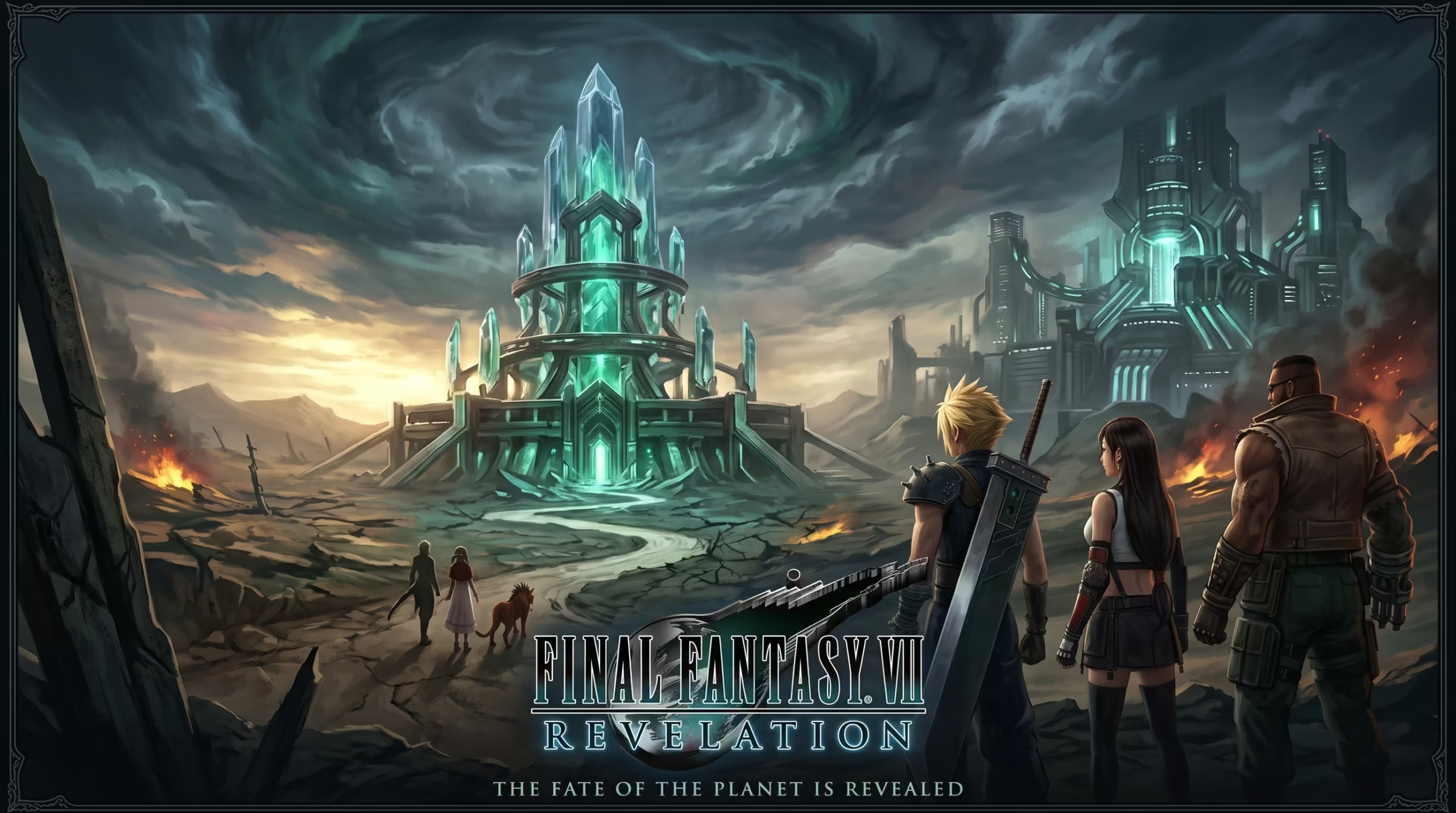
This story examines Final Fantasy 7 Revelation. At the Tokyo Game Show 2026, Naoki Hamaguchi, director of Final Fantasy 7 Revelation, announced that the game will probably require around 200 GB of storage. He confirmed that the download will be larger than the two Blu‑ray discs used for the original 1997 title and the 2006 remake. The statement came after questions about whether the game would still be distributed on physical media.
How It Works
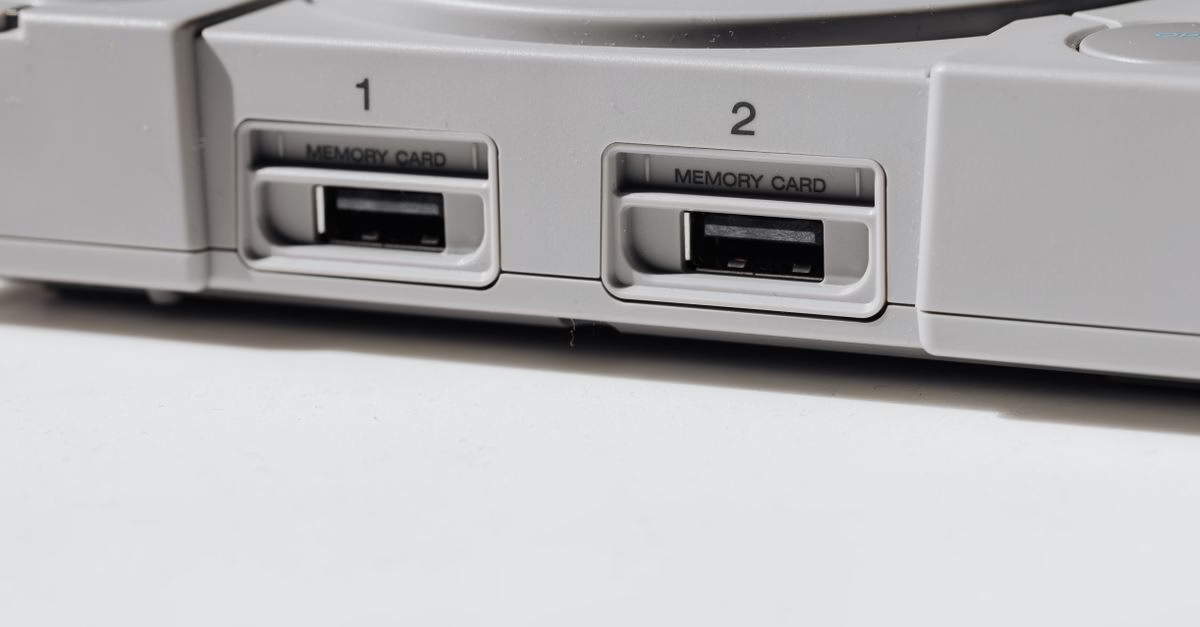
The 200 GB figure reflects the amount of data needed to deliver high‑resolution textures, expansive world maps, and advanced audio assets that modern players expect. While the game will not be shipped on a full disc, the development team intends to provide a physical product, acknowledging that Blu‑ray discs may still be relevant for collectors and certain markets.
Why It Matters
A 200 GB download is significant for console owners with limited storage or slower internet connections. It also highlights the growing trend of large‑scale games that push hardware limits, prompting discussions about storage solutions, cloud gaming, and the future of physical media.

Practical Implications
Players will need to ensure their console has sufficient free space—likely 250 GB or more—to accommodate the game. Download times will be longer, especially on 5 Gbit/s connections, and the game may require a dedicated SSD for optimal performance. Retailers may offer pre‑installed discs or bundled storage solutions to mitigate these challenges.

Limitations
The exact size is still tentative; Hamaguchi noted that details are “still getting worked out.” There is no confirmed release date or pricing information, and it is unclear how the physical product will be formatted or distributed. The impact on older consoles with limited storage capacity remains uncertain.
Conclusion
Final Fantasy 7 Revelation’s projected 200 GB storage requirement marks a new benchmark for console games, underscoring the need for larger storage solutions and prompting a reevaluation of physical media strategies. As the industry adapts, players and retailers alike will need to plan for the increased demands of next‑generation titles.
What This Means for Players
For most modern consoles, a 200 GB download is not a technical impossibility, but it does shift the balance between convenience and cost. The PlayStation 5, Xbox Series X|S, and next‑generation PC builds typically ship with 500 GB or more of internal storage, so the game will fit comfortably for those users. However, many gamers still rely on external hard drives or older consoles that offer only 500 GB of usable space. In those cases, the 200 GB requirement will force a hard‑drive upgrade or the use of a dedicated SSD, which can add a significant upfront expense.
Download Strategy and Bandwidth
Even with a high‑speed 5 Gbit/s internet connection, downloading 200 GB can take several hours. Assuming a steady 500 Mbps throughput, the raw download time would be roughly 1 hour and 20 minutes, but real‑world speeds are often lower due to server throttling, network congestion, and the overhead of the console’s download manager. Players who rely on Wi‑Fi may experience even longer times, especially if multiple devices are sharing the same network. For those with limited bandwidth, the game’s size could become a barrier to entry.
Physical Media and Collector Value
Hamaguchi’s comment about a physical product is noteworthy. While the game will not be distributed on a full Blu‑ray disc, the developers plan to offer a collector’s edition that includes a pre‑installed disc or a set of discs containing a compressed version of the game. This approach mirrors the strategy used for the 2006 remake, where a single Blu‑ray held the entire game. By providing a physical copy, Square Enix acknowledges the continued demand among collectors and regions where broadband infrastructure is less reliable. The physical media will likely be a smaller, compressed file that can be unpacked onto the console’s internal storage, reducing download time for those who prefer a one‑time transfer.
Impact on Game Distribution Models
The 200 GB figure is a clear signal that the industry is moving toward larger, more detailed worlds. This trend will influence how publishers approach distribution: cloud‑based streaming services may become more attractive, as they can offload storage to remote servers. However, streaming also introduces latency concerns and requires a stable, high‑bandwidth connection. For players in regions with limited infrastructure, the physical media option will remain essential. Consequently, publishers may need to maintain dual distribution pipelines—digital downloads for high‑end markets and physical discs for others.
Hardware Considerations for Developers
From a development standpoint, creating a 200 GB game demands careful asset optimization. Developers must balance texture resolution, polygon count, and audio fidelity against compression techniques that preserve quality while keeping file size manageable. Techniques such as variable bitrate audio, lossy texture compression, and procedural generation can reduce the final footprint. The fact that the game will still be playable on older consoles suggests that Square Enix is employing a tiered asset system, where lower‑resolution assets are delivered to systems with limited storage or processing power.
Future-Proofing Storage
Game developers and console manufacturers are already exploring solutions to accommodate larger titles. SSDs are becoming cheaper and more abundant, and many consoles now support NVMe drives. For players, investing in a high‑capacity SSD can future‑proof their system for the next wave of large games. Additionally, some consoles now offer cloud storage options, allowing users to offload less frequently accessed data. While these solutions add cost, they also provide flexibility and can improve load times if the game is designed to stream assets on demand.
Conclusion for the Community
Final Fantasy 7 Revelation’s projected 200 GB size is a practical reminder that the next generation of games will demand more from both hardware and infrastructure. Players should assess their current storage setup, consider upgrading to an SSD if necessary, and plan for longer download times. Retailers and publishers will need to balance digital convenience with the collector’s desire for physical media, potentially offering bundled storage solutions or pre‑installed discs. As the industry adapts, those who stay informed and prepared will be best positioned to enjoy the expansive, high‑fidelity worlds that modern game design promises. The key takeaway is that while the size is large, it is not prohibitive—just a new standard that requires a bit more planning and investment from everyone involved.