

GUNNAR Fallout Brotherhood of Steel Glasses Review
You don’t notice eye strain all at once.
It creeps in. Text gets harder to focus on. Your eyes feel dry. By the end of the day, you’re just done looking at a screen.
That’s the problem these glasses are trying to solve.
So instead of testing them for an hour and calling it a day, I used them the way most people would—full workdays, gaming at night, repeat—over about two weeks.

Here’s what actually changed.

Should You Buy These or Not
Let’s make this simple.
Buy them if you spend most of your day in front of a screen. Work, gaming, or both. That’s where the difference shows up. The longer you wear them, the more you notice it.
Skip them if your screen time is low. You won’t get enough benefit to justify the price.
Also, skip them if you care a lot about how your glasses look in public. These aren’t subtle. They stand out, and not always in a good way.

GUNNAR Gaming Glasses - Fallout Brotherhood of Steel- Blue Light Blocking Relieve Dry Eye
First Impression: Style Comes First (Whether You Like It or Not)
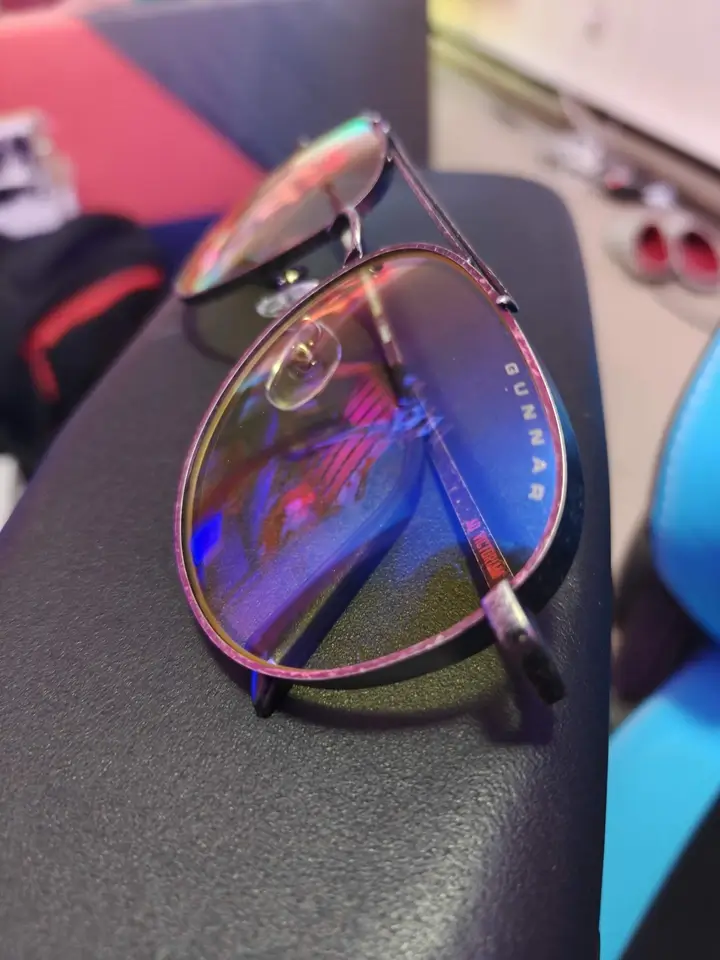
These are not subtle glasses.
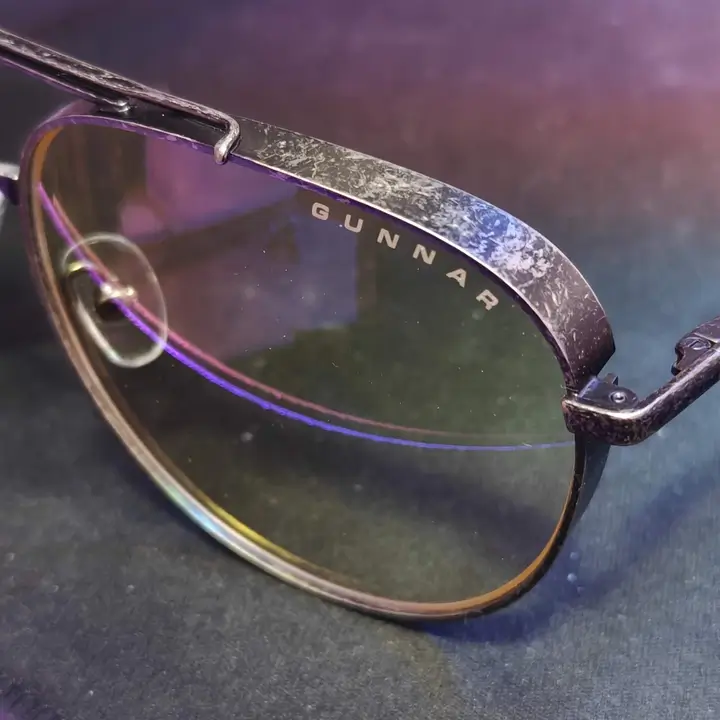
The aviator shape is big. The lenses are larger than most. The frame has that worn, gunmetal look meant to match Fallout power armour.
Up close, it works. You can see what they were going for.
From a distance, though, it reads differently. More retro. Almost 70s-inspired. One coworker called it “art student energy,” which isn’t wrong.
That matters.
Because if you’re planning to wear these outside your house, you need to be okay with standing out a bit.
If you’re using them at a desk or for gaming, it’s irrelevant.
What Changed After a Few Hours of Use
The first thing you notice isn’t comfort.
Its colour.
Everything gets a slight yellow tint. Not dark, not distracting, just warmer—like your screen switched to night mode on its own.
At first, it feels off.
Then your brain adjusts. Fast.
A few minutes in, you stop thinking about it. That part is real.
What matters more is what happens after that adjustment.
The screen feels… calmer.
Not sharper. Not clearer in a dramatic way. Just less aggressive on your eyes.
Where These Actually Make a Difference
Best case? Long workdays plus screen time at night.
That’s where they help the most. You’re stacking hours, and the reduced strain adds up. By the end of the day, your eyes feel less beat up.
The middle ground is work-only use. Still helpful, just less noticeable.
Worst case is casual use. A bit of scrolling, maybe some short sessions. You won’t feel much difference there.
That’s the reality.
The Moment That Actually Proves They Work
You don’t fully notice the effect while wearing them.
You notice it when you take them off.
After about 15–20 minutes of use, removing the glasses makes the screen feel harsh. Brighter than it should be. Almost uncomfortable for a second.
That’s the key moment.
If this were just tinted glass, you wouldn’t get that contrast. The fact that you do suggests they’re actually cutting something—likely the higher-energy light they claim to filter.
I don’t have lab tools to verify the exact numbers.
But the difference is real enough to feel.
Eye Strain: What Improves (And What Doesn’t)
Let’s be clear.
These do not eliminate eye strain.
If you sit in front of a screen all day, your eyes are still going to get tired. That’s not changing.
What does change is how quickly that fatigue builds.
With these on, the strain feels delayed. Softer. Less sharp by the end of the day.
There’s also a second factor here that most people overlook.
These lenses include a slight 0.2 magnification and prism effect.
You won’t consciously notice it.
But your eyes do.
Focusing on text takes a little less effort. Over hours, that matters more than you’d expect.
This isn’t just about blue light. It’s about reducing how hard your eyes have to work at close distances.
The Truth About Cheaper Blue Light Glasses
There are cheaper options. Plenty of them.
Some work. At least at first.
The difference usually shows up after a few hours. Pressure on the sides of your head. Lenses that feel slightly off. Small annoyances that build over time.
That’s where these pull ahead.
The spring hinges matter more than expected. The lenses feel more consistent. You don’t spend the day adjusting them.
You’re not just paying for blue light filtering. You’re paying for something you can actually wear all day without thinking about it.
Comfort Over a Full Day
Technical Specs (What You’re Actually Getting)
The numbers help explain why they feel the way they do.
- Lens width: 59 mm
- Frame width: 142 mm
- Temple length: 140 mm
- Nose bridge: 15 mm
- Weight: 1.39 oz

That puts them in a medium-to-large fit. The wide lenses explain why they take up most of your field of view, which you notice right away when wearing them.
The lenses also include GUNNAR’s coating for glare reduction and smudge resistance, along with full UV protection—not just blue light filtering.
This is where these glasses quietly win.
After 8+ hours, the biggest advantage isn’t how they look or even how they filter light.
On paper, these don’t look that different. In practice, the hinge design and lens coating matter more than the raw numbers.
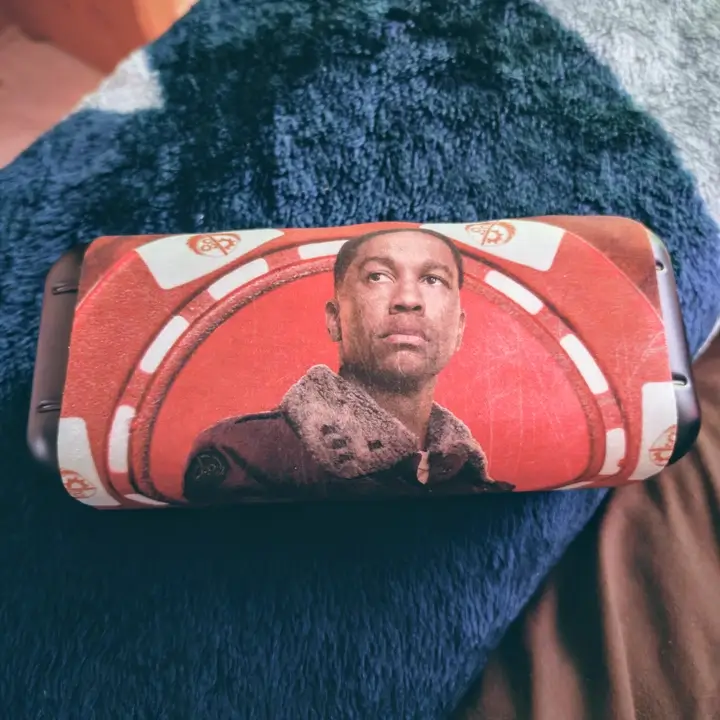
It’s that you forget you’re wearing them.
- The frame is light (just under 40 grams)
- The nose pads don’t dig in
- The temple tips sit softly
- Most importantly, the spring hinges reduce pressure on the sides of your head
That last one matters more than it sounds.
I’ve used another GUNNAR pair—the Vault 33 version—and the difference is noticeable. Without spring hinges, you feel that slow pressure build over time. With these, it’s mostly gone.
I ended up reaching for this pair more often because of that.
Not because they look better. They don’t.
Because they’re easier to wear all day.
Reading, Clarity, and Screen Work
There’s a small but noticeable improvement when reading.
Text looks a bit cleaner. Less halo around letters. Easier to stay focused on small fonts.
It’s not dramatic. If you’re expecting a night-and-day difference, you won’t get it.
But after a few hours, you realize you haven’t been squinting as much. You haven’t been adjusting your position as often.
That’s the pattern with these glasses.
Small improvements that add up over time.
Sleep and Night Use
Blue light is known to affect sleep.
Do these fix that?
Partially.
Using them at night does make it easier to wind down after screen time. Not instantly. Not dramatically. But enough to notice if you’re consistent.
If your sleep is already bad for other reasons, this won’t fix it.
It just removes one of the problems.
Where These Glasses Fall Short
This part matters.
The style is limiting. You won’t want to wear these everywhere unless you really like the look.
The tint, while easy to adjust to, isn’t ideal for colour-sensitive work. If you’re editing photos or doing design work, it’s going to get in the way.
And the price—$99 for non-prescription—is higher than basic blue light glasses.
You are paying for better build quality and lens design.
You’re also paying for branding.
Both are true.
What You Might Not Like
The style won’t work for everyone.
Up close, the Fallout design makes sense. From a distance, it leans more retro than anything else. Not something you’ll want to wear everywhere.
The tint is another trade-off. It’s easy to adjust to, but if you need accurate colors, it’s a problem. No way around that.
And the price sits in that middle zone where you have to think about it. Not cheap, not outrageous.
Who These Are Actually For
These make sense if your day looks like this:
You sit in front of a screen for hours. Work, gaming, or both.
That’s where the benefits stack up.
If you only use screens casually, you won’t get enough out of them to justify the cost.
Simple as that.
Who Should Skip Them
Related Posts


If you care a lot about subtle style, these probably aren’t your glasses.
If you need perfect colour accuracy, they’re not a good fit.
And if your screen time is low, you won’t notice much difference.
Price vs Reality

At $99, these sit in an awkward middle ground.
Not cheap. Not luxury.
There are cheaper options that block some blue light. I don’t know how they compare long-term without testing them directly.
What I can say is these feel better built and more comfortable than the low-cost pairs I’ve used before.
Whether that’s worth the extra cost depends on how often you’ll wear them.
One Line That Sums It Up
If screens are part of your daily routine, these make a difference.
If they’re not, they don’t.
FAQ: What Most Reviews Don’t Tell You
Do blue light glasses like GUNNAR actually reduce eye strain or just change screen colour?
They do both. The tint changes how the screen looks, but the real effect shows up over time. Eye strain builds more slowly, and screens feel less harsh after long use. It’s not a complete fix, but it reduces the intensity of fatigue.
Why do my eyes feel worse when I take the glasses off?
Because your eyes adjusted to reduced brightness and filtered light. When you remove them, the screen feels sharper and more aggressive. That contrast is one of the clearest signs the lenses are doing something.
Are GUNNAR glasses better than cheap blue light glasses?
In short-term use, the difference might be small. Over several hours, build quality and lens consistency start to matter more. Cheaper frames often create pressure or visual discomfort that builds throughout the day.
Do these glasses help with headaches caused by screen use?
They can help reduce triggers like glare and eye fatigue, which are linked to headaches. However, they don’t address all causes. If headaches come from posture, lighting, or other factors, the effect may be limited.
Can you wear blue light glasses all day without issues?
Yes, most people can wear them all day. The only downside is the colour tint, which may affect tasks that require accurate colour perception, like photo or video editing.
Do blue light glasses actually improve sleep quality?
They can help indirectly by reducing blue light exposure in the evening, which affects melatonin. The impact varies. If screen use is your main issue, they help. If not, the effect may be small.
Final Take
These aren’t magic.
They won’t fix bad habits. They won’t eliminate fatigue.
But they do something useful.
They take the edge off long screen sessions. They make it easier to get through a full day without your eyes feeling completely drained.
And the biggest sign that they work?
You notice it when they’re gone.