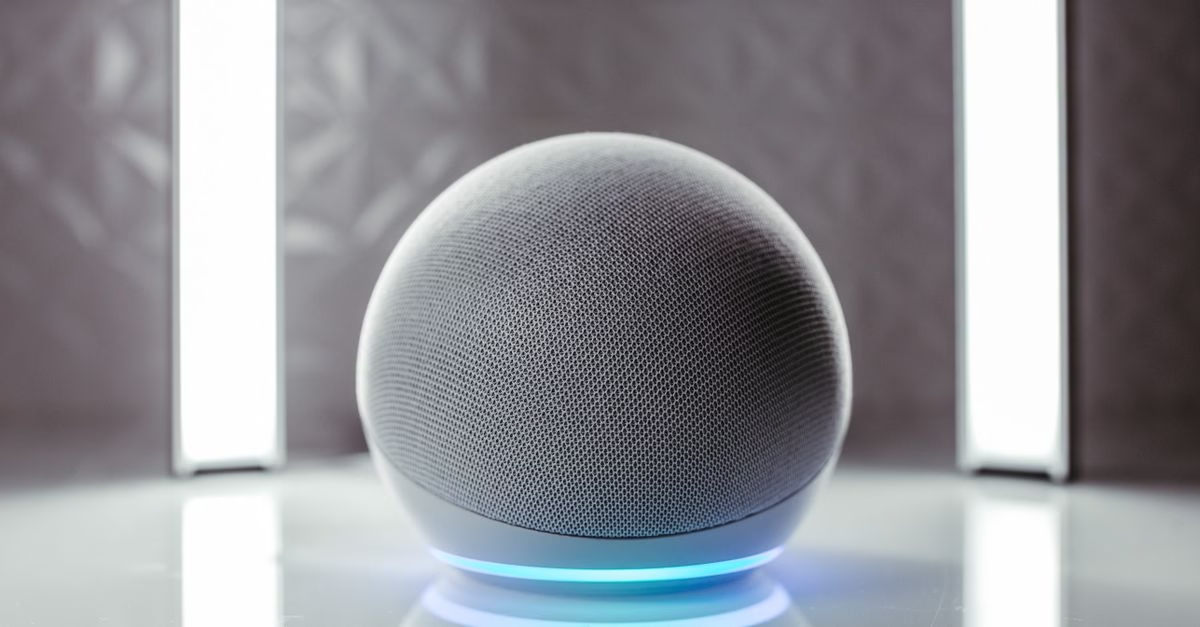
The Voice Assistant Gap Widens
Recent industry commentary points out a growing disconnect between audio performance and voice assistant capability in the smart speaker market. While Apple’s HomePod remains a staple for audiophiles who value rich, balanced sound, it faces stiff competition when it comes to the actual utility of its voice interface. Reports indicate that Siri, the brain behind the HomePod, is increasingly viewed as less intelligent and slower to react compared to the engines powering rival devices.
The core issue isn’t just about latency; it is about contextual understanding. Competitors have spent years refining their natural language processing to handle complex queries, multi-step instructions, and nuanced requests. In contrast, the HomePod’s interaction model can feel rigid. Users frequently report that simple commands require precise phrasing, whereas other assistants interpret intent even when the user speaks casually or includes background noise. This disparity has led tech observers to suggest that if voice control is a primary use case, the HomePod may no longer be the default choice for many Canadian households.
Usability Over Audio Fidelity
For the average consumer, a smart speaker is judged by how well it executes tasks, not just how it plays music. When a device fails to respond quickly or misunderstands a request, it creates friction in daily routines. This is particularly relevant for users managing smart home ecosystems, checking calendars, or setting timers hands-free. The frustration of repeating commands because an assistant didn’t catch the first attempt undermines the convenience factor that defines the category.
Furthermore, the rise of alternative platforms means that features like cross-device continuity, shopping lists, and news briefings are often more robust outside of Apple’s walled garden. While Apple excels at integrating its devices into a cohesive visual and audio experience, the underlying voice technology sometimes feels like an afterthought compared to the dedicated focus of Amazon and Google. For buyers weighing their options, this distinction is critical. If the goal is a hub for information and home automation, the ‘smarter’ assistants currently hold the advantage in practical, day-to-day scenarios.

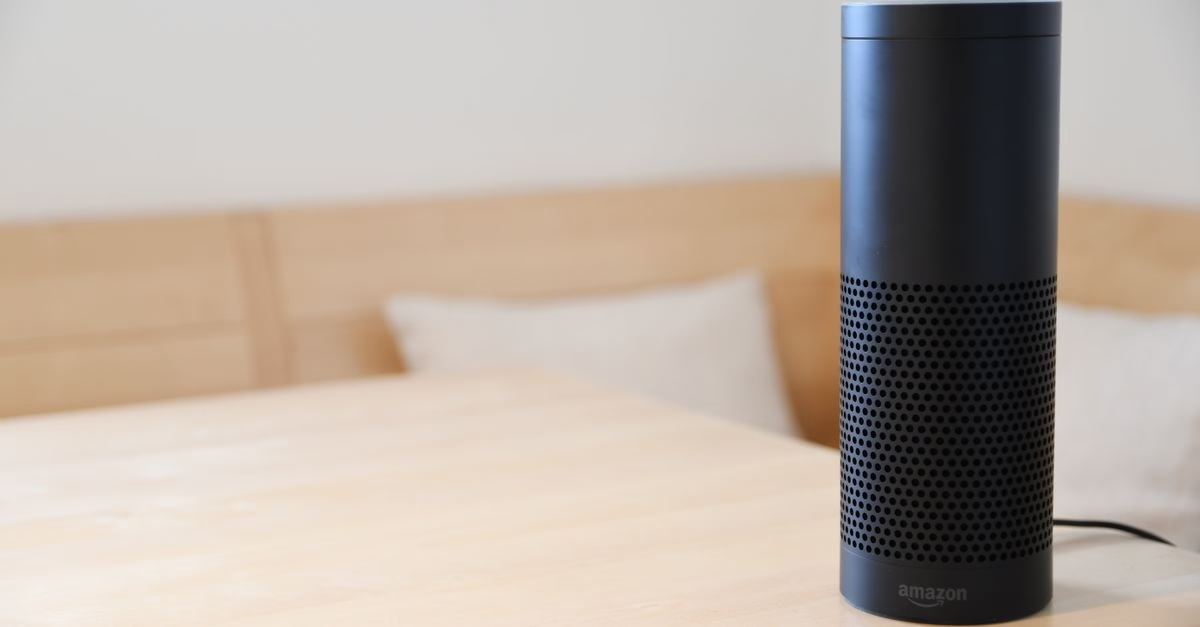
Choosing Based on Priority
The decision to buy a HomePod should hinge on what you value most in your smart home setup. If pristine audio quality and seamless integration with your existing Apple devices are non-negotiable, the HomePod remains a strong contender. However, if your priority is a responsive, intelligent assistant that handles a wide variety of queries with minimal effort, the landscape has shifted. Alternatives powered by Alexa or Google Assistant now offer a more fluid and capable voice experience, making them the pragmatic choice for those who view their speaker primarily as a conversational tool rather than just a music player.