
The Hardware Reality Check for Current Owners
The recent introduction of the Google Pixel 11 has sparked a common dilemma among Pixel 9 and Pixel 10 owners: should they invest in a new device or simply replace their aging batteries? The core issue lies in the fact that the Pixel 11 offers very little hardware differentiation from its predecessors. It retains the same 6.3-inch display with a 2,424-by-1,080 resolution and a 60-120 Hz refresh rate. While it is slightly brighter than the Pixel 9, its peak brightness matches the Pixel 10 at up to 3,000 nits.
In terms of physical design and internal power, the changes are minimal. The Pixel 11 measures 6 by 2.8 by 0.3 inches, similar to previous models, and continues to use 12 GB of RAM with storage options up to 512 GB. Crucially, all three phones feature batteries rated for 1,000 charge cycles before health drops below 80%. Since the Pixel 9 launched in August 2024 and the Pixel 10 in August 2025, most devices have not yet reached the threshold where a replacement becomes technically necessary. The phone will only alert users via the Settings app when battery health falls below that 80% mark.
Calculating the True Cost of Staying vs. Switching
For Canadian consumers and global users alike, the decision comes down to a simple cost-benefit analysis. On one hand, the Pixel 11 carries a starting price tag of $899. However, this figure does not account for trade-in credits, which can substantially lower the out-of-pocket expense for those upgrading from a Pixel 9 or 10. On the other hand, repairing your current device is remarkably inexpensive. A genuine Pixel 9 battery kit costs $59.99 from iFixit, while the Pixel 10 kit is even cheaper at $49.99.
If you choose professional installation through an authorized repair shop, labor costs will add to the total, but it remains far below the price of a new flagship. This creates a scenario where keeping your current phone is financially superior unless you require specific new features not present in the older models. Given that the camera hardware and display technology are largely unchanged, the incentive to upgrade based on pure hardware specs is weak. Users should only consider the Pixel 11 if software-only improvements or AI features justify the higher initial investment after trade-ins are applied.

When to Make the Move
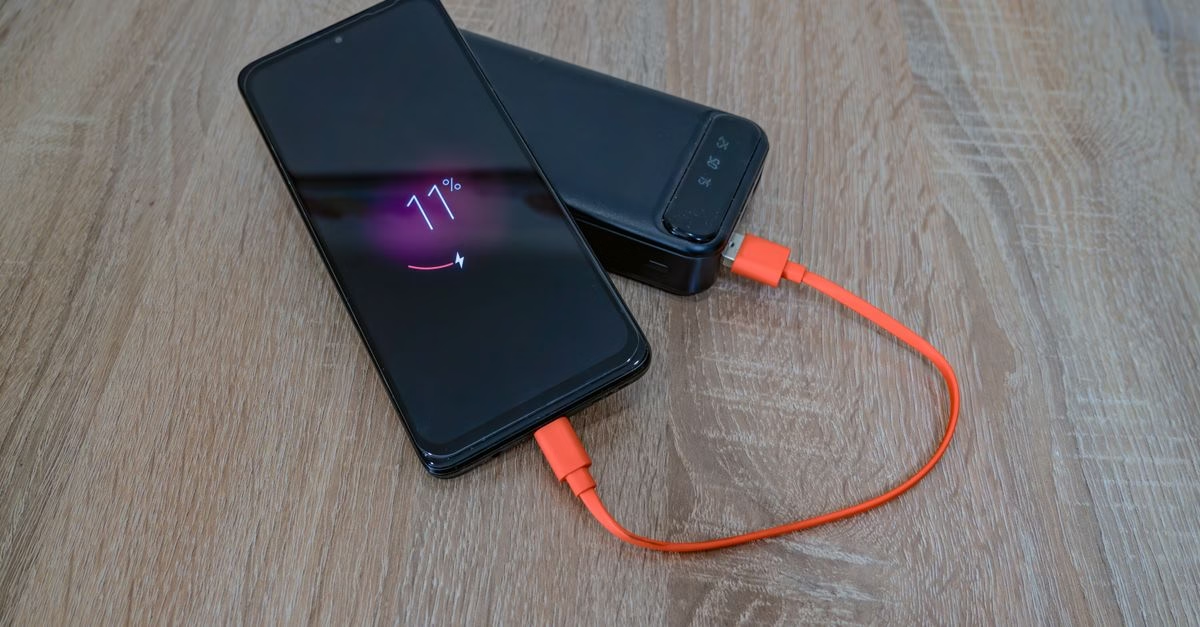
The evidence suggests that for most Pixel 9 and 10 owners, replacing the battery is the more rational choice until the device physically warns of degraded health. With over 750 charge cycles potentially still remaining on the Pixel 9 and around 400 on the Pixel 10, these phones are likely to remain functional for years. The minor hardware increments in the Pixel 11 do not warrant a full replacement solely for performance reasons. Owners should monitor their battery health settings closely; once the system advises a replacement due to falling below 80% capacity, then the math shifts toward either a repair or an upgrade depending on individual trade-in values.