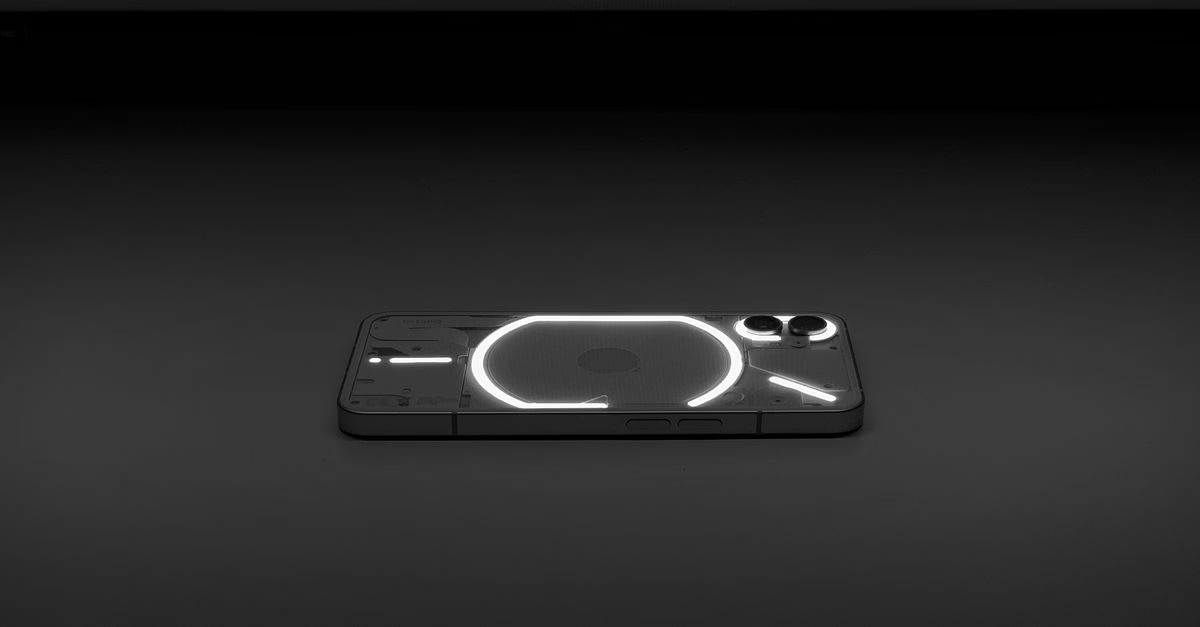
Nothing widens Android 17 testing pool
The focus here is Nothing OS 5.0 beta. Nothing has expanded its Nothing OS 5.0 open beta program to include three additional devices. The rollout now covers the Nothing Phone (4a), Nothing Phone (3a), and Nothing Phone (3a) Pro. This expansion follows the initial launch of the beta for the Nothing Phone (3) in late August and the subsequent addition of the Phone (4a) Pro earlier this month.
The update is built on top of Android 17, Google’s latest mobile operating system iteration. By pushing this software to mid-range models like the 3a series, Nothing is allowing a broader segment of its user base to test new features before the stable release. The company has not announced a specific date for the final stable build, but the widening beta suggests development is progressing through key validation stages.
Enrollment steps and installation process
Joining the Nothing OS 5.0 beta requires manual enrollment through the official Nothing community platform. Users cannot simply check for updates in their settings menu without first registering their device identifier. The process involves logging into the Nothing account associated with the phone, navigating to the beta program section, and accepting the terms of service which outline the risks of running pre-release software.
Once enrolled, the device will receive an over-the-air notification for the Nothing OS 5.0 package. The installation process mirrors standard system updates, requiring a full reboot and significant downtime. Google’s Android 17 platform underpins this build, introducing foundational changes to how apps interact with the system. Developers and testers can refer to Android 17 documentation for specific API changes that may affect third-party application behavior during this testing phase.

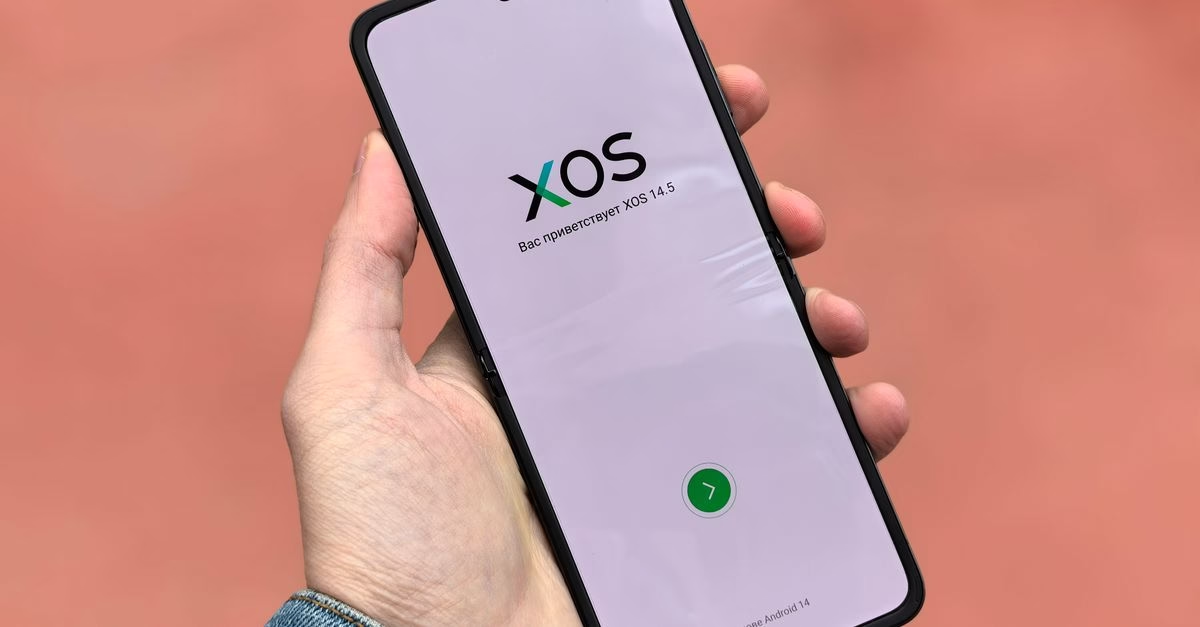
Early access to Android 17 core features
This expansion matters because it brings Android 17 capabilities to non-flagship devices much sooner than typical industry cycles. Android 17 introduces enhanced privacy controls, improved thermal management, and refined permission handling. For users of the Phone (3a) and Phone (4a), this means testing these system-level improvements on hardware that prioritizes value over raw premium specs.
Nothing OS has carved a niche with its minimalist aesthetic and glyph interface integrations. Testing version 5.0 on these devices helps ensure that custom UI elements remain stable when layered over Google’s newest codebase. It also signals Nothing’s commitment to supporting its mid-range lineup with timely software innovations, rather than reserving major OS jumps exclusively for flagship models like the Phone (3).
What Canadian users should expect
For Canadian buyers, the availability of this beta means you can influence the final software experience before it ships globally. However, practical daily use may be disrupted. Beta software often contains unresolved bugs, such as occasional app crashes, connectivity drops, or accelerated battery drain. These issues are expected during the testing phase but can hinder productivity if you rely on your phone for critical tasks.
If you decide to join, ensure your data is fully backed up. While Nothing aims for stability, downgrading from a beta build to a stable version often requires a factory reset, which erases all local data. Additionally, some banking apps or secure enterprise tools may refuse to run on detected beta software due to security certification checks. Consider using a secondary device for testing if possible.
Risks and unsupported scenarios
The primary limitation of the Nothing OS 5.0 open beta is its inherent instability. As a pre-release build, it has not undergone the same rigorous quality assurance as stable releases. Users may encounter glitches in the Glyph interface, camera processing errors, or inconsistent notification delivery. Nothing explicitly states that beta software is provided “as is” without warranty for damages resulting from its use.
Another constraint is the lack of automatic rollback options. If the beta proves too buggy for daily use, returning to the previous stable Android version typically involves unlocking the bootloader and flashing factory images, a technical process that voids warranties in some regions and deletes user data. Furthermore, not all features promised for the final Android 17 release may be fully functional in this specific Nothing OS 5.0 build.
Balancing innovation with stability
The expansion of the Nothing OS 5.0 open beta to the Phone (4a), Phone (3a), and Phone (3a) Pro marks a significant step in Nothing’s software strategy. It democratizes access to Android 17 features, allowing mid-range users to contribute to the refinement of the operating system. This move aligns with broader industry trends where manufacturers leverage community feedback to polish software before wide deployment.
However, participation requires a cautious approach. Users must weigh the excitement of new features against the potential for daily disruptions. For those willing to navigate the enrollment process and manage the risks, the beta offers a glimpse into the future of Nothing’s minimalist interface. For everyone else, waiting for the stable release remains the safest path to a reliable smartphone experience.