


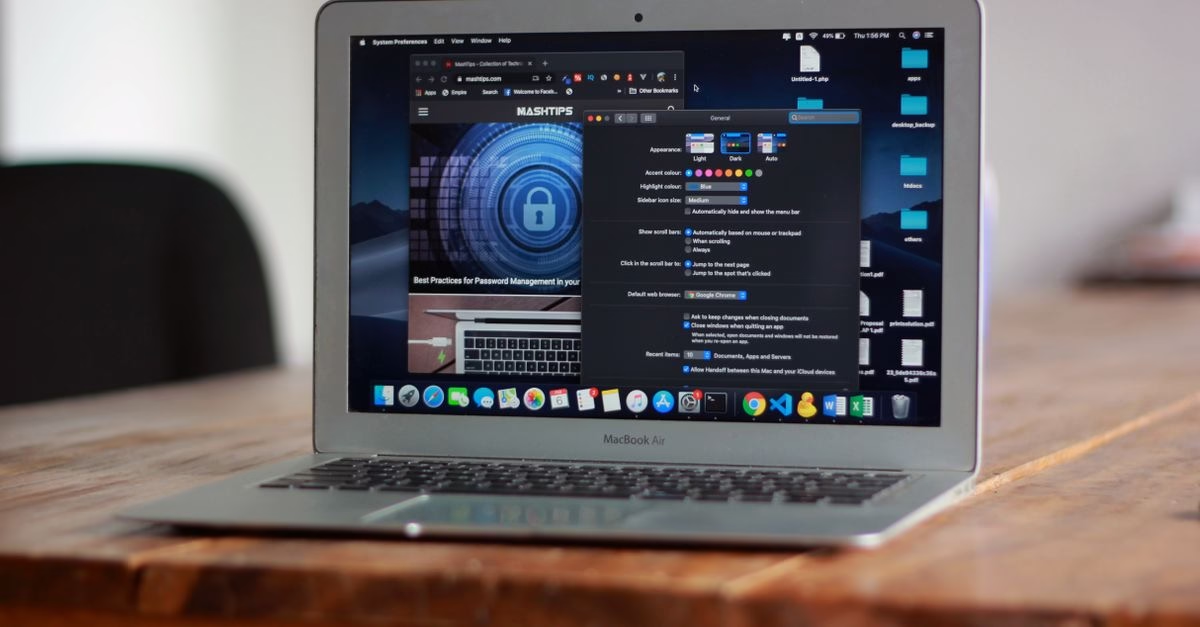
Apple’s Evolving Stance on Mac Protection
For years, the prevailing wisdom among tech enthusiasts and casual users alike was that Apple devices like the MacBook were inherently safer than their Windows counterparts. This narrative suggested that because macOS had a smaller market share, it was less targeted by malware creators, making third-party antivirus software unnecessary for the average consumer. However, recent reporting indicates a significant shift in this perspective. According to industry analysis, Apple has moved away from explicitly suggesting that users do not need additional security layers. While the company does not aggressively market third-party antivirus as a mandatory purchase, it also no longer dismisses its necessity outright.
This change in messaging is subtle but profound. It reflects a broader acknowledgment within the tech community that the threat landscape for macOS has evolved. The assumption that Macs are impervious to viruses is increasingly viewed as outdated. Instead, the focus has shifted toward understanding that while Apple provides robust native security features, these may not cover every vector of attack, particularly in more complex or high-risk usage scenarios. The conversation has moved from “Do I need antivirus?” to “What level of protection do I actually require?”
The Enterprise Reality Check
The implications of this shift are most visible in the enterprise sector, where the stakes for data security are significantly higher. Research from enterprise technology analysts highlights that macOS requires dedicated antivirus software for sufficient protection in corporate environments. This is not merely about avoiding a single virus; it is about managing risk across networks, handling sensitive client data, and ensuring compliance with industry regulations. In these settings, relying solely on Apple’s built-in tools is often considered insufficient by IT administrators who must account for diverse user behaviors and potential vulnerabilities introduced through third-party applications.
For individual consumers, this distinction is crucial. While a home user browsing the web may face different risks than a corporate network administrator, the underlying principle remains: no operating system is entirely bulletproof. The growing acceptance of third-party antivirus solutions suggests that even for personal use, there may be value in layered security. This is especially true for users who engage in file sharing, download content from various sources, or connect to public Wi-Fi networks frequently. The era of assuming automatic safety is ending, replaced by a more nuanced approach to digital hygiene that acknowledges the complexity of modern computing threats.


Navigating the New Security Landscape
As Apple continues to refine its native security features, the role of third-party antivirus software is transitioning from a niche recommendation to a standard consideration for many users. The key takeaway is that vigilance is still required. While you may not need to install heavy, resource-intensive suites if your usage is light, ignoring the possibility of malware is no longer a viable strategy. Users should evaluate their specific needs, considering factors like the sensitivity of their data and their online habits, rather than relying on outdated assumptions about Mac immunity.
What remains unknown is how quickly mainstream adoption will follow enterprise trends. It is unclear whether Apple will eventually integrate more advanced third-party scanning capabilities directly into macOS or if the market will continue to rely on external solutions. For now, the safest path is to stay informed, keep your system updated, and recognize that security is an ongoing process rather than a one-time setup. Whether you choose to add another layer of protection depends on your comfort level with risk, but the door has definitely been opened for serious consideration.





