Real-World Performance Gains for Wearable Aids
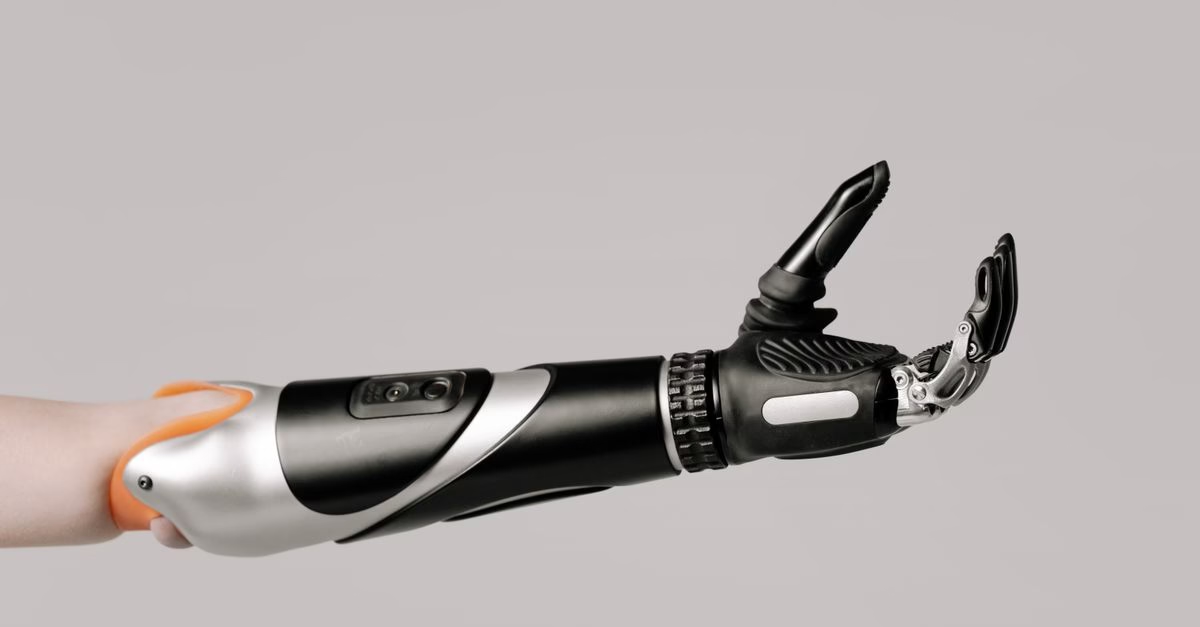
The landscape of wearable robotics is shifting from theoretical potential to tangible results. According to recent coverage by Ars Technica, exoskeleton devices are no longer just laboratory curiosities; they are actively demonstrating noticeable benefits for users engaged in various real-world tasks. This development marks a critical juncture for the industry, moving beyond proof-of-concept stages to validate actual utility in dynamic environments.
For years, the promise of exoskeletons has been held back by questions regarding comfort, power efficiency, and practical application. The current wave of reports suggests that these hurdles are being cleared. Users are finding that these mechanical aids provide meaningful support, whether in industrial settings or potentially in broader consumer contexts. The emphasis on ‘real-world’ tasks is particularly telling, indicating that the technology is being tested outside controlled academic or corporate labs where variables can be tightly managed.
The Practical Shift in Human Augmentation
This progression matters because it validates the core value proposition of exoskeleton technology: augmenting human capability without imposing undue burden. If devices are showing noticeable benefits in diverse scenarios, it suggests that the engineering challenges of weight distribution, battery life, and intuitive control have reached a maturity level suitable for wider deployment. For Canadian consumers and workers, this could mean a future where physical strain is mitigated more effectively, reducing injury risks and extending professional longevity in physically demanding roles.
However, it is important to distinguish between industrial-grade heavy lifting aids and lighter consumer-focused models. While the source material confirms benefits across ‘various’ tasks, it does not specify the exact nature of every use case. The implication is that the technology is versatile, but the specific advantages may vary depending on the user’s needs. This versatility is key to its adoption, as it allows for tailored solutions rather than a one-size-fits-all approach. The move toward real-world validation also pressures manufacturers to prove durability and reliability over time, not just in short-term trials.

Navigating the Early Adoption Phase
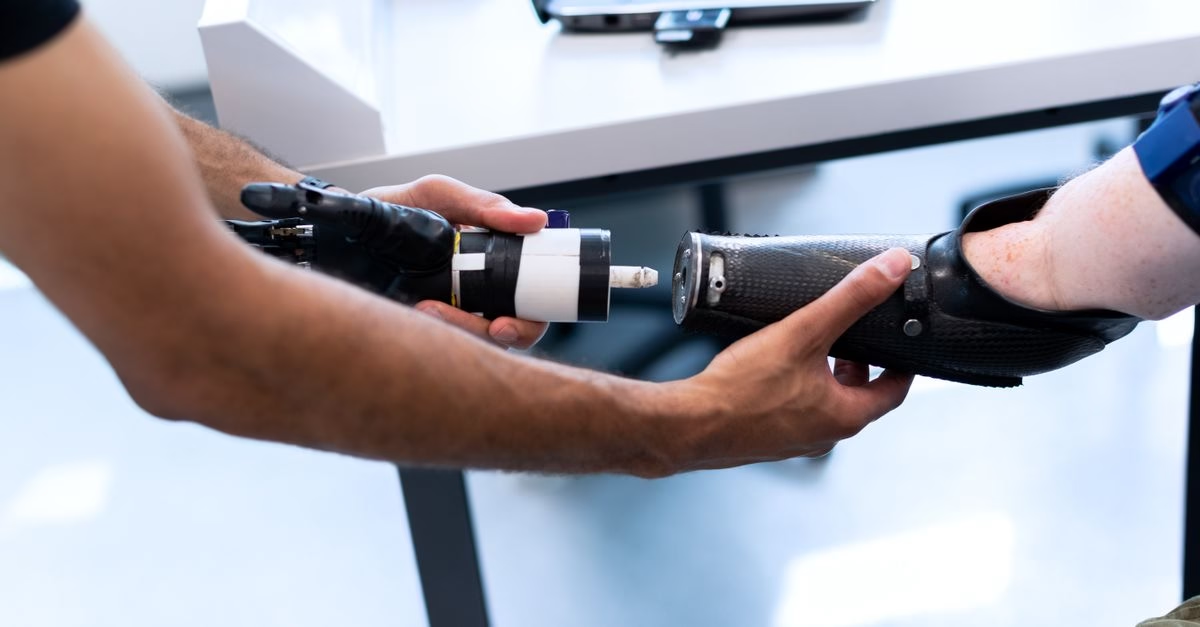
As exoskeletons begin to demonstrate their worth in practical settings, the focus will likely shift from ‘if’ they work to ‘who’ needs them most and ‘how’ they integrate into daily life. The current evidence points to a promising trajectory, but much remains unknown regarding long-term user experience, cost accessibility, and regulatory standards for consumer-grade devices. For now, the dawn of this age is defined by successful integration into real-world workflows, offering a glimpse of a future where technology seamlessly supports human physical effort.