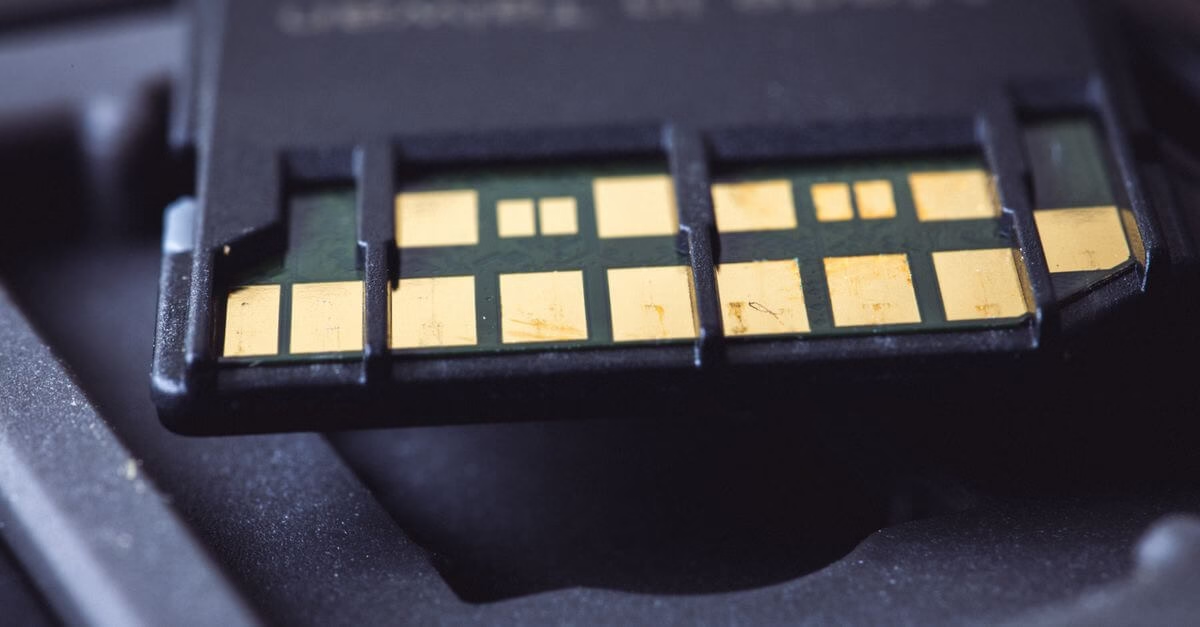
What happened: CXMT announces NAND flash R&D plans
This story examines CXMT NAND flash.
Chinese chipmaker CXMT, best known for its DDR5 DRAM modules, is reportedly preparing to enter the NAND flash market. Reuters, citing people familiar with the project, says CXMT will set up a dedicated NAND research‑and‑development production line at its new Beijing facility. The company has already established a research institute in the capital, and NAND development is listed among its current projects.
Sources indicate CXMT has begun informal talks with potential customers, including a newly formed startup that intends to use the chips for AI and super‑computer storage solutions. No official launch date or production capacity has been disclosed, and it is unclear whether the line will move beyond R&D into pilot or full‑scale manufacturing.
How CXMT plans to build NAND capability

Entering NAND flash requires a different process stack than DRAM. While CXMT’s existing fabs specialize in high‑speed DRAM cell formation, a NAND line must master multi‑layer 3D stacking, charge‑trap or floating‑gate structures, and precise etching to achieve the high densities demanded by modern storage.
The reported R&D line will likely serve as a pilot platform for these processes. By integrating the line into its new Beijing plant, CXMT can leverage existing clean‑room infrastructure, but it will still need to source specialized equipment—such as atomic layer deposition (ALD) tools and high‑precision lithography systems—typically supplied by a narrow set of global vendors.
In practice, the line will start with small‑volume prototype wafers, allowing CXMT to validate cell architecture, endurance, and error‑correction algorithms before scaling up. Partnerships with customers early in the design phase suggest CXMT is aiming to tailor its NAND offerings to niche high‑performance workloads rather than mass‑market consumer SSDs at this stage.
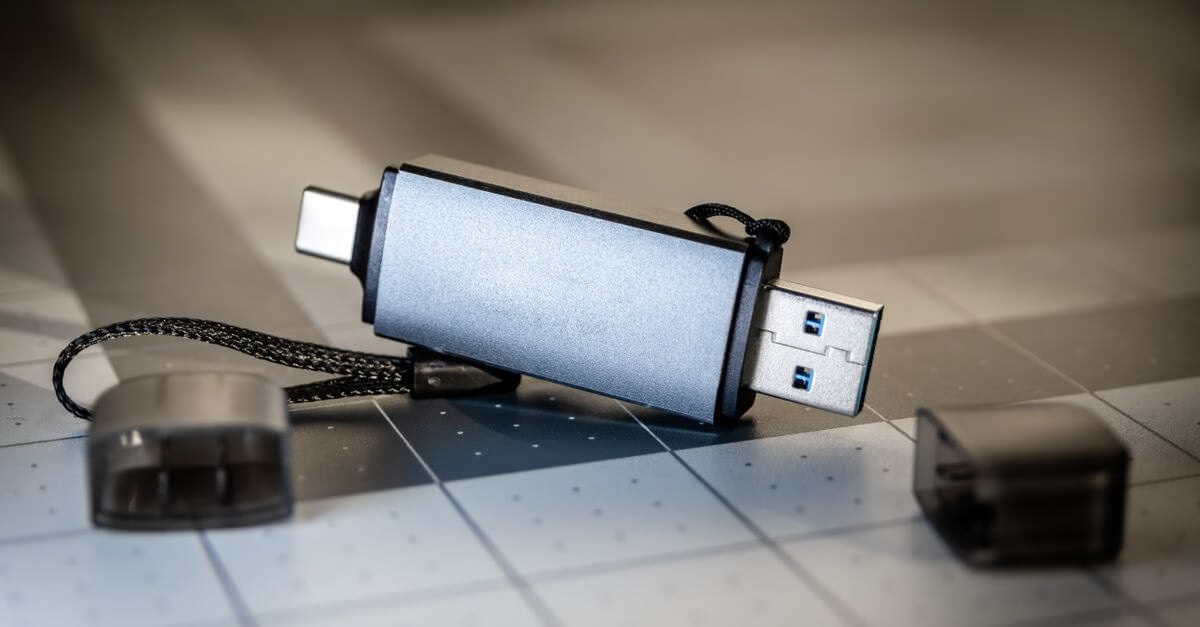
Why the move matters for the memory ecosystem
The flash market is heavily concentrated: Samsung, SK Hynix and Kioxia together command over 80 % of global NAND shipments. China’s domestic player YMTC holds the third‑largest share, but its output is still a fraction of the leaders. CXMT’s entry could add a fourth significant Chinese source, potentially diversifying supply and reducing geopolitical risk for Chinese data‑center operators.
From a pricing perspective, CXMT already commands a premium over Samsung for 64 GB DDR5 server modules, indicating it can leverage scarcity to secure higher margins. If it can translate that pricing power to NAND, customers facing the current flash shortage may see new negotiating leverage.
Strategically, the move aligns with Beijing’s broader push for semiconductor self‑sufficiency. Adding NAND capability to CXMT’s portfolio narrows the technology gap between China’s DRAM and flash sectors, which have historically developed on separate tracks.
Practical implications for buyers and the market
For enterprises planning AI‑heavy workloads or building next‑gen supercomputers, a domestic NAND source could simplify supply chains and reduce exposure to export controls. CXMT’s early engagement with a startup focused on AI storage hints at a potential niche product line—high‑performance, low‑latency NAND optimized for large‑scale training datasets.
However, buyers should temper expectations. An R&D line does not guarantee immediate volume availability. Companies that need large quantities of consumer‑grade SSDs will likely continue to source from established vendors for the foreseeable future.
Investors and analysts should watch for announcements about pilot production runs, yield targets, and any partnership with equipment suppliers. Those metrics will indicate whether CXMT can move from prototype to a commercially viable flash product.
Limitations and unanswered questions
The biggest unknown is timing. Neither CXMT nor its partners have disclosed when the R&D line will become operational, nor whether it will transition to trial production. A single R&D line, even if successful, is unlikely to shift global NAND supply dynamics in the short term.
Technical risk is also high. NAND flash manufacturing tolerances are tighter than DRAM, and yield rates for new 3D processes typically start low. CXMT will need to overcome these hurdles before it can compete on cost or volume.
Finally, market reception remains speculative. While a Chinese startup has expressed interest, broader OEM adoption will depend on CXMT’s ability to meet reliability standards, endurance specifications, and price points that can compete with entrenched players.
Conclusion: A cautious but noteworthy step
CXMT’s reported push into NAND flash marks a strategic expansion that could, over time, add a new Chinese voice to a market dominated by a handful of global giants. The initiative is still in the research phase, and a single R&D line will not instantly alleviate the current flash shortage. Nonetheless, the move signals China’s intent to close the technology gap between its DRAM and flash sectors, and it may eventually give domestic data‑center operators a home‑grown alternative for high‑performance storage.
For now, industry watchers should monitor CXMT’s progress on pilot production, yield improvements, and any formal customer commitments. Those signals will determine whether the project remains a technical curiosity or evolves into a genuine competitive force in the NAND arena.