From sparkling white wine to chocolatey Irish stout, I put iGulu’s automated homebrewing system to the test at home in Ottawa. The brewing was easy. The real surprise came when I invited people over.
Review disclosure: iGulu contacted me earlier this summer and provided the original iGulu F1 brewing machine and two ingredient kits (Sparkling White Wine and Irish Stout) for this review. The experiences and opinions expressed here are entirely my own. I’ve since purchased additional brewing products to explore more recipes, including beer, mead, and cider. For clarity, this review focuses exclusively on the original iGulu F1, which I’ve personally tested at home, rather than the newer F1 Pro.
Traditional homebrewing has always fascinated me. There’s something satisfying about turning a collection of ingredients into a drink you can pour, taste, and share. But there’s also the other side: expensive equipment, preparation, cleaning, fermentation schedules, and the possibility of waiting weeks for a batch that doesn’t turn out as expected.
A conventional all-grain setup can involve a brew kettle, mash tun, fermentation vessels, temperature-control equipment, and a substantial amount of space. Even simpler extract kits still leave plenty of work for the person brewing.

The iGulu F1 smart homebrewing system takes a different approach. It combines temperature-controlled fermentation, chilling, and dispensing in one countertop appliance, with ready-made ingredient kits that load their recipes automatically.
Earlier this summer, iGulu asked if I’d be interested in putting the machine through its paces for CRYOVEX readers and viewers. I agreed, and the company sent me the F1 with two kits: Sparkling White Wine and Irish Stout.
I wasn’t interested in simply repeating the manufacturer’s promises. I wanted to know how easy it actually was to use and whether the finished drinks were worth serving.
Fortunately, I had some willing volunteers to help with that second part.
And they weren’t shy about finishing what I made.
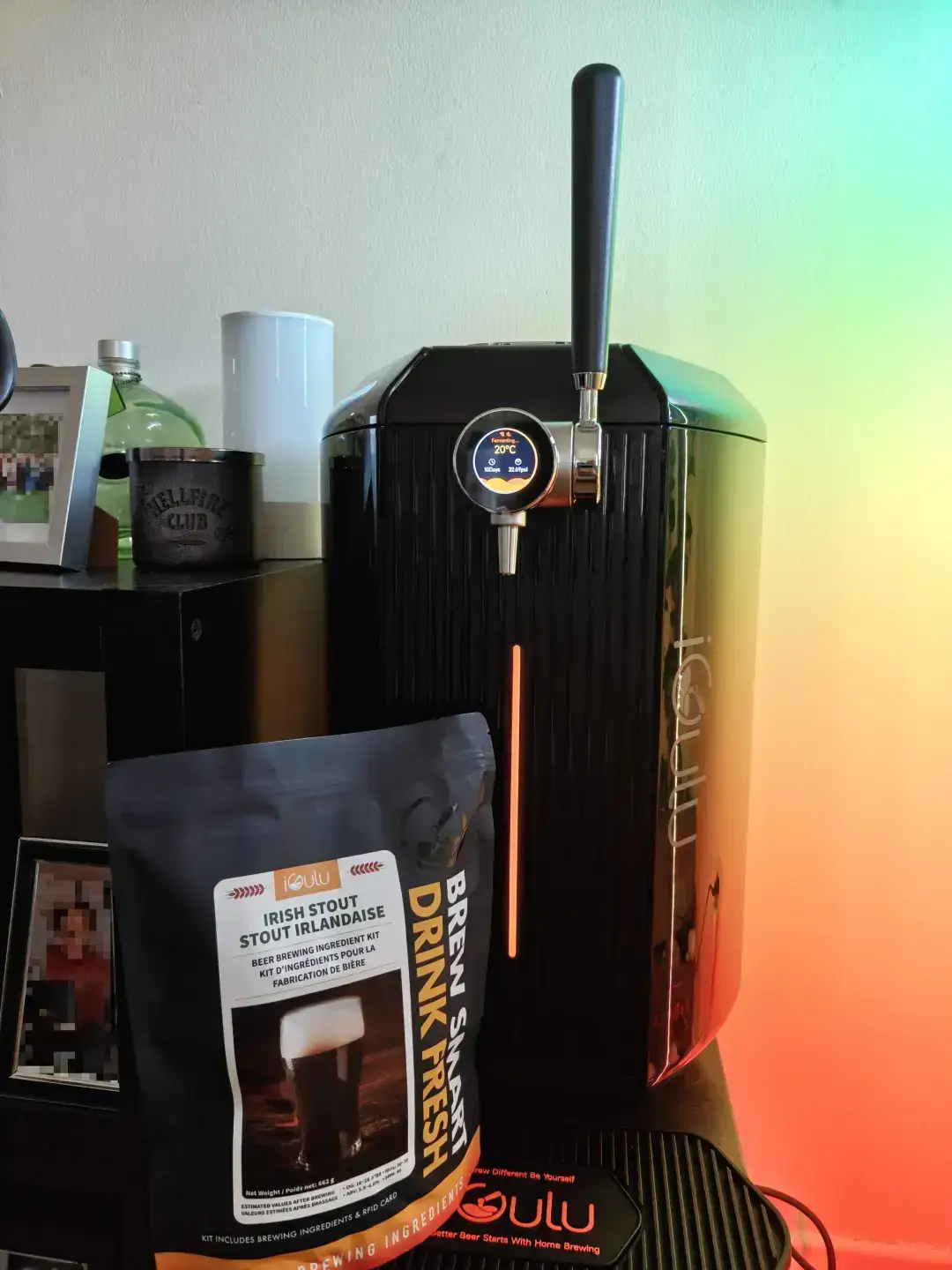
My verdict: The iGulu F1 made home fermentation much less intimidating than I expected. After several batches and two particularly successful gatherings, I came away impressed by its convenience and, more importantly, the drinks it produced.
Why I Wanted to Test the iGulu F1
I’ve always felt that the outcome of a brewing session matters more than the complexity of the equipment used to produce it.
Traditional homebrewing can be deeply rewarding, especially if you enjoy controlling every stage. But a brewing day can also consume several hours before fermentation even begins. Then come days or weeks of waiting, followed by bottling, kegging, or transferring the finished beer.
A more convenient system sounds appealing, but convenience alone isn’t enough.
There’s no point saving hours of preparation if the result tastes mediocre.
That’s what made the F1 interesting. On paper, it promised to eliminate much of the active work associated with managing fermentation while keeping enough control over the process to produce enjoyable drinks.
I also liked that it wasn’t limited to beer.
The machine supports several types of fermented beverages, including cider, kombucha, and wine. For my first two featured tests, that meant I could try two completely different recipes.
The decision about which one to make first wasn’t entirely mine.
Everyone wanted to try the sparkling white wine.
So that’s where I started.
Unboxing the iGulu F1: More Appliance Than Brewing Equipment
The F1 doesn’t look like traditional homebrewing equipment.
Instead of a collection of buckets, tubes, temperature controllers, and separate refrigeration hardware, it’s an enclosed countertop machine with a front-mounted touchscreen and dispensing tap.
It’s a clean, modern design that looks appropriate in a kitchen or home bar.
But don’t mistake it for a tiny gadget.
According to iGulu’s Canadian product specifications, the machine measures approximately 33.2 cm wide, 45.5 cm deep, and 51.8 cm tall. It also weighs around 11.3 kg before the fermentation vessel is filled.
You’ll want a dedicated spot for it, ideally somewhere with sufficient ventilation and room to access the top.
Did I Read the Manual?
Nope.
I went straight to YouTube.
Rather than work through a manual, I wanted to watch someone unbox the machine and demonstrate the simplest way to get started.
Once I’d watched the setup, I had a much better idea of how everything fitted together.
That was enough to move on to preparing the first batch.
But before anything went into the tank, there was one job I wasn’t about to skip.
Cleaning.
I cleaned the fermentation tank, accessories, tubing, and other components that would come into contact with the ingredients.
This is one area where shortcuts don’t make sense. Brewing requires clean, properly sanitized equipment, and the machine’s automated features aren’t a substitute for good preparation.
Only after dealing with the equipment did I open the sparkling white wine kit.
How Easy Is the iGulu F1 to Use? Here’s My Entire Process
This was probably the biggest surprise of the review.
I expected brewing to involve more preparation and more decisions.
Instead, the whole process was almost ridiculously simple.
Here’s exactly how I approached it:
- Follow the recipe package. The included instructions tell you which ingredients to add and in what order.
- Add water to the indicated line. I used the first marked fill line on the fermentation vessel, following the kit’s directions.
- Add the liquid mixture. In went the wet ingredients supplied with the kit.
- Add the dry ingredients. I followed the order specified on the package.
- Add the yeast. This starts the biological fermentation process.
- Seal the vessel and connect the tubing. Everything needs to be fitted according to the machine’s instructions.
- Scan the included recipe card. The F1 recognizes the kit and loads its programmed fermentation schedule.
- Press Start. And that’s it.
Seriously.
That was the part I appreciated most.
There was no complicated temperature chart for me to program. I didn’t have to calculate how many days to leave the drink at one temperature before changing it to another.
The recipe card handled those settings.
For someone who wants to produce a batch without turning the entire process into a technical exercise, that’s a big deal.
Why I Used Ottawa Tap Water
I live in Ottawa, Canada, and for these batches I used ordinary tap water directly.
I didn’t notice an unwanted taste that I could attribute to the water in the finished drinks.
Of course, water quality varies by location. Mineral content, chlorine treatment, and other factors can affect brewing, so I wouldn’t assume that every municipal water supply will produce identical results.
For my testing, though, Ottawa tap water worked well enough that I didn’t feel the need to switch to bottled water.
What Happens After You Press Start?
This is where the iGulu F1 starts earning its smart-home credentials.
Once the program begins, the machine takes responsibility for the programmed fermentation temperatures and timing.
The F1 includes heating and compressor cooling, with sensors and pressure management built into its fermentation system.
Instead of buying a separate fermentation fridge, heating belt, and temperature controller, you’re working with one integrated appliance.
The touchscreen displays the active brewing program and its remaining duration.
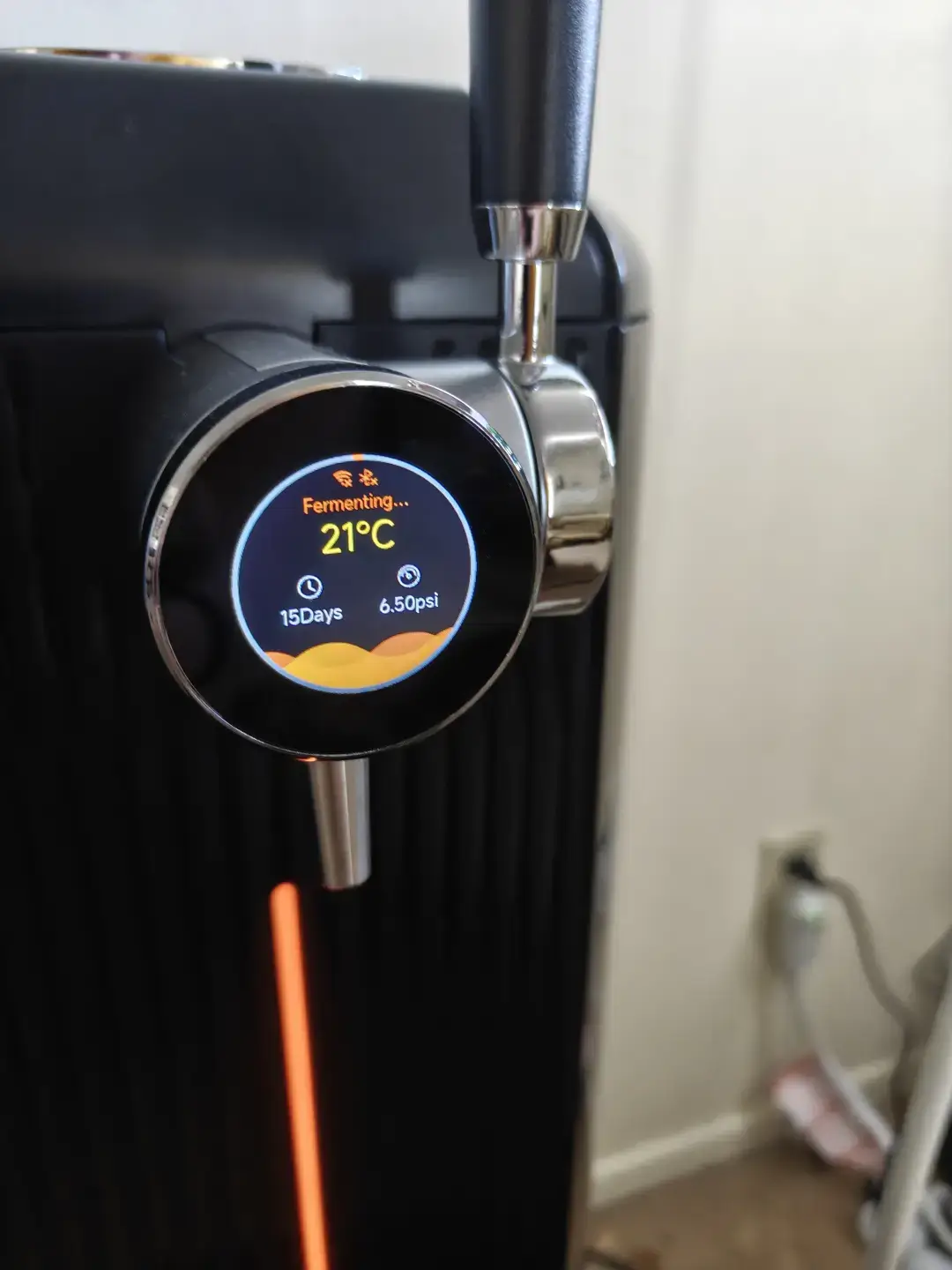
And because the recipe is already loaded, there isn’t much else to do during the scheduled fermentation.
You wait.
That’s really the hardest part.
When my brewing program finished, the machine sounded an alert and moved into keeping the drinks cold.
I didn’t have to manually move the vessel into a refrigerator or start working out the next cooling stage.
The F1 doesn’t make fermentation instantaneous. It makes managing fermentation considerably easier.
That distinction is important.
Yeast still needs time to do its work. Different beverages and recipes have different requirements, and the duration displayed by the machine depends on the selected program.
What you’re saving is active preparation and intervention, not necessarily the total number of calendar days.
First Hands-On Test: Making Sparkling White Wine
I wasn’t originally expecting sparkling white wine to be the star of a homebrewing-machine review.
But when I mentioned the two ingredient kits, the people around me were much more interested in trying the wine first.
So I figured, why not?
The iGulu Sparkling White Wine kit contains a prepared juice concentrate blend, yeast and nutrients, a fining sachet, and an RFID recipe card.
It’s designed to simplify the process of preparing a fermented sparkling wine without having to source and measure every ingredient individually.
I followed the package instructions, prepared the fermentation tank, added the ingredients, connected everything, and started the program.
And that was the extent of the active brewing work.
The machine took over from there.
Preparing the Perfect Excuse to Entertain
Now, if you’re going to make sparkling wine at home, you might as well make an occasion out of it.
That’s exactly what I did.
I organized a gathering and prepared a spread of charcuterie, cheeses, and other food to accompany the wine.
I went all out on this one.
There was something satisfying about putting that much effort into the food while the drink itself had required surprisingly little hands-on work.
But I also knew the real test was coming.
It’s easy to be impressed by a machine you’ve just unpacked.
It’s another thing to serve what it produces to a group of people and see whether they actually enjoy it.
The Sparkling White Wine Taste Test
The wine turned out to be a success.
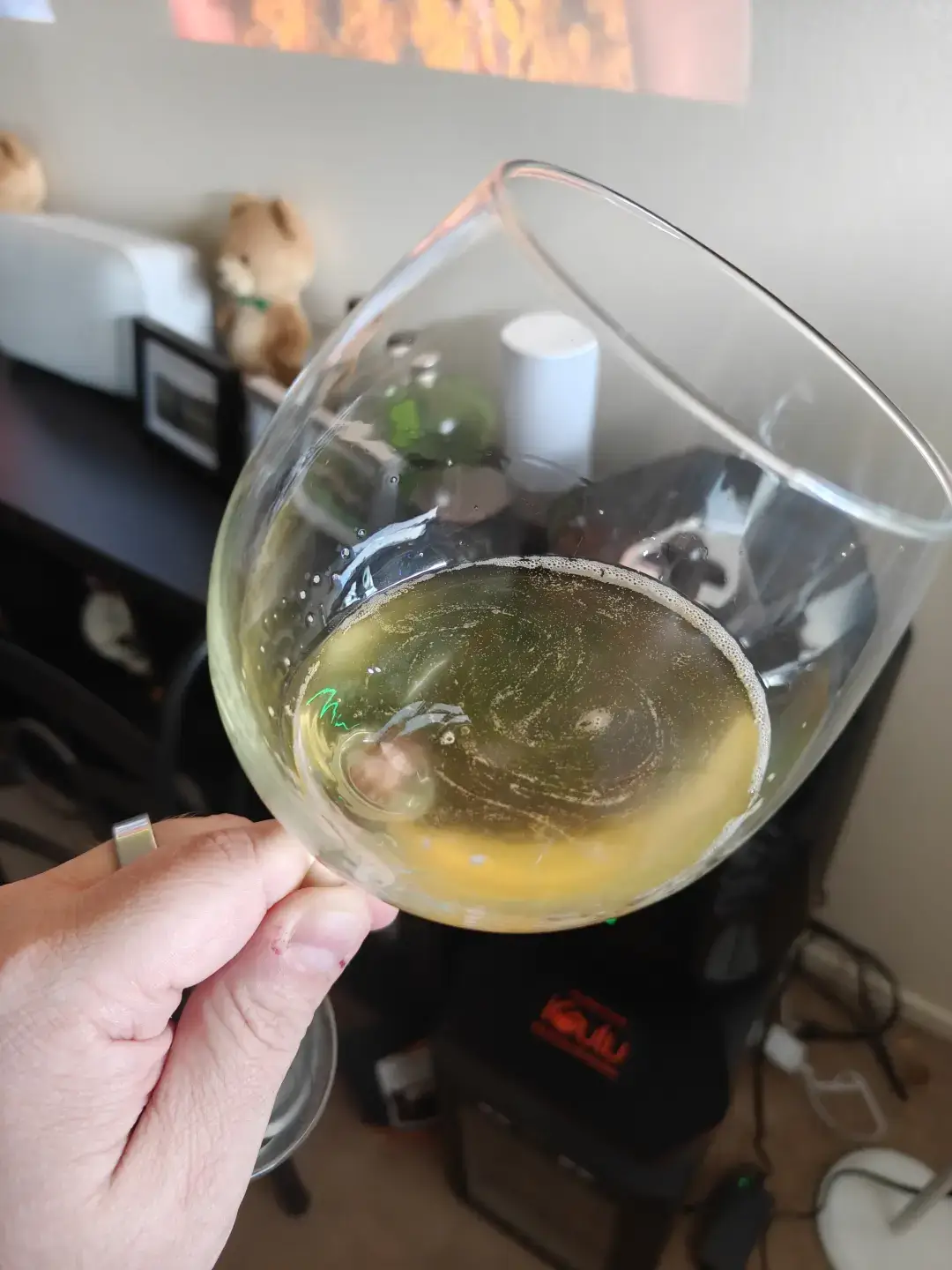
And the biggest surprise wasn’t simply that I enjoyed it.
It was seeing people who don’t normally drink wine enjoy it too.
That was the moment I started looking at the machine differently.
I wasn’t serving a drink because I needed someone to evaluate a review product. I was sharing something I’d prepared at home, and people were genuinely enjoying themselves.
The charcuterie and cheese spread worked beautifully for the occasion.
The atmosphere was exactly what I’d hoped for.
And by the end of the gathering, there wasn’t any wine left.
Now, I’m not going to pretend that an empty fermentation vessel is a laboratory measurement of quality.
Taste is subjective. A gathering isn’t a controlled blind tasting, and different people will naturally have different preferences.
But when guests who wouldn’t normally reach for wine are enjoying the finished product, that means something to me.
My first iGulu F1 batch was a success, not just as a brewing experiment but as something I was happy to serve to other people.
Second Hands-On Test: Brewing Irish Stout
With the sparkling wine finished, it was time to move on to something completely different.
Irish stout.
I was particularly interested in this recipe because dark beers can have a much richer flavour profile, often built around roasted malt characteristics.
Chocolate, coffee, sweetness, bitterness—there’s plenty of room for a stout to develop its own personality.
The iGulu Irish Stout ingredient kit uses dark dry malt extract, stout-style sugar, yeast, and hop extract.
The manufacturer’s published recipe lists 12 days of primary fermentation followed by three days of conditioning. Those are programmed stages rather than a guarantee of when every individual batch will be served.
By the time I started this second featured recipe, I was already familiar with the machine.
Same Machine, Different Drink
The preparation followed the same basic routine as the sparkling white wine.
I prepared the equipment, followed the ingredient instructions, added the required water, sealed the fermentation vessel, and connected the tubing.
Then came the recipe card.
Scan.
Start.
Wait.
That consistency is one of the F1’s advantages.
Once you’ve learned the basic preparation process, switching to a different ingredient kit doesn’t mean learning an entirely new brewing system.
The recipe changes, along with its programmed stages, but the basic workflow remains familiar.
For someone who enjoys trying different drinks, that makes the system more approachable.
How Did My Irish Stout Taste?
This was the part I’d been looking forward to.
And I wasn’t disappointed.
My Irish stout had a delightful combination of chocolate flavours, hints of coffee, and a sweetness that I found particularly enjoyable.

It had the kind of character I wanted from a dark beer.
The chocolate and coffee notes complemented each other, while the sweet impression made the finished drink especially appealing to my taste.
I wouldn’t describe this as a formal competition tasting. I wasn’t measuring specific flavour compounds or comparing the stout against a blind lineup of commercial beers.
I was judging the drink in the way that matters most when I’m at home: did I enjoy it, and would I happily serve it again?
Absolutely.
Another Gathering, Another Empty Batch
| Sparkling White Wine | Irish Stout | |
|---|---|---|
| Preparation | Guided ingredient kit | Guided ingredient kit |
| Your tasting experience | Enjoyable, including for guests who normally avoid wine | Chocolate, coffee notes, and sweetness |
| Guest reception | Entire batch consumed | Entire batch consumed |
| Your assessment | Successful first test | Another successful batch |
Naturally, I had people over again.
I wasn’t about to keep the stout to myself.
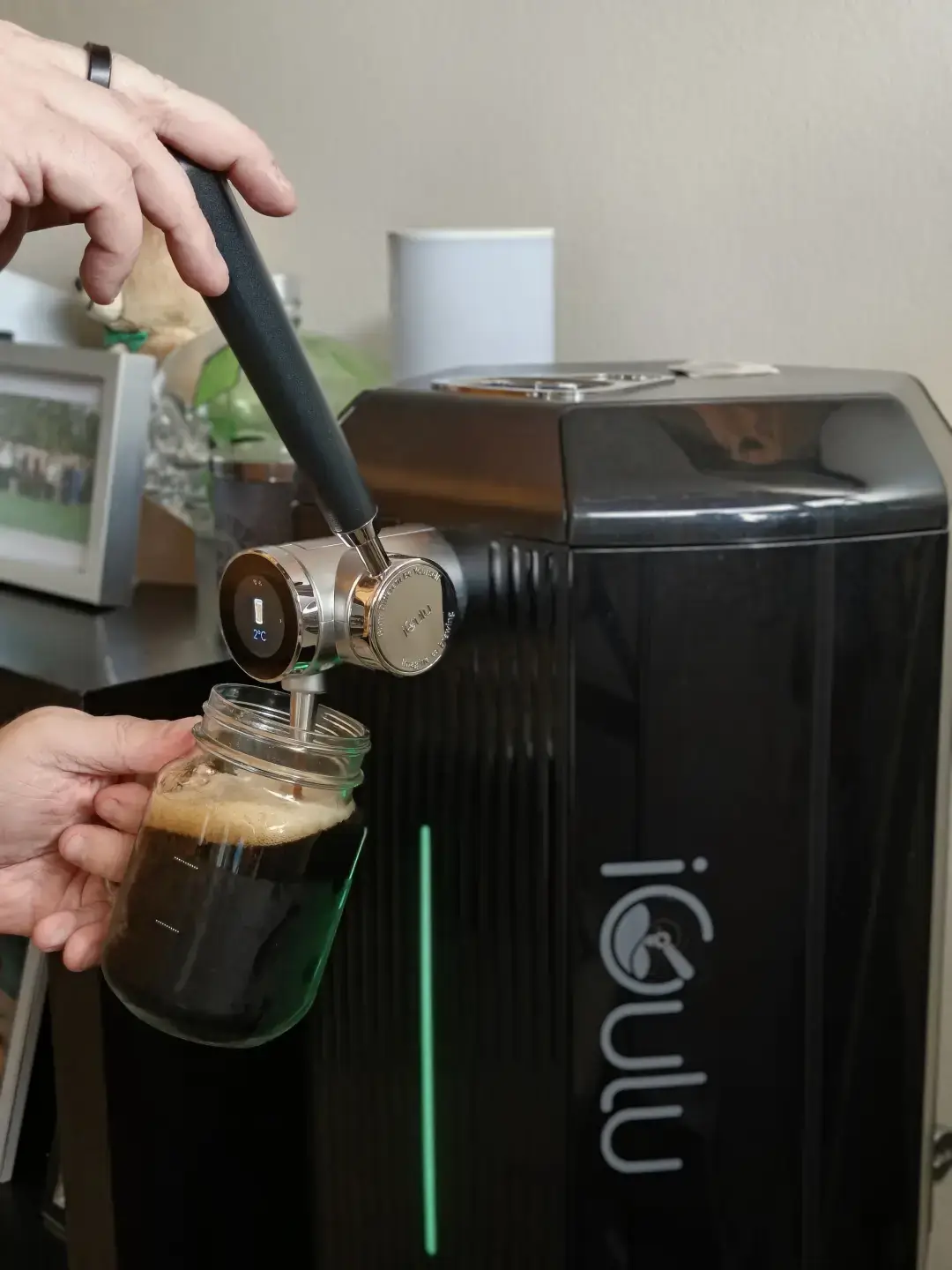
The gathering went much the same way as the sparkling wine evening.
Everyone enjoyed the experience, and once again there was nothing left at the end.
That’s two very different drinks that I was happy to share, both prepared through the same straightforward system.
After several batches, the novelty of the machine was no longer the main attraction.
The finished drinks were.
Can the iGulu F1 Make Good Beer Beyond Irish Stout?
My own hands-on brewing centred on sparkling white wine and Irish stout. But after enjoying both, I naturally started thinking about what else I could make with the F1. A Bavarian wheat beer and a Mosaic Pale Ale were two interesting examples worth looking into.
Bavarian Wheat Beer: Three Stages, One Automated Program
A published F1 Bavarian wheat beer test used a program that started at 16°C, moved to 18°C and finished with a 2°C cold crash. The resulting beer was described as golden with a frothy head and the banana-like aromas characteristic of certain wheat beer yeasts.
What interests me most is the way the F1 moves through those different temperatures. That is precisely the sort of fermentation management I didn’t have to perform manually with my own wine and stout batches. It’s a useful example of how a programmed recipe can handle more than one fermentation stage without needing a separate fridge or temperature controller.
Mosaic Pale Ale: Simple Preparation, Then Patience
I also looked at a published F1 Mosaic Pale Ale test. Preparation took about 20 minutes, and the finished pale ale received a positive taste assessment after roughly ten days.
That timing sounds familiar in the best way: preparation can be quick, but the yeast still needs time to work. My own experience was much the same. I could finish setting up a batch in a few straightforward steps, then leave the F1 to manage the programmed process.
These examples give me ideas for other beers to try, but they don’t change what I can personally vouch for. The sparkling white wine and Irish stout are the batches I prepared and served myself, and both went over well with my guests. If I make the wheat beer or Mosaic Pale Ale in the future, I’ll be able to judge those flavours from my own glass too.
What Makes the iGulu F1 Different From Traditional Homebrewing?
The biggest difference isn’t that the machine performs some kind of brewing magic.
It’s that the F1 removes a considerable amount of equipment management from the process.
Traditional all-grain brewing can involve mashing grains, boiling wort, cooling it, transferring it to a fermentation vessel, maintaining the appropriate temperature, and eventually preparing the finished beer for serving.
The iGulu takes care of a more specific part of that process.
Its ready-made kits supply prepared fermentable ingredients, while the machine manages fermentation conditions, chilling, and dispensing.
That doesn’t mean it replaces every piece of equipment required to make beer from raw grain.
It means someone can produce a small batch using prepared ingredients without needing an entire conventional brewing station.
And for me, that is precisely where its convenience becomes valuable.
The machine handles the repetitive management work while leaving the enjoyable parts: choosing a recipe, preparing it, waiting for the result, and sharing it.
The iGulu App, RFID Recipes, and Master Mode
The F1 can operate through its front touchscreen, while the companion app provides connected functions such as monitoring device status, managing brewing information, and creating custom recipes.
The app is an additional way to interact with the system rather than a requirement to perform every basic operation.
The RFID recipe cards are particularly useful for beginners because they load the appropriate program without requiring manual configuration.
But what happens when you want more control?
That’s where the optional Master Mode upgrade comes in.
According to iGulu’s documentation, Master Mode allows custom fermentation stages involving temperature and duration, along with additional dispensing and carbonation settings.
On the F1, internal fermentation pressure is regulated by the machine. Master Mode does not give it unrestricted manual fermentation-pressure control.
I can see the appeal for someone who wants to experiment with their own ingredients or create more elaborate recipes.
For my review, however, the standard guided-kit process was enough to produce the results I wanted.
That’s an important consideration before spending extra money on features you might not use.
Carbonation, CO₂, and Dispensing
One of the F1’s practical advantages is its integrated dispensing system.
Once a batch has finished fermentation and reached its serving conditions, you can pour it from the machine’s front tap.
The F1 supports both an integrated air pump and compatible external CO₂ cylinders.
According to iGulu’s CO₂ guide, the air pump can dispense without a separate cylinder, but the manufacturer recommends consuming drinks within 24 hours when that method is used.
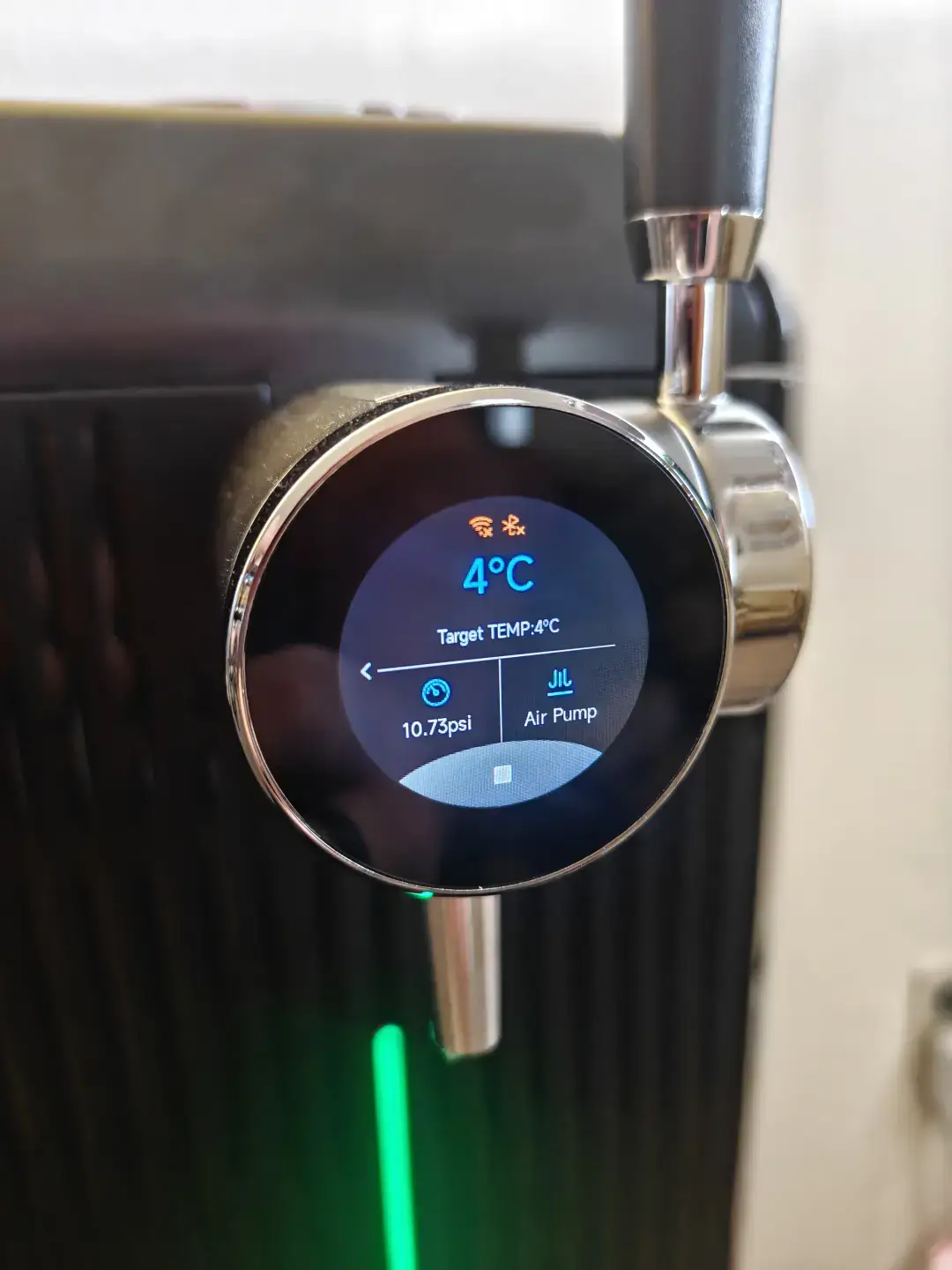
External CO₂ is better suited to maintaining carbonation and limiting exposure to air during longer storage.
iGulu says finished beverages may remain in COOL mode for up to 30 days with an appropriate CO₂ supply, although that is manufacturer guidance rather than a guarantee for every recipe.
The F1 uses a TR21×4 connection compatible with certain screw-in CO₂ cylinders, including the blue screw-in SodaStream format.
I would verify cylinder compatibility before buying accessories, especially since not every SodaStream cylinder uses the same connection.
The F1 can also dispense from certain compatible commercial beer kegs, including the Heineken 5-litre DraughtKeg with the proper adapter. It shouldn’t be assumed to support every commercial keg format.
What Does the iGulu F1 Cost in Canada?
This is where the convenience needs to be weighed against the price.
The iGulu Canadian storefront has listed the F1 at approximately C$1,099, before considering optional accessories or additional ingredient kits.
At the prices checked for this review, the manufacturer listed these items:
| Item | Listed Canadian price |
|---|---|
| iGulu F1 brewing machine | C$1,099 |
| Sparkling White Wine ingredient kit | C$55.99 |
| Irish Stout ingredient kit | C$33.99 |
| Master Mode Premium Card | C$139.99 |
Prices and availability can change, so check the current storefront before purchasing.
With a standard output of approximately 3.8 litres, those kit prices work out to around C$14.73 per litre for sparkling wine and C$8.94 per litre for Irish stout.
That’s before electricity, water, CO₂, cleaning materials, and the initial machine cost.
The F1 isn’t necessarily the cheapest way to make beer or wine at home.
Its value lies in reducing the equipment, effort, and attention involved in producing small batches.
For someone interested in large-scale brewing at the lowest possible cost per litre, a more traditional setup may make better financial sense.
For someone who values convenience and enjoys experimenting with different drinks, the calculation is different.
What I Liked About the iGulu F1
The setup was genuinely simple. I didn’t have to spend hours learning the machine before making my first batch. Once I’d prepared and cleaned everything, the guided brewing process was straightforward.
The automation was useful. Having the machine follow a programmed fermentation schedule meant I wasn’t constantly managing separate temperature-control equipment.
It handled two very different recipes. Sparkling white wine and Irish stout aren’t exactly interchangeable drinks, yet the preparation process remained familiar.
The finished drinks were enjoyable. This matters more to me than any technical specification. Both featured recipes turned out well enough that I was happy to serve them to guests.
It made entertaining more interesting. There was something satisfying about inviting people over and serving drinks I’d made using the machine.
What Could Be Better?
The batch size is limiting. The F1’s standard brewing output is approximately 3.8 litres. That’s reasonable for experimenting, but not much when you’re entertaining several people. I discovered how quickly a successful batch can disappear.
It takes up counter space. The integrated design is attractive, but the machine isn’t particularly small. You’ll want somewhere sensible to keep it.
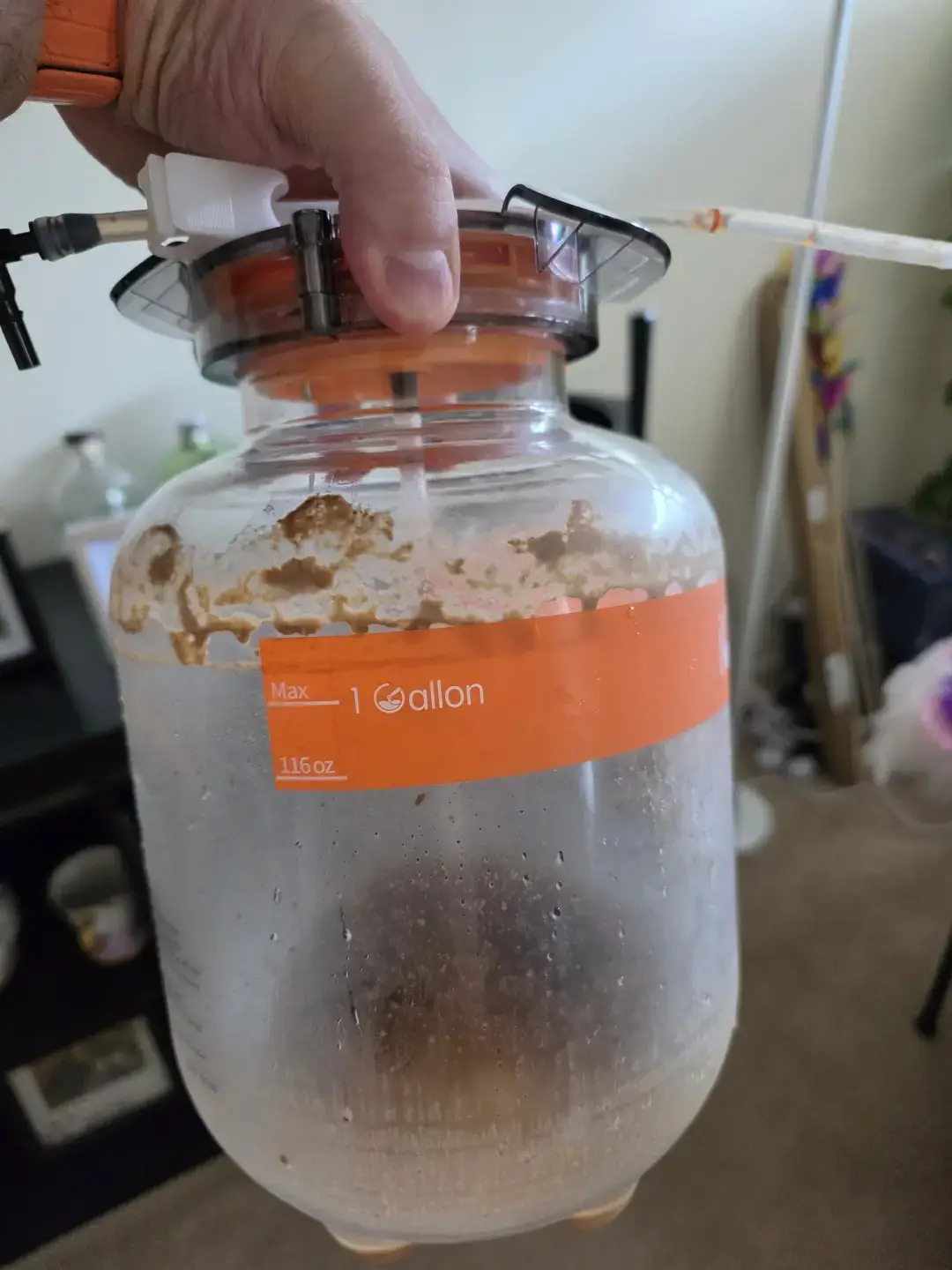
Cleaning is still required. The F1 automates fermentation management, not sanitation. Preparing the tank and components properly remains essential.
Ingredient costs add up. Ready-made kits are convenient, but they’re not necessarily economical compared with sourcing ingredients in bulk.
You can’t rush fermentation. The machine reduces active work, but yeast still needs time to produce the finished beverage.
One machine means one active vessel at a time. To start another batch while keeping the finished drink available, you’ll need to transfer it appropriately or use additional equipment. An extra vessel alone doesn’t turn the F1 into two independent fermentation machines.
Who Should Buy the iGulu F1?
I think the F1 makes the most sense for someone who is interested in making beer, wine, or other fermented drinks at home but doesn’t want to commit to a large traditional brewing setup.
It’s particularly appealing if you value convenience, enjoy trying different recipes, and are comfortable with smaller batches.
The F1 was also featured among the unique gadgets in CRYOVEX’s Father’s Day 2026 tech gift guide, alongside other interesting devices for the home.
For beginners, the guided ingredient kits provide a straightforward starting point.
For people who already understand brewing, the integrated temperature management and custom-recipe options may make it useful for small experiments.
But I wouldn’t recommend it as the obvious choice for someone whose main objective is producing large quantities at the lowest possible cost.
The F1 is an automated small-batch appliance first and foremost.
And that is how I approached this review.
Frequently Asked Questions
Can the iGulu F1 make wine as well as beer?
Yes. The F1 supports fermented beverages beyond beer, including wine and cider. I tested its Sparkling White Wine kit and had a successful result that I shared with guests.
How does the iGulu F1 work?
The machine manages programmed fermentation temperatures and timing, then provides chilling and dispensing. With compatible iGulu ingredient kits, scanning the included RFID card automatically loads the recipe’s fermentation stages.
How long does it take to make beer with the iGulu F1?
That depends on the recipe. For example, iGulu’s Irish Stout kit lists 12 days of primary fermentation followed by three days of conditioning. Other beer styles may have different schedules.
Is the iGulu F1 good for beginners?
In my experience, the guided-kit workflow was approachable. The important steps were preparing clean equipment, following the ingredient instructions, sealing and connecting everything correctly, scanning the recipe card, and starting the program.
Can you use tap water with the iGulu F1?
You can use suitable drinking water according to the recipe instructions. I used Ottawa tap water for my batches and didn’t notice an unwanted flavour attributable to it. Results may differ depending on local water quality.
Does the iGulu F1 require an external CO₂ cylinder?
Not strictly for dispensing. The F1 also has an integrated air pump, but iGulu recommends consuming drinks within 24 hours when using that method. External CO₂ is useful for maintaining carbonation and longer-term dispensing.
Can I create my own recipes with the iGulu F1?
Yes. The system includes certain built-in fermentation programs, while the optional Master Mode upgrade allows more detailed control over custom fermentation stages.
Can the iGulu F1 replace a traditional all-grain brewing system?
Not completely. The F1 specializes in fermentation management, chilling, and dispensing. Traditional all-grain preparation still requires the appropriate equipment for mashing and boiling.
Is the iGulu F1 worth the money?
That depends on your priorities. If you want large batches at the lowest cost per litre, traditional brewing equipment may offer better value. If you want small batches with less preparation and automated fermentation management, the F1 is an appealing alternative.
Final Verdict: Would I Recommend the iGulu F1?
After several batches, including my sparkling white wine and Irish stout tests, I came away with a much better appreciation for what the iGulu F1 is trying to accomplish.
It isn’t about replacing every traditional brewing technique.
It isn’t about producing enormous quantities of beer.
And it certainly doesn’t make the waiting disappear.
What it does is take many of the repetitive parts of managing fermentation and put them inside one appliance.
The setup was easier than I expected. The recipe cards removed much of the guesswork, and the machine handled the programmed heating and cooling stages without requiring constant intervention.
But the real payoff came when I started sharing the finished drinks.
The sparkling white wine was a hit, including with people who don’t normally drink wine. The Irish stout followed with chocolate, coffee, and sweet flavours that made it particularly enjoyable.
Both gatherings ended the same way.
Nothing left.
That doesn’t prove every recipe will be a winner, and I’m not suggesting that automation makes bad brewing practices impossible.
But it tells me that the two featured batches were enjoyable enough to share confidently.
The main compromises remain the small standard batch size, the investment in the machine, and the ongoing cost of ingredients and accessories.
For someone who wants to experiment with small batches, entertain friends, and enjoy the process without investing in a full traditional setup, those compromises may be entirely reasonable.
My final take on the iGulu F1 is simple: I went in expecting an interesting brewing gadget. I came away with a machine that made me want to keep making drinks and inviting people over to try them.
And for me, that’s a pretty convincing result.