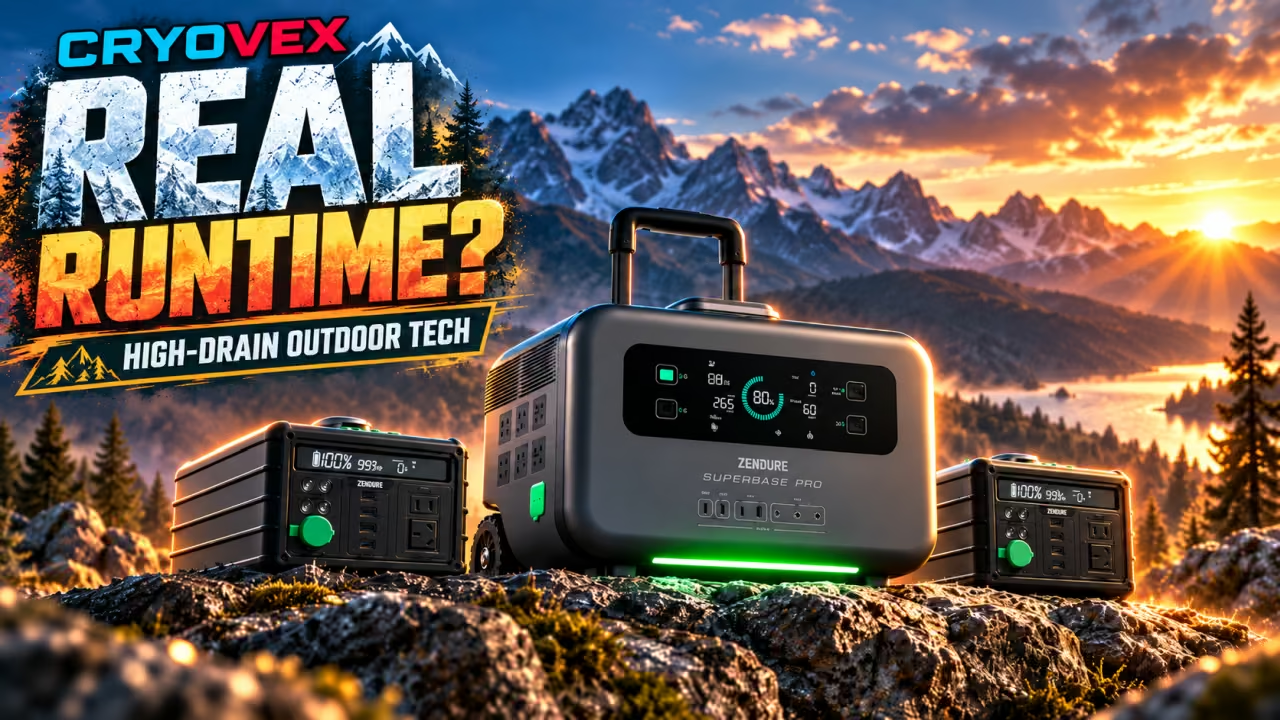
Portable batteries often deliver less run time outdoors than their capacity label suggests. Low temperatures, changing loads and moisture can all affect how long cameras, communications equipment and navigation devices keep working. A battery that lasts eight hours indoors may fade much sooner during a cold field trip.
Reliable performance starts with understanding the complete power system, including the battery chemistry, voltage regulation, enclosure and charging plan.
Harsh Environments Drain Portable Power
Cold weather slows the chemical reactions that produce electrical current. At the same time, outdoor devices may consume extra energy for display brightness, data transmission or internal heating. Wind and direct contact with frozen ground can cool a battery faster, even when the surrounding air seems manageable.
Guidance on cold battery drain explains why low temperatures reduce available power without necessarily causing permanent capacity loss. Carry batteries inside an insulated pouch and keep spares close to your body until needed. Before leaving, test your full setup outdoors for at least an hour. An indoor bench test won’t reproduce the combined effect of cold, wind and peak electrical loads.


Anker SOLIX C2000 Gen 2 Portable Power Station
Fluctuating Discharge Under Cold Temps
Battery voltage tends to sag when a device suddenly demands more current. A drone climbing quickly, a camera recording high-resolution video or a satellite communicator sending data can create short load spikes. In cold conditions, the battery’s higher internal resistance makes those dips more severe.
Published information about low-temperature batteries shows why chemistry and operating range matter when selecting a power source. Engineers can also use regulated DC/DC converters when a design needs efficient conversion, wide temperature operation or a stable output across changing input conditions. For consumer equipment, check the manufacturer’s stated temperature range and avoid mixing cells with different ages or charge levels.
Stable Power Delivery Across Voltage Drops
Many devices shut down at a defined minimum voltage even though the battery still contains usable energy. This behaviour can make a battery percentage indicator fall rapidly near the end of a session. A regulated power stage helps maintain the voltage expected by sensitive electronics as the source discharges.
Test equipment under realistic workloads instead of leaving it idle. Record video while wireless features are active, run a GPS unit at full brightness or operate a sensor through its normal measurement cycle. Note the time, air temperature and shutdown voltage for each test. These details reveal which activity creates the highest drain and help you estimate a practical field run time with a sensible reserve.
Weatherproofing Internal Power Boards
Moisture can disrupt power delivery long before water becomes visible inside an enclosure. Condensation forms when cold equipment enters a warm shelter, while rain can reach circuit boards through charging ports, cable openings and poorly seated covers. Corrosion may then increase electrical resistance or cause intermittent faults.
Inspect seals for grit, cracking and compression damage before each outing. Close port covers fully and use manufacturer-approved cases where available. If equipment becomes cold and damp, place it in a sealed bag before bringing it indoors. Let it warm gradually, then open the bag once it reaches room temperature. Product designers should also consider conformal coatings, protected connectors and drainage paths appropriate to the device’s environmental rating.
Smarter Field Charging Alternatives

Anker SOLIX C1000 Gen 2 Portable Power Station + Water Resistant Bag Go Without Solar
Plan field charging around usable watt-hours and device input limits. Add each device’s energy needs, then include a reserve of roughly 20 percent for conversion losses and cold-weather reductions. For example, equipment using 60 watt-hours per day should have access to at least 72 watt-hours under favourable conditions, with a larger margin during winter travel.
A portable power station can support longer trips and equipment that requires standard AC output. This overview explains a portable battery with AC, its format, and typical connection options. Keep the station dry, charge it before departure and confirm that every cable works. Labelled cables and a written charging order also prevent a low-priority device from using the power reserved for essential communications or navigation.
Outdoor run time becomes far more predictable once you test the exact equipment, workload and temperature you expect to encounter. Write the measured cold-weather result on the battery or its storage case so your next power estimate is based on field performance, not the number printed on the box.
Outdoor Battery Runtime FAQ: What Most People Overlook
1. Why does my battery shut down when it still shows 20% remaining?
Your battery might not be empty. In cold conditions, lithium-ion batteries develop higher internal resistance, making their voltage drop more sharply when a device demands power. If that voltage falls below the device’s operating threshold, it can shut down even while the battery indicator shows remaining charge. This is particularly troublesome with cameras, drones, and communications equipment that draw power in sudden bursts. Warming the battery may restore some usable performance, although an aging or damaged battery might still need replacing.
2. Is a battery that dies in freezing weather permanently damaged?
Not necessarily. Cold temperatures can temporarily reduce the power a lithium-ion battery can deliver, making it appear weaker than it really is. Once the battery returns to its recommended operating temperature, much of that lost performance can return. However, cold-weather operation and cold-weather charging are different concerns. Charging a battery outside its permitted temperature range can cause lasting damage. If your battery repeatedly struggles after warming up, its age, condition, and health deserve a closer look.
3. Can charging a lithium battery below freezing damage it more than using it?
Yes, and this is a distinction worth understanding before your next winter trip. Many lithium-ion batteries can discharge at temperatures where charging is restricted. Charging unsuitable cells below 0°C (32°F) can cause lithium plating, potentially damaging the battery. Some specialized batteries have built-in heaters or charging controls that permit low-temperature charging. Always check the manufacturer’s charging-temperature specification, not just the operating-temperature range. Never bypass a battery’s temperature protection to force a charge.
4. Why won’t a 500Wh portable power station run a 100W device for five full hours?
On paper, 500 watt-hours divided by 100 watts equals five hours. In practice, the device won’t necessarily receive all 500Wh. Converting battery power to AC electricity consumes energy, and the power station itself may require electricity to operate. Using an illustrative 85% delivery assumption gives about 4.25 hours before any additional reserve or cold-weather losses. Actual runtime depends on the equipment, power station, temperature, and workload. The capacity printed on the box is a starting point, not a guaranteed runtime.
5. Can a portable power station lose battery power when nothing is plugged into it?
Yes. Some portable power stations consume electricity simply by remaining powered on, particularly when their AC inverter or other outputs are enabled. That background consumption can gradually reduce the energy available for your equipment. Certain models automatically disable unused outlets to limit this waste, but the behaviour varies. Turn off outputs you aren’t using, check your model’s standby settings, and confirm its remaining capacity before heading outdoors. A full battery today doesn’t guarantee the same charge after storage.
6. Does a weather-resistant power station mean it’s safe to leave outside in the rain?
Not automatically. Water resistance depends on the specific product and which components have been tested. A manufacturer might advertise an IP-rated battery pack while the outlets, display, or main enclosure have a different level of protection. Charging ports and open covers can also create vulnerable points. Check the complete unit’s ingress-protection rating and operating instructions. Unless the manufacturer explicitly permits wet-weather operation, keep your power station sheltered and its electrical connections dry.
7. Why can bringing cold electronics indoors cause moisture damage?
The danger isn’t always the snow or rain outside. When cold electronics enter a warm, humid room, moisture from the indoor air can condense on cooler surfaces. That moisture can fog camera lenses and potentially affect sensitive internal components. Before bringing cold gear inside, place it in a suitable sealed bag while it is still dry, then allow it to reach room temperature gradually before opening. Avoid powering on equipment that has developed condensation until it has dried according to the manufacturer’s instructions.
8. What’s the most reliable way to know how long an outdoor battery will actually last?
Test it under the conditions you expect to encounter. A battery that runs a camera for hours indoors may perform differently when the screen is bright, wireless features are active, and temperatures are below freezing. Run the complete setup outdoors for at least an hour, record the temperature and battery consumption, and watch for sudden shutdowns. Repeat the test across your most demanding activities when practical. Leave extra capacity for unexpected delays, especially when powering essential navigation or communications equipment.