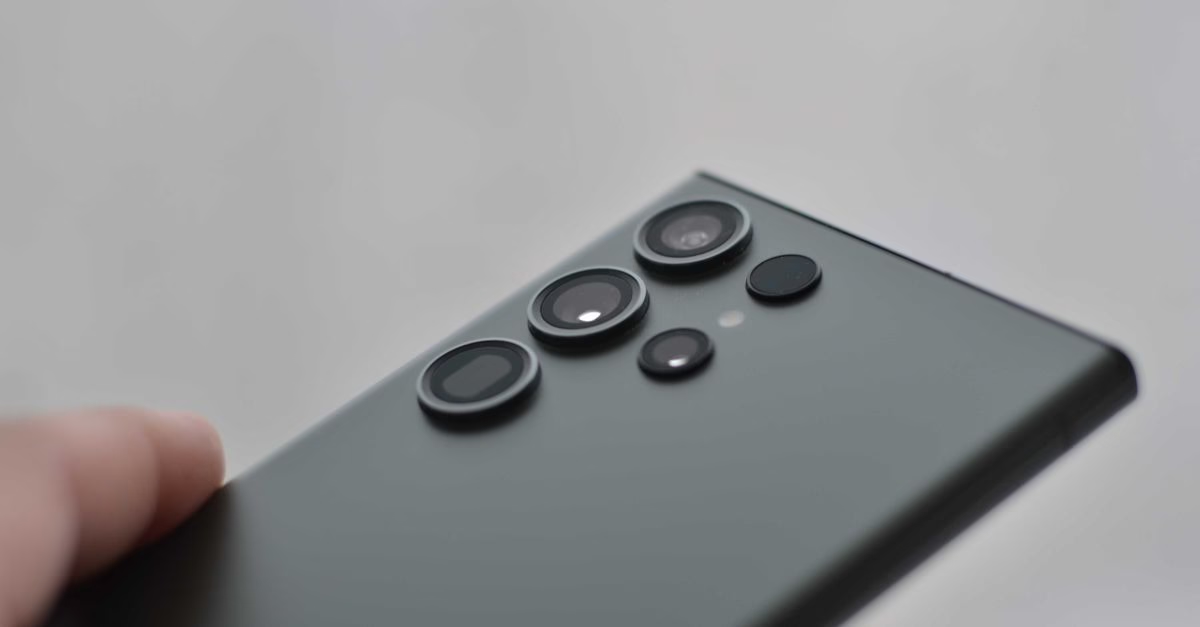
Minimal Physical Changes for the Next Ultra Flagship
Leaker Ice Universe has shared early images of screen protectors intended for the upcoming Samsung Galaxy S27 Ultra. The critical takeaway from these visuals is that the new protector appears nearly identical, if not completely interchangeable, with the one used for the current Galaxy S26 Ultra. This suggests that Samsung is making virtually no adjustments to the front-facing glass, bezel thickness, or camera cutout placement for the next generation.
According to the leak, this continuity represents “the smallest change in front display design between two consecutive Ultra flagships in Samsung’s history.” While the external form factor remains stable, the internal display technology is set to evolve. Reports indicate that both the S27 Ultra and the accompanying S27 Pro will utilize a next-generation M16 OLED display. This specific panel technology has already made its debut on the iQOO 16, which advertises advanced performance metrics derived from this newer generation of organic light-emitting diodes.
For consumers tracking the physical evolution of Samsung’s top-tier devices, this announcement clarifies that the dramatic redesigns or significant bezel reductions often associated with major generational leaps are not happening here. Instead, the focus is shifting toward internal component refinement while maintaining a familiar user interface footprint.
Implications for Accessories and User Experience
The decision to maintain such strict consistency in the front display design has immediate practical implications for accessory manufacturers and existing users. If the screen protectors are indeed interchangeable, it signals a high degree of confidence in the chassis dimensions and reduces the friction for consumers who wish to upgrade their device without discarding previously purchased protection gear. For the average buyer, this means a predictable tactile experience; the phone will feel familiar in the hand, with the same button placements and camera island orientation.

However, the lack of external visual change contrasts sharply with the promised internal upgrades. The move to the M16 OLED panel suggests that Samsung is prioritizing image quality, brightness efficiency, or refresh rate stability over aesthetic innovation. This approach appeals to users who value performance consistency but may disappoint those hoping for a more radical redesign. It also highlights a broader industry trend where flagship smartphones are reaching a point of diminishing returns regarding physical design, forcing companies to compete on specs like sensor size, processing power, and display materials rather than shape or size.
Furthermore, this stability simplifies the transition for enterprise users or those with established workflows built around the current Ultra model. There is no learning curve required for navigation gestures or physical button locations, allowing the focus to remain entirely on the software and hardware performance improvements driven by the new processor and display engine.
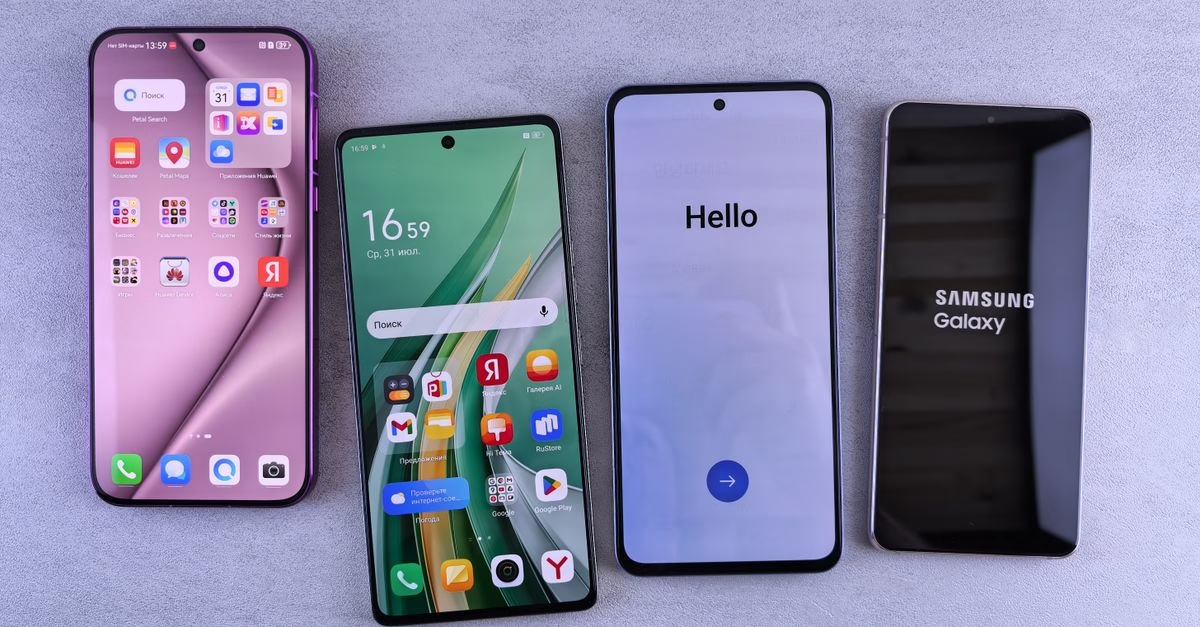
Stability Over Radical Redesign
The leaked information regarding the Galaxy S27 Ultra points to a conservative approach in industrial design. By keeping the front display essentially the same as its predecessor, Samsung is betting that user familiarity and accessory compatibility outweigh the marketing appeal of a new look. The real story lies in the M16 OLED technology, which promises to deliver tangible improvements in visual performance without altering the device’s silhouette.
While the external changes are negligible, the internal shift to next-generation display panels indicates that Samsung is still pushing the boundaries of what the screen can do. For Canadian buyers and global consumers alike, the S27 Ultra appears to be an evolutionary step rather than a revolutionary one. Those waiting for a drastic change in form factor may need to look beyond the Ultra series, while those seeking incremental gains in display quality and processing speed will find this continuity reassuring. As more details emerge about the M16 panel’s specific capabilities, the true value proposition of this device will become clearer.