The Leap from Concept to Console-Cloning
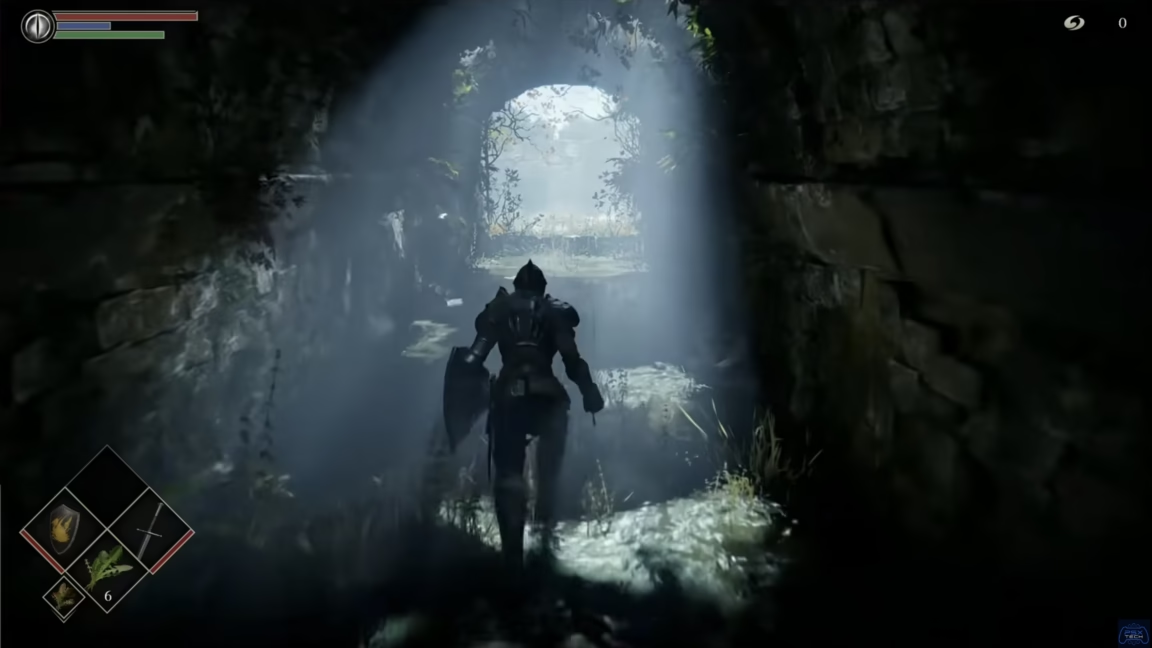
The landscape of PC-based PlayStation 5 emulation has shifted dramatically in recent weeks, moving beyond theoretical proof-of-concepts to actual playable experiences. Projects like AnyPS5 have successfully demonstrated the ability to run major first-party titles, including Astro Bot and Demon’s Souls, without requiring the physical console hardware. This development marks a critical inflection point for reverse-engineering teams who have spent years decoding the complex custom silicon of Sony’s latest generation console.
While earlier attempts often stalled at boot screens or failed to render basic graphics, these new builds are delivering stable frame rates and functional gameplay loops. The speed of this advancement has surprised many in the community, suggesting that the technical barriers previously thought insurmountable are being dismantled faster than anticipated. However, it is important to note that these are early-stage builds; they represent significant engineering achievements rather than polished consumer products ready for daily use.
Why This Shift Reshapes Hardware Expectations
For Canadian gamers and tech enthusiasts, this development highlights two competing realities: the increasing power of modern PC hardware and the diminishing exclusivity of console software. The fact that PS5 titles can run on PC suggests that the architectural gap between Sony’s custom AMD APU and standard PC components is narrowing in terms of emulation feasibility. This does not mean every PC can run these games, but it indicates that the software layer required to translate PS5 instructions is becoming more efficient.
This progress also raises questions about the longevity of platform exclusives. If high-fidelity emulation becomes viable, the value proposition of dedicated hardware consoles may face pressure from users seeking flexibility. Yet, we must remain grounded in the current limitations. As noted in community discussions, we are likely still far from a state where a solid majority of the PS5 library can be ably run on average PC hardware. Current successes are isolated victories against specific titles, not a universal solution for the entire catalog.

The Road Ahead for Emulation Stability
While the immediate future holds promise for more playable demos and optimized builds, the path to widespread adoption is fraught with technical hurdles. Issues such as input latency, graphical glitches, and the sheer computational cost of real-time translation will need to be addressed before these emulators become practical alternatives to native console play. For now, these developments serve as a testament to the ingenuity of the reverse-engineering community.
What remains unknown is the timeline for broader compatibility and the legal challenges that may arise as these tools mature. Until then, these milestones offer a glimpse into a future where the lines between console and PC gaming continue to blur, driven by relentless technical innovation rather than corporate strategy.