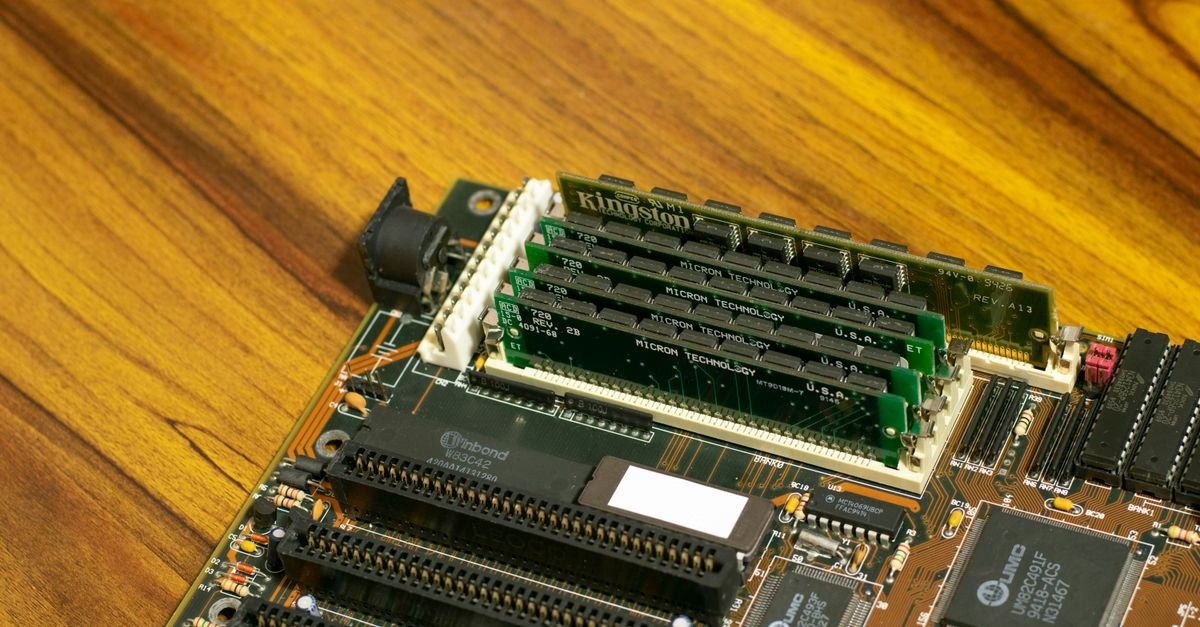
Record-Breaking Financials for Micron in Fiscal 2026
Micron Technology, Inc. (Nasdaq: MU) has officially announced its financial results for the fourth quarter and full year of fiscal 2026, which concluded on September 3, 2026. The company’s performance marks a historic milestone, with fiscal Q4 2026 revenue reaching $54.23 billion. This figure represents a substantial increase compared to the $41.46 billion recorded in the prior quarter and dwarfs the $11.32 billion reported for the same period last year.
Profitability metrics were equally impressive. GAAP net income stood at $37.70 billion, translating to $32.87 per diluted share. On a non-GAAP basis, net income was even higher at $38.40 billion, or $33.42 per diluted share. These numbers indicate that Micron is not only generating top-line growth but also maintaining strong margins despite the complexities of semiconductor manufacturing.
Liquidity and cash generation have also seen dramatic improvements. Operating cash flow surged to $43.97 billion in Q4, a significant leap from the $25.39 billion in the previous quarter and the mere $5.73 billion from the same period last year. This influx of cash suggests that Micron is well-positioned to reinvest in research, development, and capital expenditures essential for maintaining its competitive edge in the memory chip market.
Implications for the Memory Market and Tech Industry
The scale of Micron’s financial success provides critical insight into the current state of the global technology sector. The primary driver behind these record revenues is almost certainly the insatiable demand for high-bandwidth memory (HBM) and other advanced storage solutions required by artificial intelligence data centres. As companies race to build out AI infrastructure, the bottleneck has often been memory capacity and speed, making suppliers like Micron indispensable.

For consumers and businesses alike, this surge in corporate spending can have downstream effects. While enterprise-grade memory prices may remain elevated due to high demand, the increased production capacity and investment in next-generation technologies could eventually lead to more abundant and affordable options for standard PC and mobile devices. However, it is important to note that the immediate impact of such massive revenue spikes is often felt first in the enterprise sector rather than the retail market.
Furthermore, the strong operating cash flow gives Micron the flexibility to navigate potential future market fluctuations. In an industry known for cyclical booms and busts, having a robust financial buffer allows the company to sustain innovation cycles without being forced into drastic cost-cutting measures during slower periods. This stability is crucial for long-term supply chain reliability.
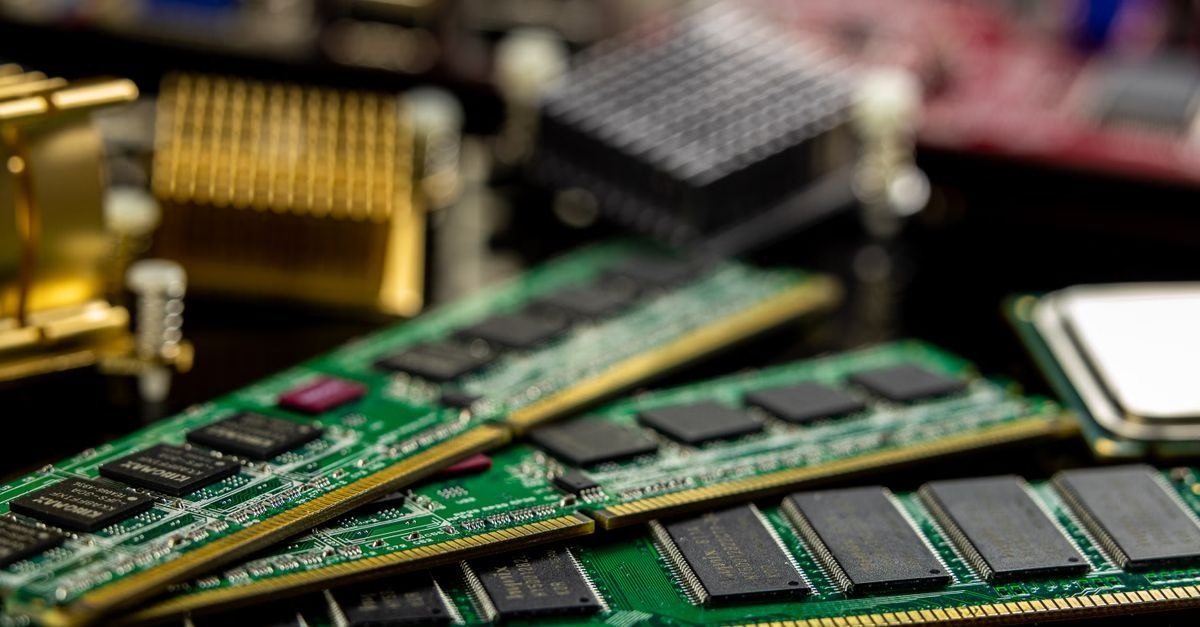
Looking Ahead After a Historic Quarter
Micron’s fiscal 2026 results set a new benchmark for the semiconductor industry, demonstrating the profound economic impact of the AI revolution. The combination of soaring revenue, healthy net income, and exceptional cash flow positions the company as a dominant force in the memory market. As we move forward, the focus will shift to how Micron leverages these resources to expand its manufacturing capabilities and develop the next generation of memory technologies.
While the current figures are undeniably positive, it remains to be seen whether this level of demand can be sustained indefinitely. Market dynamics can change rapidly, and competitors are also ramping up their own production capacities. For now, however, Micron’s performance highlights the critical role that memory chips play in powering the modern digital economy. Stakeholders should watch closely for any updates on production timelines and product roadmaps, as these will likely influence market trends in the coming quarters.