
Regulators uncover hidden generator farm
The focus here is data center fine. New Jersey environmental authorities have hit a data center operator with a substantial $1.1 million penalty following the discovery of 62 unpermitted natural gas generators. The enforcement action marks a significant escalation in how state agencies monitor the physical footprint of digital infrastructure.
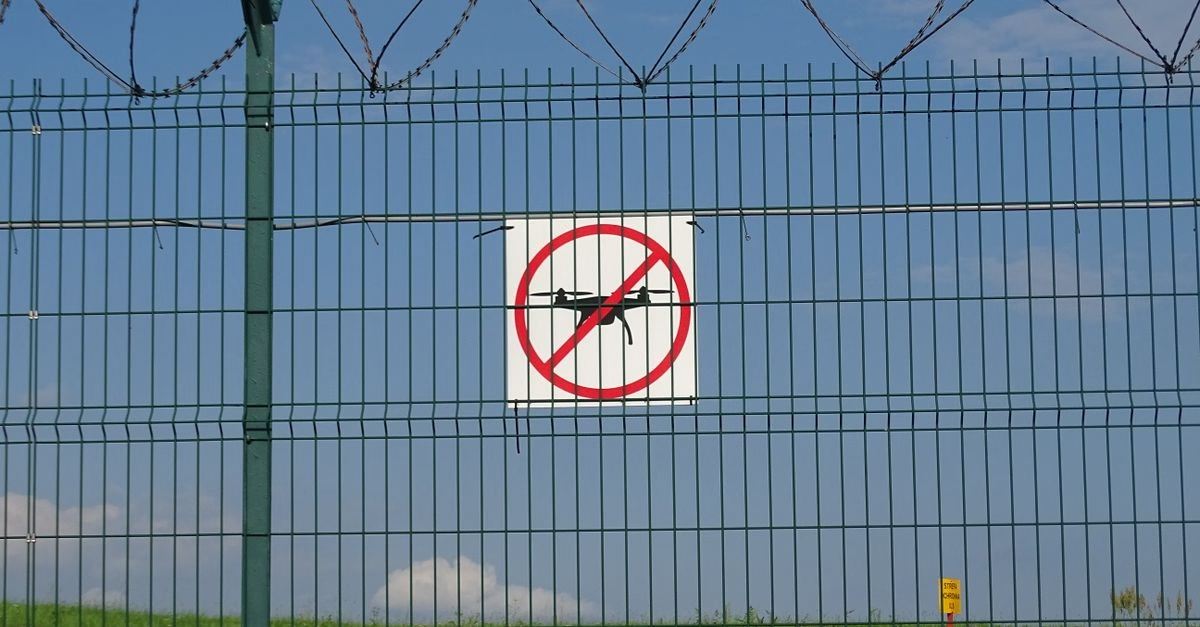
The violation came to light not through routine paperwork audits, but via aerial surveillance. Drone footage and satellite imagery revealed the extensive array of backup power units that had been installed without the necessary regulatory approvals. This visual evidence proved difficult for the operator to dispute, forcing a confrontation with state environmental codes.
The role of aerial surveillance in compliance
Traditional compliance checks often rely on self-reporting or scheduled site visits, which can miss unauthorized modifications. In this case, high-resolution aerial photography provided an undeniable overview of the facility’s layout. The technology allowed regulators to count individual generator units and assess their scale relative to the permitted infrastructure.
Natural gas generators are common in data centers for backup power, but they require strict permitting due to emissions and safety concerns. By bypassing these steps, the operator avoided scrutiny regarding air quality impacts and noise pollution. The use of remote sensing tools demonstrates a shift toward more proactive, data-driven enforcement methods in industrial zoning.

Community concerns over tech pollution
For neighbors living near large-scale data hubs, this fine validates long-standing fears about unchecked industrial growth. While tech companies often highlight their renewable energy goals, the reliance on fossil-fuel-based backup systems remains a dirty secret of the industry. The presence of 62 unpermitted units suggests a systemic disregard for local environmental safeguards.
Residents worry that million-dollar fines, while hefty, may simply become a cost of doing business for wealthy operators. If penalties do not lead to stricter operational changes or decommissioning of illegal units, the environmental burden on local communities will persist. This case underscores the tension between global digital demand and local quality of life.
What this means for future infrastructure projects
Data center developers in New Jersey and beyond must now assume that their physical installations are under constant observational scrutiny. The precedent set by this enforcement action means that aerial monitoring could become a standard tool for regulatory bodies. Companies can no longer rely on the opacity of large campuses to hide non-compliant additions.
This development may also influence insurance and liability assessments for tech infrastructure. Operators will need to ensure that every piece of mechanical equipment, especially those involving combustion, is fully documented and permitted. Failure to do so risks not only financial penalties but also potential shutdowns or legal challenges from affected communities.
Unanswered questions about ongoing operations
While the fine addresses the past violation, it remains unclear whether all 62 generators have been removed or properly permitted since the discovery. The summary information does not detail the current operational status of the facility or whether additional penalties are pending. Regulatory outcomes often involve prolonged negotiation, leaving immediate environmental impacts unresolved.
Furthermore, the specific identity of the data center operator is not detailed in the available summary, limiting the ability to track their broader compliance history. Without knowing the specific actor, it is difficult to assess whether this is an isolated incident or part of a wider pattern of negligence within a particular company’s portfolio.
A wake-up call for invisible infrastructure
The $1.1 million penalty serves as a stark reminder that digital services have heavy physical consequences. As demand for cloud computing and AI processing grows, so does the need for robust, transparent oversight of the facilities that power them. Aerial surveillance has proven to be an effective check against corner-cutting in industrial construction.
For Canadian and US observers alike, this case highlights the importance of verifying environmental claims with tangible evidence. Tech giants must align their backup power strategies with local regulations if they wish to maintain social license to operate. The era of hiding industrial scale behind server rack aesthetics is coming to an end.
The reliance on natural gas for backup power is not an anomaly but a growing industry standard, driven by the insatiable energy demands of modern computing. As highlighted by reports regarding Meta’s planned new data centers, the operational reality often involves waiting for dedicated natural gas-fired power plants to be built before facilities can go fully online. This dependency creates a structural incentive for operators to install extensive generator arrays, sometimes outpacing the bureaucratic speed of permitting processes. When companies prioritize rapid deployment to meet market demand for AI and cloud services, the regulatory framework can appear as a bottleneck rather than a safeguard, leading to the kind of unauthorized installations seen in New Jersey.
However, the technological landscape for enforcement is evolving just as quickly as the infrastructure itself. The use of drone footage and satellite imagery in this case signals a broader shift toward open-source intelligence and community-led monitoring. Groups like Sustain SJ, which provided the visual evidence in this instance, demonstrate that local advocacy organizations now have access to tools that were once the exclusive domain of state agencies or military entities. This democratization of surveillance means that data center operators can no longer assume their physical expansions will go unnoticed by the communities they impact. The barrier to entry for exposing environmental violations has lowered significantly, making transparency a mandatory operational consideration rather than an optional public relations strategy.
From a practical standpoint, the $1.1 million fine raises questions about the economic calculus of compliance versus penalty. For large technology firms with vast capital reserves, a seven-figure penalty may be absorbed as a minor operational expense rather than a deterrent. If the cost of obtaining proper permits involves lengthy delays, environmental impact studies, and potential requirements for emissions mitigation technology, some operators may view the risk of a fine as a preferable alternative to delayed revenue generation. This dynamic suggests that financial penalties alone may be insufficient to curb non-compliance. Regulators may need to consider more severe consequences, such as operational shutdowns or revocation of business licenses, to ensure that environmental laws are treated as binding constraints rather than negotiable fees.
Furthermore, the lack of specific details regarding the operator’s identity in the initial reports complicates the broader assessment of industry-wide practices. Without knowing whether this violation stems from a single rogue facility manager or a corporate-wide strategy, it is difficult for investors and policymakers to gauge the systemic risk. If this behavior is isolated, it represents a failure of internal controls. If it is widespread, it indicates a deeper misalignment between corporate growth targets and regulatory adherence. Stakeholders must demand greater clarity on who is responsible for these installations and what corrective actions are being taken beyond the payment of fines. The ultimate goal should be a transition toward cleaner, permitted backup solutions that do not compromise local air quality or community trust.
As the digital economy continues to expand, the tension between invisible digital services and visible industrial impacts will only intensify. The New Jersey case serves as a critical precedent, illustrating that the physical footprint of the internet is subject to the same environmental laws as any other heavy industry. For neighbors, regulators, and even remote observers, the lesson is clear: verification through independent observation is essential. The era of trusting corporate sustainability reports at face value is over. Instead, a new model of accountability is emerging, one where satellite eyes and community vigilance play a central role in ensuring that the infrastructure powering our digital lives does not come at an unacceptable environmental cost.