Routine Update Causes Sudden Power Loss
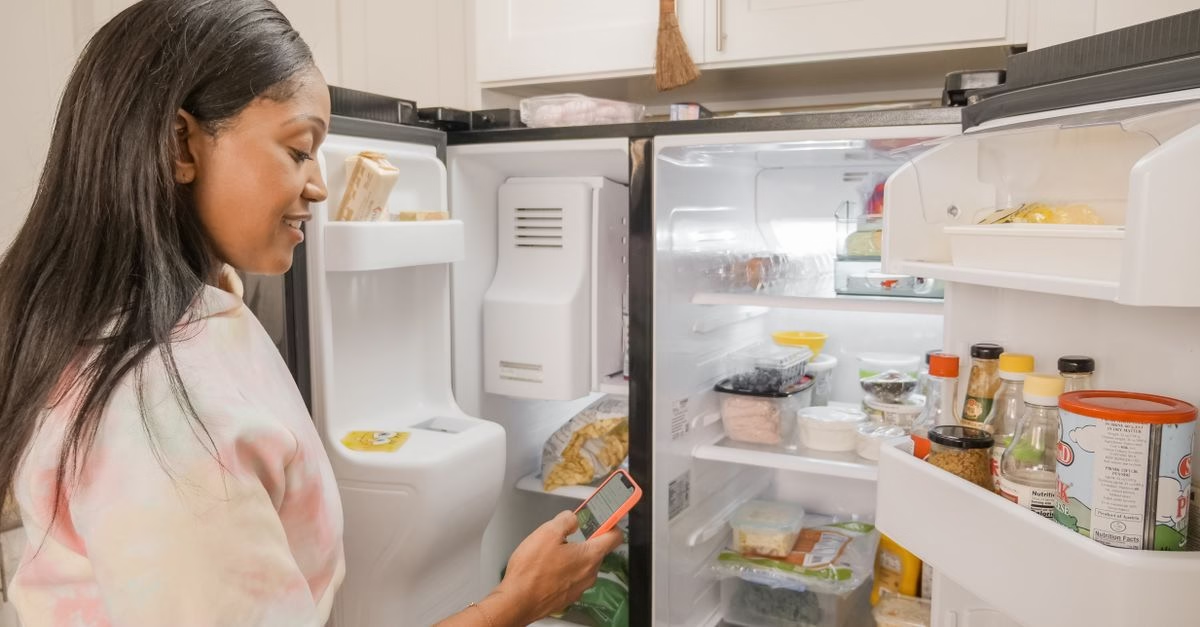
The focus here is Samsung fridge update. A standard firmware update distributed through Samsung’s SmartThings ecosystem has resulted in catastrophic failures for a subset of smart refrigerators. Owners report that their appliances suddenly lost power and stopped functioning immediately after attempting to install the update. This was not a gradual degradation of performance or a minor software bug; it was an immediate brick event that rendered the cooling systems inert.
The timing could not have been worse for many users. The failures coincided with the lead-up to a major three-day holiday celebration in South Korea, a period when households typically stock up on perishable goods. Instead of preparing for festivities, affected customers found themselves dealing with warm interiors and rapidly spoiling inventory. The suddenness of the failure left little room for emergency mitigation or manual troubleshooting.
The SmartThings Delivery Mechanism
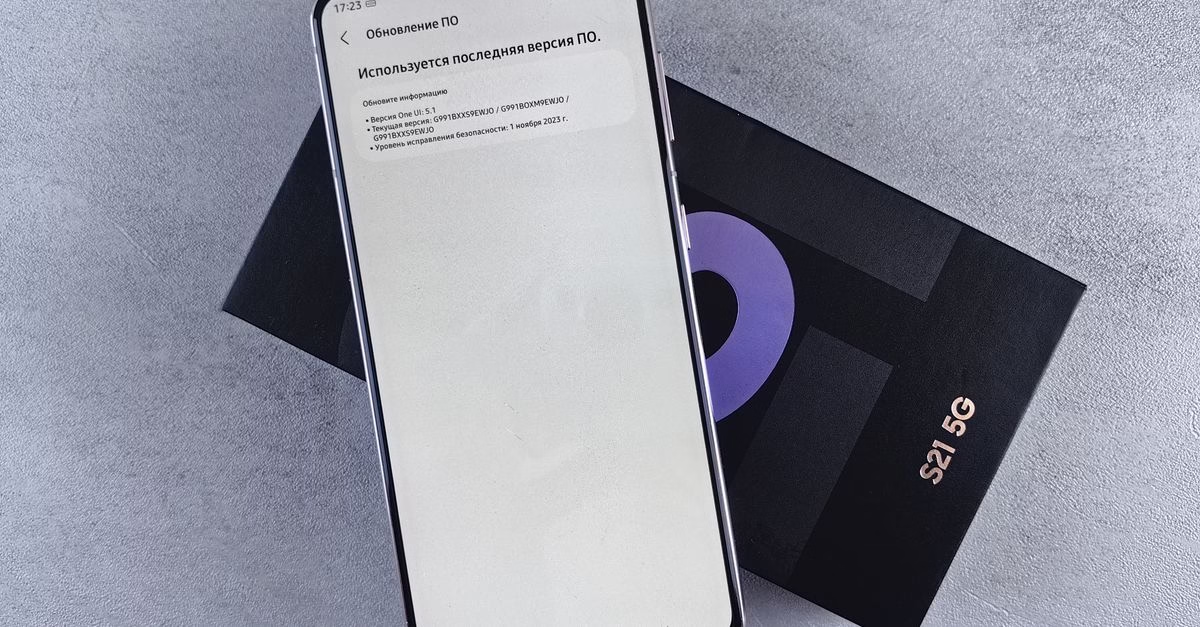
Samsung manages its connected appliance ecosystem through the SmartThings platform, which allows for over-the-air firmware updates. These updates are designed to patch security vulnerabilities, improve energy efficiency, or add new features to the device’s interface. In this instance, the update process itself appears to be the vector for the failure. When the refrigerator attempted to apply the new code, the system crashed rather than rebooting into the updated state.
Unlike a computer that might fail to boot but retain data, a refrigerator’s primary function is thermal regulation. Once the control board failed to initialize after the update, the compressor and cooling fans ceased operation. There is no manual override for a bricked mainboard in most modern smart fridges, meaning users could not simply reset the device to restore cooling. The reliance on centralized software management introduces a single point of failure for critical home infrastructure.

High Stakes for Connected Kitchen Appliances
This incident highlights the growing risk of connecting essential home appliances to the internet. A refrigerator is not a discretionary gadget like a smart speaker or a streaming stick; it is a critical utility for food safety. When a software update bricks a TV, you lose entertainment. When it bricks a fridge, you lose hundreds of dollars worth of groceries and potentially face health risks from consuming compromised food.
The scale of the impact is amplified by the timing. With families preparing for a long holiday weekend, the loss of refrigeration capacity created immediate logistical and financial stress. Reports describe the situation as absurd and embarrassing, reflecting the frustration of trusting a major manufacturer with core household functions. It raises serious questions about the testing protocols for firmware that controls hardware with real-world physical consequences.
Financial Loss and Compensation Uncertainty
For affected owners, the immediate concern is the cost of spoiled food. Refrigerators are often stocked heavily before holidays, meaning the financial loss per household can be substantial. Beyond the groceries, there is the inconvenience of finding alternative storage or purchasing replacements on short notice. The emotional toll of ruining holiday preparations adds another layer of frustration to the technical failure.
Samsung has acknowledged the issue and stated that it is reviewing whether it will offer compensation for the spoiled food. However, this language stops short of a guaranteed reimbursement program. Customers are currently left in limbo, waiting for clarity on whether they will be made whole for their losses. Without a clear claims process, many may have to rely on home insurance or credit card purchase protections, which vary widely in coverage and ease of use.
Unknown Scope and Recovery Path
It remains unclear how many units are affected by this specific firmware version. Samsung has not released a detailed list of impacted models or serial number ranges, making it difficult for owners to determine if their devices are at risk. This lack of transparency prevents proactive measures, such as disabling automatic updates, for those who might still have functional units.
Furthermore, the path to recovery for bricked units is not well documented. It is unknown whether a simple power cycle, a hard reset, or a service technician visit is required to restore functionality. If the mainboard is permanently damaged, repairs could be costly and time-consuming, especially given the holiday demand for service technicians. The absence of a clear rollback mechanism leaves users dependent on Samsung’s support infrastructure for a resolution.
Trust Erosion in Smart Home Reliability
This incident serves as a stark reminder that smart features come with inherent risks. While connectivity offers convenience, it also introduces vulnerability to software errors that can have physical repercussions. For Samsung, the reputational damage may extend beyond the immediate cost of compensation, affecting consumer confidence in its broader smart home lineup.
Owners should monitor official channels for updates on compensation and repair instructions. Until then, the incident underscores the need for manufacturers to implement stricter safeguards for firmware updates on critical appliances. For consumers, it may be prudent to weigh the benefits of smart connectivity against the potential for catastrophic failure in essential home devices.