The latest projections for the NVIDIA GeForce RTX 60 series
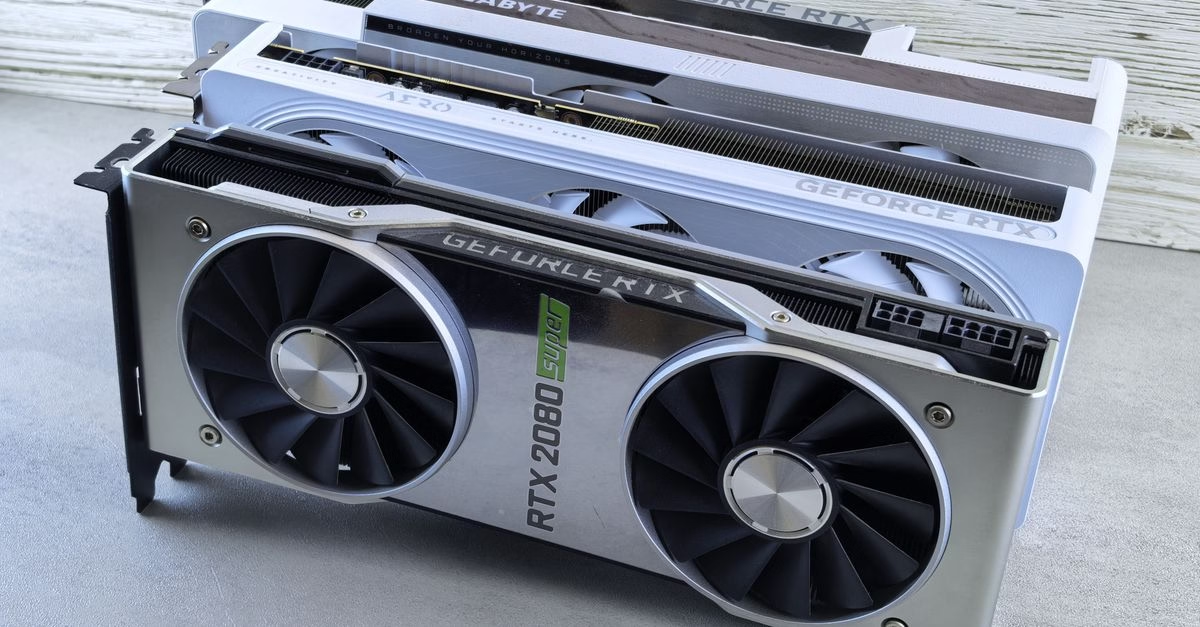
The hardware community is currently recalibrating its expectations for the next major leap in GPU performance. Recent reports from well-known industry leakers, including Kopite7Kimi and Kepler_L2, suggest that the highly anticipated NVIDIA GeForce RTX 60 series will not hit the market until 2028. This update represents a notable shift from earlier speculation that placed the launch of the Rubin-based architecture in the second half of 2027. While NVIDIA remains characteristically silent regarding its future product roadmaps, the consensus among these sources is that the timeline has been pushed back. It is important to approach these claims with a degree of healthy skepticism, as they originate from unofficial channels rather than corporate press releases. Nevertheless, the alignment between multiple leakers who have historically tracked NVIDIA hardware closely adds weight to the 2028 narrative. For those waiting to see how the company will iterate on its current RTX platform, this news suggests a longer wait than many enthusiasts initially anticipated.
Understanding the Rubin architecture transition
At the core of the upcoming NVIDIA GeForce RTX 60 series is the Rubin architecture, a successor designed to push the boundaries of path tracing and neural rendering. NVIDIA has long positioned its RTX technology as the most advanced platform for these specific computational tasks, which are central to modern gaming and professional content creation. By moving to the Rubin architecture, the company intends to refine the efficiency and raw power of its GPUs, likely integrating more sophisticated AI-driven features that have become staples of the current lineup. The technical transition involves not just the silicon itself, but the complex integration of next-generation memory standards and power delivery systems. As the industry moves toward more demanding graphical workloads, the Rubin architecture is expected to be the vehicle for these advancements. However, the complexity of developing such hardware means that any disruption in the supply chain—particularly regarding high-bandwidth memory—can have a cascading effect on the entire development cycle, potentially forcing the company to adjust its internal milestones to ensure a stable product launch.
The impact of a longer product cycle
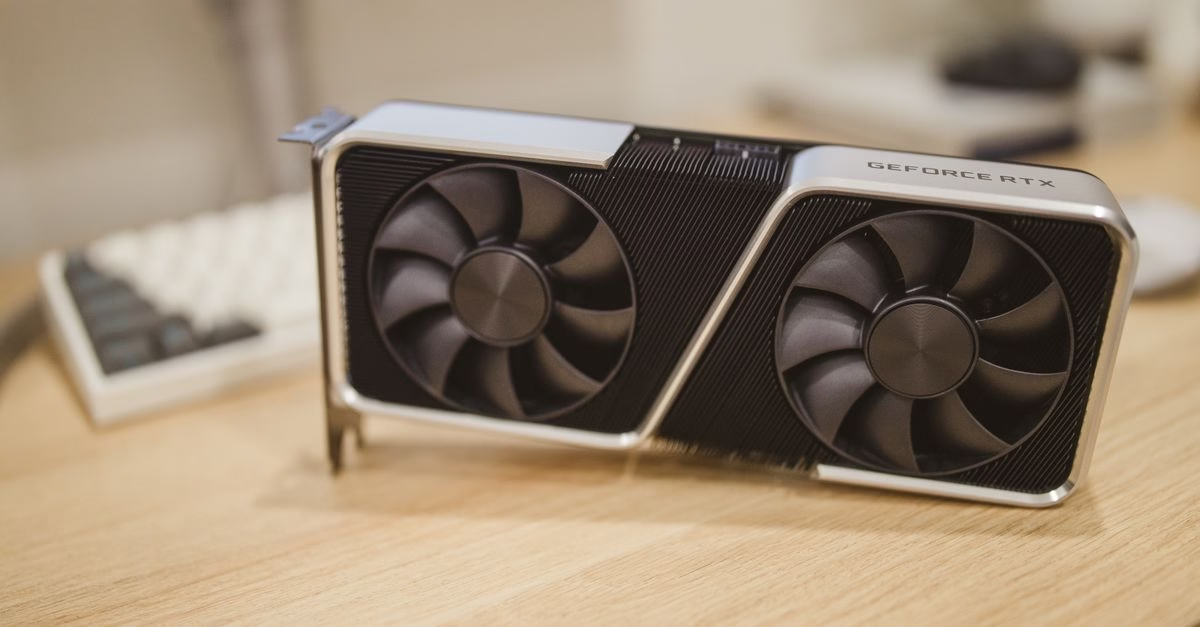
For the average consumer, the potential delay of the NVIDIA GeForce RTX 60 series to 2028 means that the current generation of hardware will likely remain the flagship standard for a longer period. In a market where users are constantly evaluating whether to upgrade their rigs, a longer cycle provides more stability but also delays the arrival of new, more efficient performance tiers. If NVIDIA chooses to wait until 2028, it may be a strategic move to align the launch with more mature manufacturing processes or to avoid the current volatility in the memory market. This approach could ultimately lead to a more polished product, but it also leaves a gap in the market for those hoping for a significant jump in performance sooner. The Sharp Take here is that while enthusiasts always want the latest silicon, a delayed launch is often preferable to a rushed one that suffers from supply shortages or inflated pricing. By extending the timeline, NVIDIA may be attempting to balance its aggressive innovation pace with the harsh realities of global semiconductor logistics.
What this means for your next GPU purchase
If you are currently planning a high-end PC build, the news of a 2028 release for the NVIDIA GeForce RTX 60 series suggests that you should not hold your breath for a next-gen upgrade in the immediate future. Current cards, such as those in the 50-series, will likely continue to be the primary focus for the next several years. For gamers, this means the value proposition of current hardware remains strong; you are not buying into a platform that will be rendered obsolete in six months. When making purchasing decisions, it is better to focus on the performance requirements of your current display setup and software needs rather than waiting for a hypothetical release that is years away. The volatility in the memory supply chain mentioned by industry analysts is a reminder that hardware roadmaps are fluid. If you need a high-performance GPU today, the existing market options are well-documented and capable, and they are unlikely to be eclipsed by the Rubin architecture in the short term.

Uncertainty in the current industry landscape
The primary limitation in assessing the arrival of the NVIDIA GeForce RTX 60 series is the complete lack of official confirmation from NVIDIA. Leaks, while often based on internal information, are not guarantees of reality. The conflict between different leakers—such as the disagreement between those claiming a 2027 launch and those pointing to 2028—highlights just how volatile the situation is. Hardware roadmaps are frequently adjusted in response to competitive pressures, manufacturing yields, and the availability of critical components like VRAM. Furthermore, the global semiconductor environment is currently facing significant shifts, making it difficult for even industry insiders to predict exact release dates with total certainty. We must also consider that NVIDIA may be prioritizing its data centre and AI-focused hardware, which could influence the allocation of resources for consumer gaming products. Until the company issues a formal announcement or provides a concrete roadmap, any date mentioned should be viewed as a moving target rather than a fixed deadline.
Looking toward the future of NVIDIA hardware
While the prospect of a 2028 launch for the NVIDIA GeForce RTX 60 series might feel like a disappointment to those eager for the next step in GPU evolution, it reflects the complex realities of modern hardware development. The Rubin architecture represents a significant step forward, and the time taken to bring it to market will likely be spent ensuring it meets the high standards expected of the RTX brand. For now, the focus remains on the current generation of hardware, which continues to define the state of the art in path tracing and neural rendering. As we wait for further clarity, the best approach for users is to remain informed but patient. The hardware landscape is shifting, and while the wait for the next generation may be longer than some hoped, the eventual arrival of the RTX 60 series will likely be shaped by the very market conditions that are currently causing these delays. We will continue to monitor official channels for any updates that might clarify the timeline for this upcoming product line.