The meme gets a second life, this time disc‑free
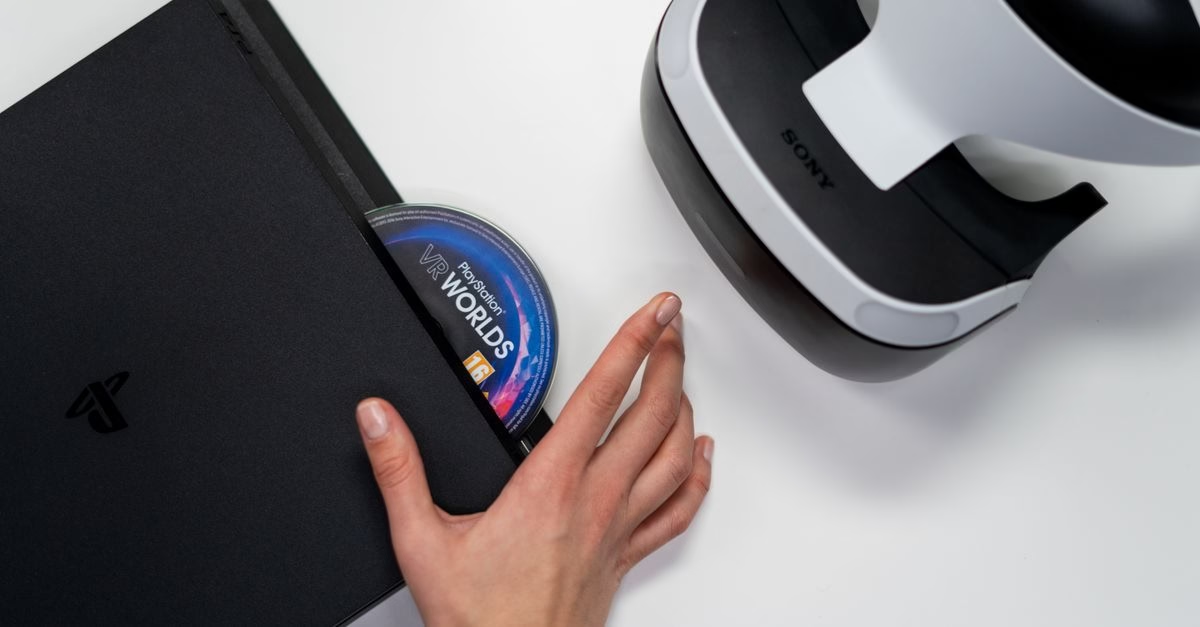
The focus here is PS4 game sharing. In a short, 22‑second video posted to social media, former PlayStation executives Shuhei Yoshida and Adam Boyes reenacted the now‑iconic “this is how you share your games on PS4” moment that first went viral in 2014. Instead of holding a physical disc, the pair simply raise an empty hand, a visual punchline that underscores Sony’s current focus on digital downloads and streaming. The clip was first reported by Eurogamer and quickly circulated on Kotaku, GameSpot and other outlets, each noting the tongue‑in‑cheek reference to the company’s dwindling physical‑media lineup.
The original meme showed Yoshida and Boyes pulling a PS4 game disc from a case, then dramatically handing it to an unseen friend while a caption read, “this is how you share your games on PS4.” It became a staple of gaming humor, illustrating the simplicity of disc‑based sharing. The new version replaces the disc with nothing, a visual cue that the era of swapping physical media is effectively over.
Both executives posted the video on their personal accounts, and Sony’s official channels amplified the post, framing it as a light‑hearted nod to the brand’s heritage while subtly acknowledging the shift toward a disc‑less future.
Why the disc‑less gag lands so hard
The original meme worked because it captured a concrete, relatable action: taking a game out of its case and handing it over. That physicality made the joke instantly understandable. In the new clip, the absence of a disc forces viewers to fill the gap with context—namely, Sony’s recent announcements about phasing out physical releases for many first‑party titles and the growing prominence of PlayStation Plus and cloud streaming.

From a production standpoint, the recreation required only a simple set‑up: a camera, a PS4 controller prop, and the two executives. No special effects were needed; the humor derives entirely from the visual contrast between the original and the updated version. By stripping away the disc, the video also sidesteps any copyright concerns that might arise from showing a recognizable game cover, keeping the focus squarely on the act of sharing itself.
The clip’s distribution strategy mirrors modern meme‑culture practices. It was posted on Instagram, Twitter and YouTube simultaneously, each platform’s algorithm favoring short, loopable content. The accompanying caption—something along the lines of “How we share games now” —provides just enough context for casual viewers while inviting deeper discussion among industry watchers.
What the empty hand says about PlayStation’s future in Canada
For Canadian gamers, the meme hits a nerve because the country has long been a strong market for physical PlayStation discs. Retail chains like EB Games and the now‑defunct GameStop have stocked PS4 and PS5 discs for years, and many consumers still prefer owning a tangible copy for resale or collection purposes.
Sony’s gradual retreat from physical media—evident in recent announcements that several upcoming titles will launch digitally‑only—has practical implications for Canadian retailers. Stores that rely on disc sales face inventory challenges, and consumers may encounter fewer options for buying or trading used games. The meme’s visual shorthand—an empty hand—captures that shift in a way that a press release cannot.
Moreover, the joke underscores a broader industry trend: the rise of subscription services like PlayStation Plus Extra and Premium, which bundle hundreds of games for a monthly fee. In Canada, where broadband speeds are generally robust, the appeal of streaming or downloading games directly to the console is growing. The meme therefore serves as a cultural barometer, reflecting both Sony’s strategic direction and the evolving preferences of Canadian gamers.
How the disc‑less reality will affect everyday PlayStation owners
If Sony continues to prioritize digital distribution, several concrete changes will ripple through the Canadian market:
**Retail shelf space will shrink.** Physical copies will become niche items, likely limited to collector’s editions or special releases.
**Resale markets will dwindle.** Websites like GameSwap and local buy‑and‑sell groups will see fewer listings, reducing a secondary revenue stream for gamers.
**Subscription value rises.** PlayStation Plus tiers will become the primary way to access new releases, making the service’s price‑to‑content ratio a critical buying decision.
**Internet bandwidth matters more.** Players in rural Canada may need to upgrade home internet plans to handle large game downloads, a cost that could offset savings from not buying discs.
**Preservation concerns emerge.** Without a physical archive, future access to games could depend on Sony’s servers remaining operational, a point of contention for game historians and collectors.
While the meme is humorous, it also prompts consumers to evaluate their own habits. Those who still rely on discs for offline play or limited‑data households may need to reconsider their hardware choices or explore external storage solutions.
What the meme doesn’t tell us—and what remains unknown
The recreation is a clever piece of marketing, but it offers no hard data about Sony’s timeline for ending physical releases. The company has not published a definitive roadmap, and regional differences (e.g., Canada versus Japan) could affect rollout speed. Additionally, the video does not address how Sony will support legacy disc owners—whether firmware updates will continue to recognise older media or if any compatibility issues could arise on future consoles.
Another blind spot is the impact on indie developers who still rely on physical distribution for niche audiences. While major first‑party titles are moving digital‑only, smaller studios may continue to press discs for collectors, and the meme says nothing about that segment.
Finally, the clip’s humor hinges on shared cultural memory of the original meme. Newer PlayStation users who missed the 2014 moment might not grasp the full irony, limiting the joke’s reach beyond a certain demographic.
In short, the meme is a snapshot, not a comprehensive briefing on Sony’s physical‑media strategy.
A punchline that mirrors a real industry shift
Shuhei Yoshida and Adam Boyes’s disc‑less reenactment is more than a nostalgic nod; it’s a visual shorthand for PlayStation’s accelerating move toward a fully digital ecosystem. For Canadian gamers, the empty hand signals a future where buying, sharing and preserving games will look very different from the disc‑centric days of the PS4 era. While the meme doesn’t spell out Sony’s exact plans, it sparks a necessary conversation about retail, resale, and the role of subscription services in the next generation of PlayStation experiences. As the industry continues to evolve, keeping an eye on these cultural cues can help consumers anticipate the practical changes that will affect how they play.