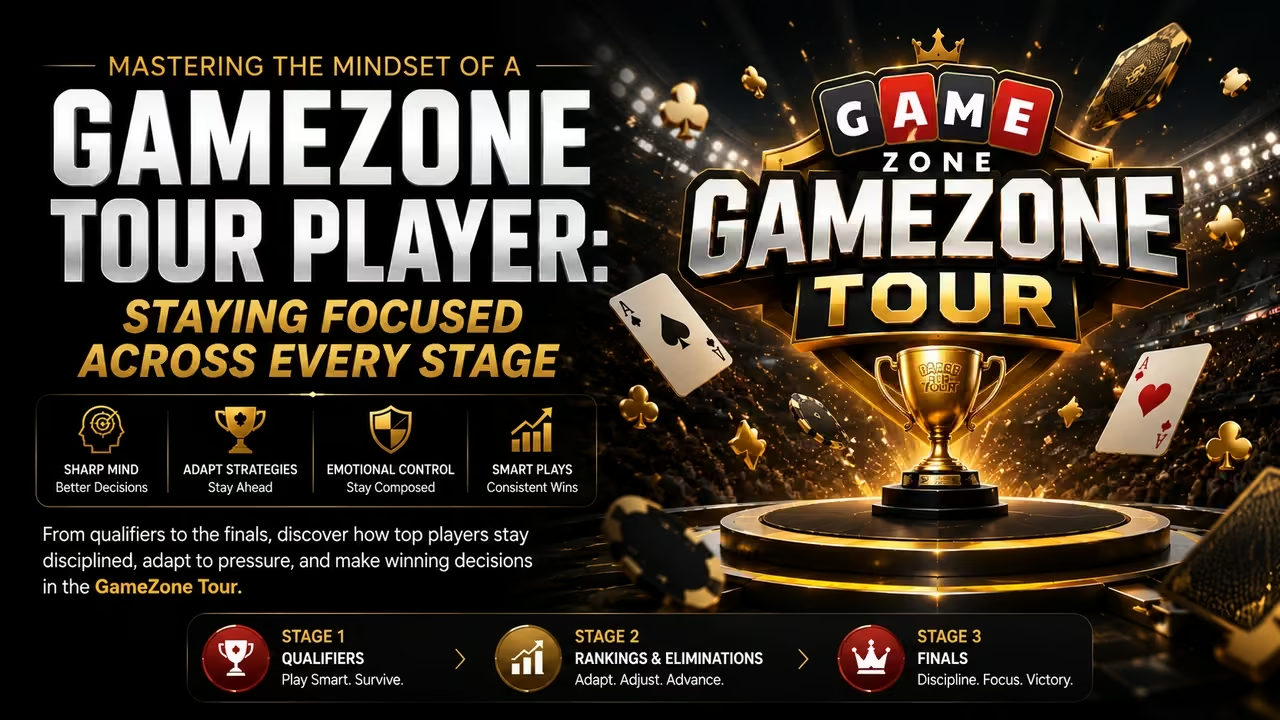
Competitive card gaming extends far beyond the luck of the draw. Success requires a sharp, adaptable mind that reacts strategically under pressure. In tournaments like the GameZone Tour, players confront challenges testing both skill and consistency through multiple rounds, making mental stamina just as essential as technical ability.
Unlike casual Tongits games, a tournament environment places weight on every decision. Winning isn’t simply about strong hands but sustaining a steady, strategic approach from the opening to the final rounds. Understanding how to preserve and sharpen this mental edge can be the ultimate advantage in GameZone Tour competitions.
Players who regularly observe high-level Tongits tournaments often notice that top performers rarely rely on aggressive plays alone. Consistency, emotional discipline, and timing repeatedly emerge as the defining traits separating casual competitors from long-term contenders in structured GameZone Tour events.
Competitive Tongits rewards players who remain disciplined under pressure rather than those who rely purely on aggressive instincts.
The Vital Role of Mindset in Competitive Play
Many players focus primarily on obtaining strong cards, believing that’s the key to victory. However, GZone Tour’s structured, multi-round format favors consistent decision-making rather than temporary bursts of success.

The tournament setting rewards traits such as patience, discipline, and awareness, shifting emphasis away from impulsive plays common in casual games. A single reckless choice can drastically impact overall rankings.
Often, the most successful players aren’t those who receive premium hands but those who remain composed and make sound judgments, especially when under pressure.
Stage 1: Qualifiers – The Importance of Controlled Aggression
In early rounds, enthusiasm can push players toward aggressive strategies seeking immediate control. However, such aggressive moves frequently involve unnecessary risk and misjudgments.
A more effective approach involves measured aggression — playing assertively yet carefully without overcommitting. Key considerations during qualifiers include:
- Avoiding risky moves that threaten early elimination
- Gradually advancing through each round through strategic play
- Placing survival priority above outright domination
Experienced tournament players frequently treat qualifiers as a survival phase rather than an opportunity to dominate immediately. Preserving composure and avoiding unnecessary elimination risks often produces more reliable progression than high-risk aggressive strategies early in the competition.
Though strong hands appear early for some, experienced players often choose safer paths, valuing steady progression over early dominance.
At this stage, the primary objective isn’t to showcase strength but to secure advancement reliably.
Stage 2: Rankings & Eliminations – Flexibility and Adaptability
As the competition intensifies, players face the need to adjust strategies based on opponents and current standings.
Decision-making becomes deeply tied to awareness rather than raw skill alone. Adjustments commonly seen include:
- Leading players adopting conservative strategies to maintain advantage
- Mid-ranked players balancing risk and control to climb rankings
- Lower-ranked players calculating higher risks in pursuit of improvement
No fixed strategy guarantees success—the ability to read situations and tailor gameplay according to evolving dynamics often distinguishes contenders.
Adapting effectively to the tournament flow is crucial for survival and progress during this phase.
Stage 3: Finals – Prioritizing Discipline Over Ego
The final stage introduces heightened pressure where each decision gains amplified importance, and recovery from mistakes becomes more difficult.
Here, a mindset emphasizing discipline takes precedence over aggressive dominance. Successful players tend to:
- Maintain calm in response to setbacks
- Resist making emotionally driven choices
- Focus on timing and opportunity rather than forcing plays
In advanced competitive Tongits matches, restraint and patience often outperform impulsive tactics. Ego-driven attempts to assert dominance prematurely can lead to costly errors.
At the finals level, experienced players often win through patience rather than flashy gameplay. Waiting for opponents to make positioning mistakes or emotional decisions can create stronger opportunities than forcing aggressive plays too early.
Emotional Control: The Underestimated Edge
Performance levels across players often correlate strongly with emotional regulation capabilities. Frustration may induce rushed decisions, overreactions to losses, or abandoning strategic plans.
In competitive environments, emotional decision-making commonly leads to rushed discards, overcommitment, and reactive gameplay. Skilled players typically develop mental reset routines between rounds to maintain strategic clarity and avoid allowing frustration to influence future decisions.
Effective competition demands mental resets and consistent decision-making methods to sustain equilibrium across rounds.
Emotional stability emerges as a skill of equal importance to technical proficiency, evolving naturally through experience.
Players mastering emotional control demonstrate steadiness, maintaining strategic clarity even during challenging stretches.
Pitfalls in Mindset That Weaken Performance
Repeated mental errors often hamper progress more than lack of skill. Common pitfalls to avoid include:
- Treating every round as a do-or-die scenario
- Disregarding the layered structure of the tournament
- Allowing short-term setbacks to influence long-term decisions
- Failing to modify strategies against various opponents
Avoiding these errors can lead to more consistent outcomes and improved resilience in competition.
Understanding the big picture of tournament progression promotes patient and calculated play rather than impulsive reactions.
Cultivating a Winning Mindset
A robust mindset in the GZone Tour results from discipline and a conscientious approach rather than reactive play.
Common habits among successful players involve:
- Thinking in terms of entire tournament stages rather than isolated rounds
- Prioritizing steadiness over reckless aggression
- Exhibiting patience during slower periods of progress
- Basing choices on position and context, not emotional response
Preparation outside actual gameplay also contributes significantly to tournament performance. Many competitive players review previous matches, study opponent tendencies, and analyze decision patterns to improve consistency under pressure during future GameZone Tour stages.
Game Zone’s secure and PAGCOR-licensed platform offers an ideal setting for developing these qualities organically. The environment supports reliable, structured competition that encourages growth in mental discipline alongside gameplay skills. The platform’s regulated environment helps ensure fair competition standards, structured tournament systems, and reliable gameplay experiences for participants. This level of operational transparency contributes to stronger player confidence during competitive events.
Players looking to improve their competitive Tongits performance can also explore additional GameZone Tour strategy guides focused on gameplay discipline, tournament preparation, and advanced decision-making techniques.
Related Posts


Mindset as the Key to GameZone Tour Success
Winning in the GameZone Tour extends beyond knowing Tongits rules—it demands consistently making the right calls under pressure across multiple stages.
Players may grasp mechanics well but varying levels of discipline often determine who excels throughout qualifiers, mid-tournament rankings, and finals.
Calmness, adaptability, and proactive decision-making prove invaluable traits, helping players remain relevant contenders from start to championship end.
The Mental Formula for Progression
Navigating all phases of the GameZone Tour—from qualifiers through finals—calls for a composite of skill, patience, heightened awareness, and emotional control.
Top-performing players flexibly adjust their strategies while maintaining composure, favoring well-reasoned tactics instead of emotional reactions.
Mastering this mental approach can transform how every decision and round is perceived, leading to more consistent and rewarding competitive journeys.
Many players gradually develop stronger tournament instincts through repeated exposure to competitive environments. Over time, experience helps refine risk assessment, emotional discipline, and decision timing across different stages of play.
Emphasizing mindset development completes the essential toolkit for players aspiring to thrive in the competitive arena of the GZone Tour, where mental agility blends seamlessly with technical skill to fuel victory.
Key Takeaways
- Consistency often outperforms aggressive gameplay in long tournaments
- Emotional control is essential during elimination stages
- Tournament awareness influences strategic decision-making
- Adaptability helps players respond to changing rankings and opponents
- Discipline and patience become increasingly important during finals
Frequently Asked Questions
Q1. What is GameZone Tour?
GameZone Tour features a structured Tongits tournament with progressive stages including qualifiers, rankings, and finals.
Q2. Is Game Zone Tour suitable for beginners?
Yes, beginners can join and develop through experience, though mindset and decision discipline are critical for long-term success.
Q3. What mental traits lead to success in Game Zone Tour?
Discipline, adaptability, and emotional control remain vital to preserving consistency through all competition stages.