The Rapid Shift in Memory Preferences
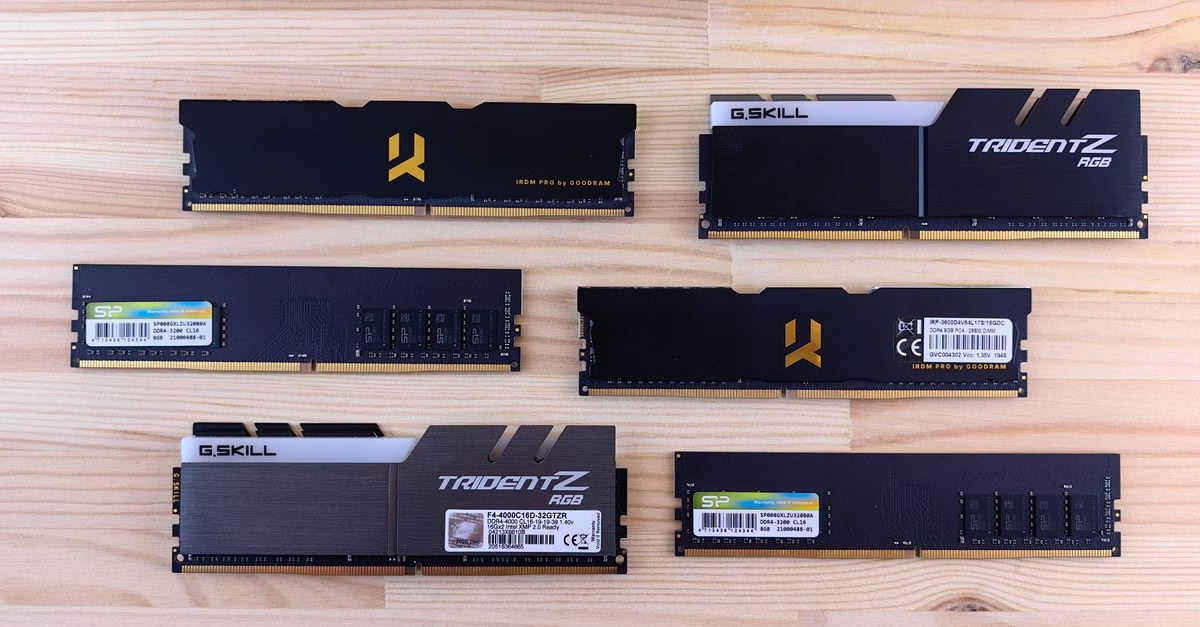
Valve’s September 2026 Steam Hardware & Software Survey confirms a notable change in how gamers are configuring their PCs. For the first time, systems equipped with 32 GB of RAM have become the most common memory capacity among participants, capturing 42.22% of the share. This represents a gain of 4.77 points from the previous month. In contrast, the 16 GB tier, which had held the lead with 41.20% in August, dropped 3.38 points to settle at 37.82%.
This swap occurred within a single reporting cycle, suggesting a swift adoption curve rather than a gradual transition. The trend aligns with earlier indications from August 2025, where industry observers began flagging 32 GB as the emerging standard for next-generation gaming rigs.
Implications for Game Development and Buyer Choices
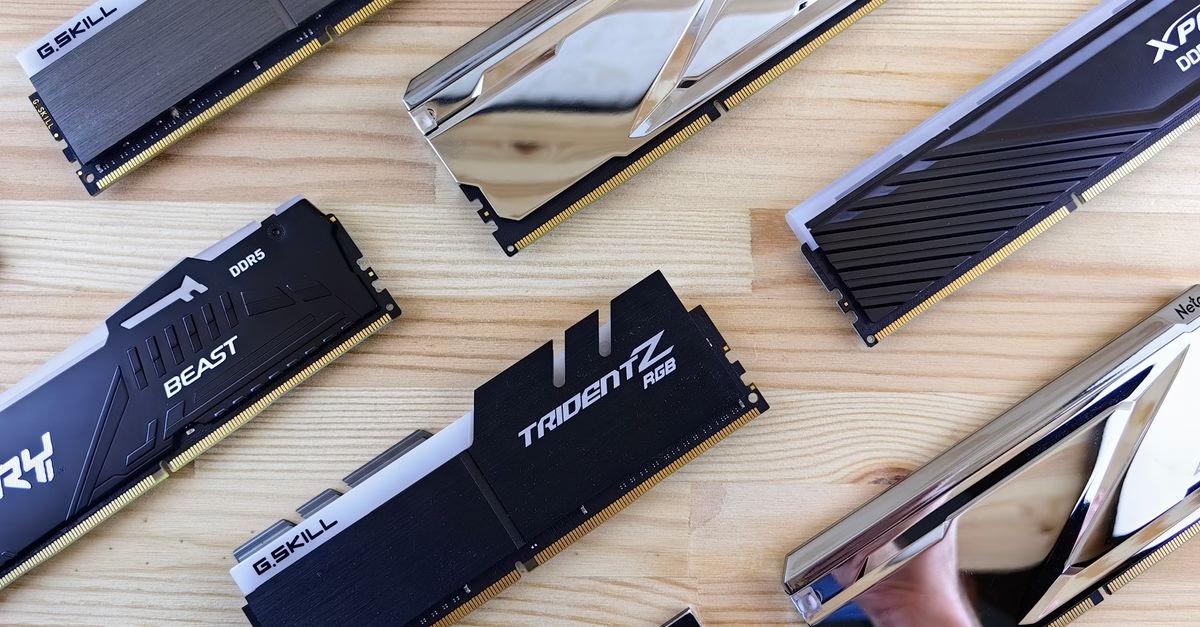
This statistical shift reflects broader changes in software demands and consumer behaviour. Several recent high-profile releases have begun listing 32 GB of RAM in their recommended specifications, effectively pushing 16 GB into the category of minimum requirements. As developers optimize for larger assets and more complex simulations, the baseline for smooth performance is rising. For Canadian buyers planning upgrades or new builds, this data signals that investing in 32 GB kits is becoming a more prudent long-term decision.
However, the survey reports only total capacity, leaving critical details like memory speed (DDR4 vs. DDR5) unaddressed. Additionally, the sample composition changed significantly this month, with Simplified Chinese user participation jumping 7.42 points to 31.39%. While this likely contributes to the overall volume increase, it introduces uncertainty about whether the RAM shift is purely driven by global adoption or regional sampling biases. Other metrics show AMD gaining CPU share to 47.41% and the GeForce RTX 5070 becoming the most popular GPU at 5.86%, indicating a broader hardware refresh cycle.

Monitoring the Trend Beyond One Month
While the September data marks a historic crossover, a single month does not definitively establish a permanent trend. Voluntary surveys can fluctuate based on active player bases and regional events. It remains reasonable to wait for October’s numbers to verify if 32 GB retains its top position or if the 16 GB segment stabilizes. Until then, the current figures serve as a strong indicator that the industry is moving past the 16 GB era. Gamers should view this as confirmation that higher memory capacities are no longer niche but are becoming the norm for modern PC gaming experiences.