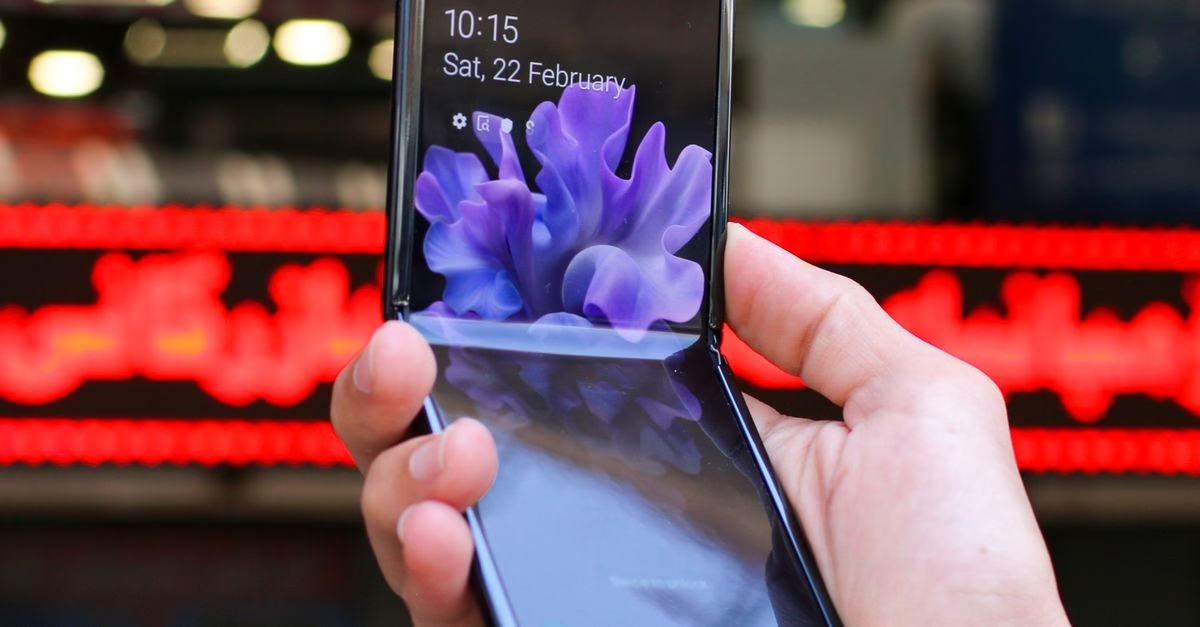
Current pricing and emerging specifications for Samsung foldables
Samsung’s previous-generation book-style foldable, the Galaxy Z Fold7, has seen its market price adjust to $1,350. This figure represents a substantial $550 difference when compared to the reported cost of its successor, the Galaxy Z Fold8 Ultra. The pricing shift highlights the typical depreciation curve for premium mobile hardware as newer iterations enter the conversation.
Despite the generational gap, physical dimensions remain remarkably consistent between the two models. Both devices are described as surprisingly thin for the category, measuring just 8.9mm, and they share a lightweight chassis of 215g. This consistency suggests that Samsung has prioritized maintaining a portable form factor even as internal components evolve.
The primary distinctions lie in power management capabilities. The Z Fold8 Ultra reportedly includes a battery with a 600mAh increase over the Z Fold7’s 4,400mAh unit. Additionally, the newer model supports upgraded charging standards, moving from 25W to 45W for wired connections and from 15W to 20W for wireless charging. These specifications indicate a focused effort to address endurance and recharge speed without altering the device’s external footprint.
Value proposition shifts for Canadian foldable buyers
For consumers considering a entry into the foldable market, the current pricing of the Z Fold7 presents a compelling alternative to the latest flagship. A $550 saving is significant, especially when the core physical experience—thinness and weight—remains largely unchanged. Buyers who prioritize portability and screen real estate over marginal gains in charging speed may find the older model offers better immediate value.

However, the improvements in the Z Fold8 Ultra address common pain points for heavy users. The larger battery capacity could translate to meaningful extra screen-on time, which is critical for multitasking on a large inner display. Faster charging also reduces downtime, making the device more practical for users who rely on their phone throughout a long day without easy access to a charger.
It remains unclear if other internal upgrades, such as processor performance or camera enhancements, accompany these power changes. Without confirmed details on those components, the decision largely hinges on whether battery life and charging convenience justify the premium price tag of the newer model. Potential buyers should weigh their daily usage patterns against the cost difference before committing.
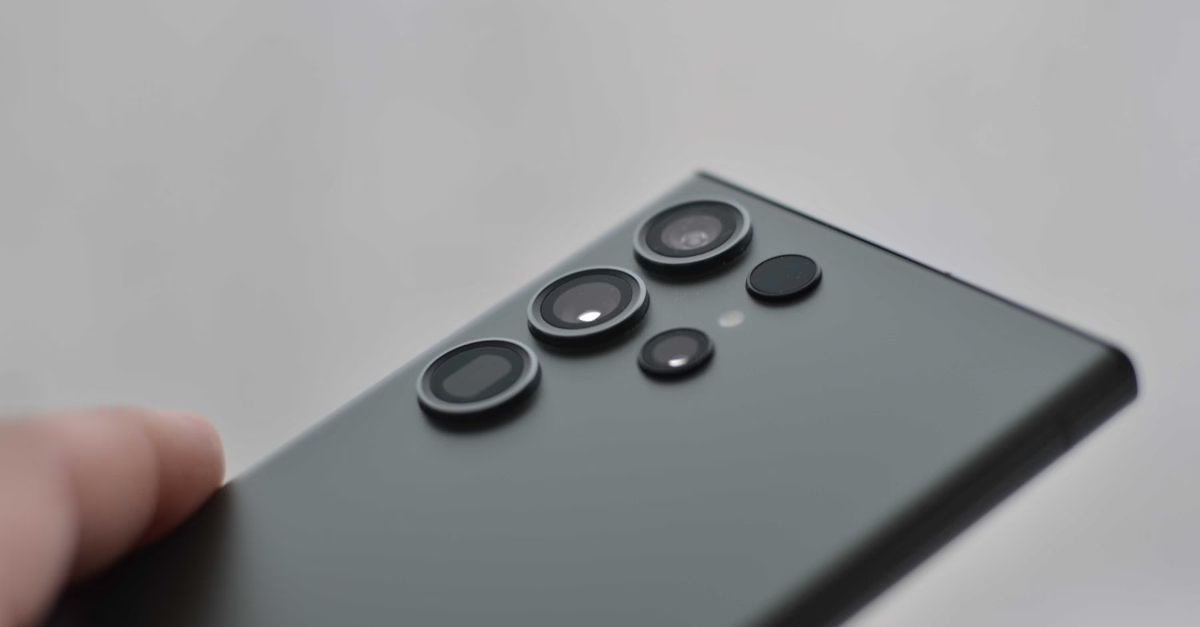
Balancing cost savings against incremental technical gains
The juxtaposition of the discounted Galaxy Z Fold7 and the spec-heavy Z Fold8 Ultra illustrates a clear choice for consumers. Those sensitive to budget can secure a high-quality foldable experience at a reduced rate, benefiting from mature hardware and a proven design. The physical parity between the two devices ensures that the older model does not feel obsolete in hand.
Conversely, users who demand maximum endurance and quicker top-ups will likely lean toward the Z Fold8 Ultra. The 600mAh battery increase and doubled wireless charging speed represent tangible quality-of-life improvements. As more details about the Z Fold8 Ultra’s full feature set emerge, the value equation may shift further. For now, the decision rests on how much weight a buyer places on power metrics versus upfront cost.